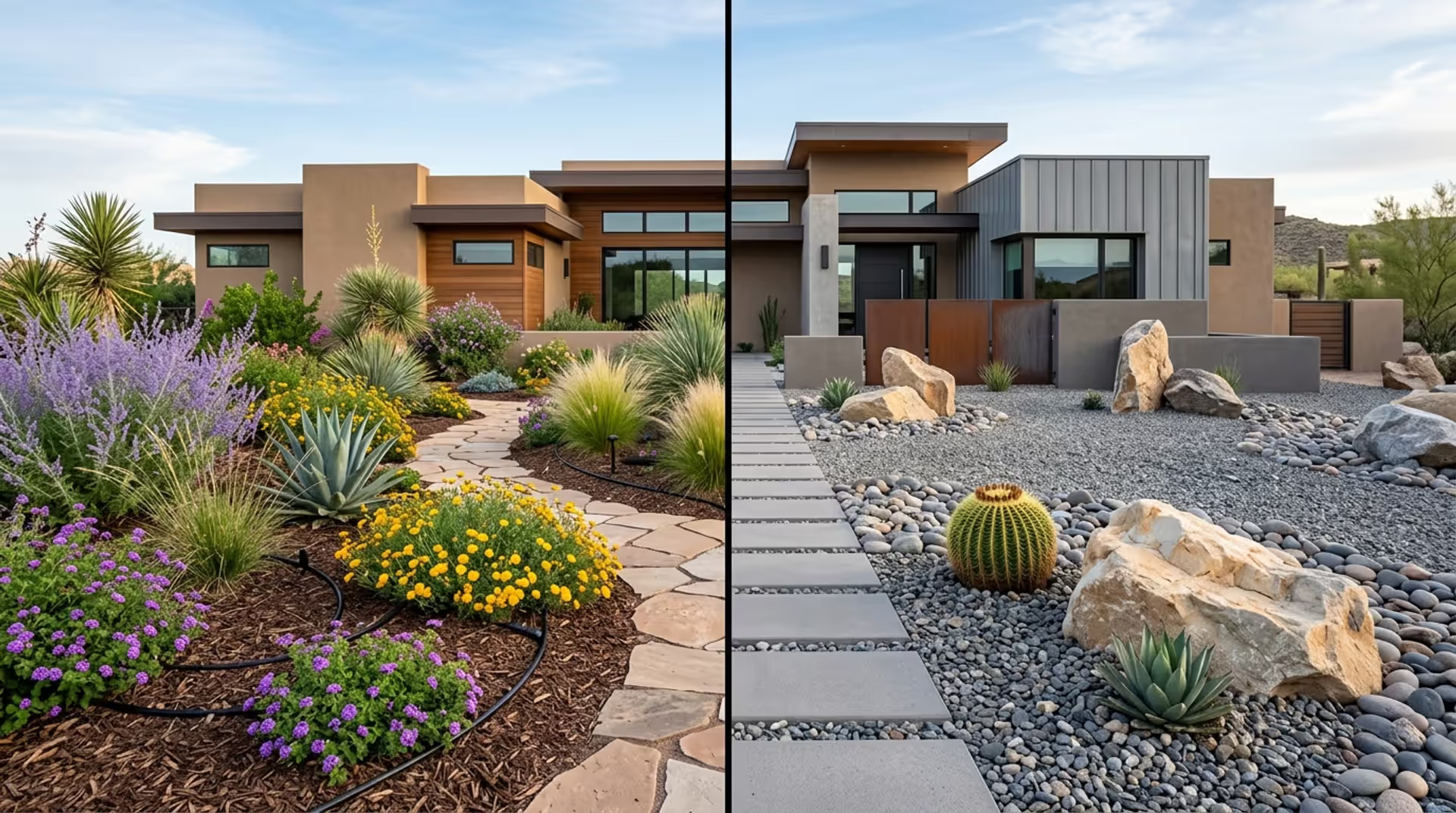
When you're staring at a brown, thirsty lawn in the middle of a drought, two terms keep popping up: zeroscape and xeriscape. They sound almost identical, right? But they're actually quite different approaches to solving the same problem—how to have a yard that doesn't guzzle water like there's no tomorrow.
Here's the thing most homeowners don't realize until they're knee-deep in landscaping decisions: choosing between these two methods isn't just about water savings. It's about how much green you want to see (literally), how much time you're willing to spend maintaining your yard, and what your neighbors or HOA will tolerate. Let's break down what each approach really means and when one makes more sense than the other.
What Is Xeriscape Landscaping?
Xeriscape is a water-wise landscaping method that dramatically reduces outdoor water use while still maintaining living plants and visual appeal. The term comes from the Greek word "xeros" (meaning dry) combined with "landscape."
The core principle? Work with nature, not against it.
A proper xeriscape garden design follows seven fundamental principles: smart planning and design, soil improvement, practical turf areas, efficient irrigation, use of mulches, low-water plants, and appropriate maintenance. You're not eliminating water entirely—you're using it strategically.
The water conservation benefits are substantial. Most xeriscape yards use 50-75% less water than traditional lawns. That's not a small difference. In states like Colorado, California, and Arizona, that can mean hundreds of dollars in savings annually, plus you're not contributing to water scarcity issues.
What goes into a xeriscape plant list? Think native and adapted species that evolved to handle your local conditions. For the Southwest, that might include blue grama grass, red yucca, penstemon, and agave. In the Mountain West, you'd see rabbitbrush, Apache plume, and various sedums. The Pacific Northwest has its own palette with Oregon grape, manzanita, and native fescues.
The pattern I see most often is homeowners thinking xeriscape means cactus and rocks. It doesn't. You can have lush, colorful gardens that just happen to thrive on minimal supplemental water once established.
What Is Zeroscape Landscaping?
Zeroscape takes the concept further—or strips it down, depending on how you look at it. This is zero water landscaping in its purest form. No irrigation systems. No living plants that require any watering beyond natural rainfall.
The approach relies almost entirely on hardscaping: gravel, decorative rock, pavers, concrete, stone features, and occasionally artificial turf. If plants appear at all, they're typically artificial or extremely drought-tolerant specimens that survive purely on whatever rain falls naturally.
How does it differ from xeriscape? Simple. Xeriscape reduces water use. Zeroscape eliminates it.
This means no drip lines, no sprinkler timers, no worrying about watering schedules when you're on vacation. The maintenance shifts from plant care to occasional sweeping, weed prevention, and keeping hardscape materials looking fresh.
Zeroscape became popular in areas facing severe, prolonged drought where water restrictions made even low-water plants difficult to establish. Parts of Nevada, Southern California, and West Texas have seen significant adoption since the early 2020s.
The trade-off? You lose the cooling effect of transpiring plants, the habitat value for pollinators and wildlife, and the psychological benefits that come with living greenery. But you gain near-zero maintenance and absolute water independence.
Author: Marcus Eldridge;
Source: cribbslandscaping.com
Key Differences Between Zeroscape and Xeriscape
Let's get specific about how these approaches compare in practice.
Water Usage Comparison
Xeriscape yards typically use 30-50 gallons per square foot annually after establishment, compared to 90-120 gallons for traditional lawns. That's a 60-70% reduction.
Zeroscape? Zero supplemental water. Whatever rain falls is all you get.
But here's the catch most people miss: during the establishment phase (usually the first year or two), xeriscape gardens still need regular water to help plants develop deep root systems. You're not saving much initially. Zeroscape avoids this entirely since there's nothing to establish.
Maintenance Requirements
Xeriscape demands different maintenance, not necessarily less. You'll spend less time watering and mowing, but you'll still prune, mulch, weed, and occasionally divide plants. Budget 2-4 hours per week during growing season for an average-sized yard.
Zeroscape maintenance is genuinely minimal. Rake or blow debris, spot-treat weeds that pop up through rock (they will), and refresh gravel every few years as it settles or gets dirty. Maybe 1-2 hours monthly.
The simpler option usually wins here if your priority is time savings.
Visual Appeal and Design Flexibility
This is where opinions diverge sharply.
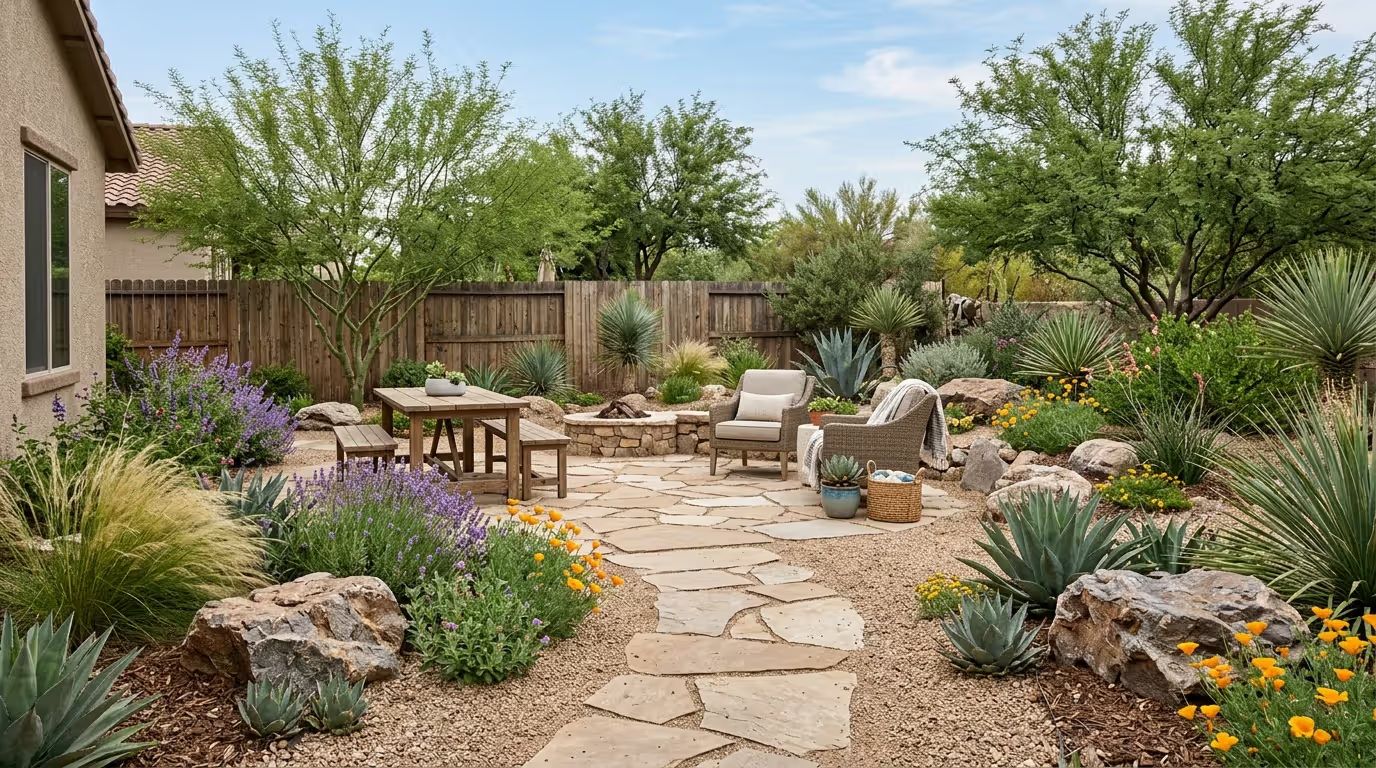
A well-designed xeriscape backyard can rival any traditional landscape in color, texture, and seasonal interest. You can create distinct garden rooms, play with heights and layers, and enjoy blooms from spring through fall. The design flexibility is enormous because you're working with living materials that change over time.
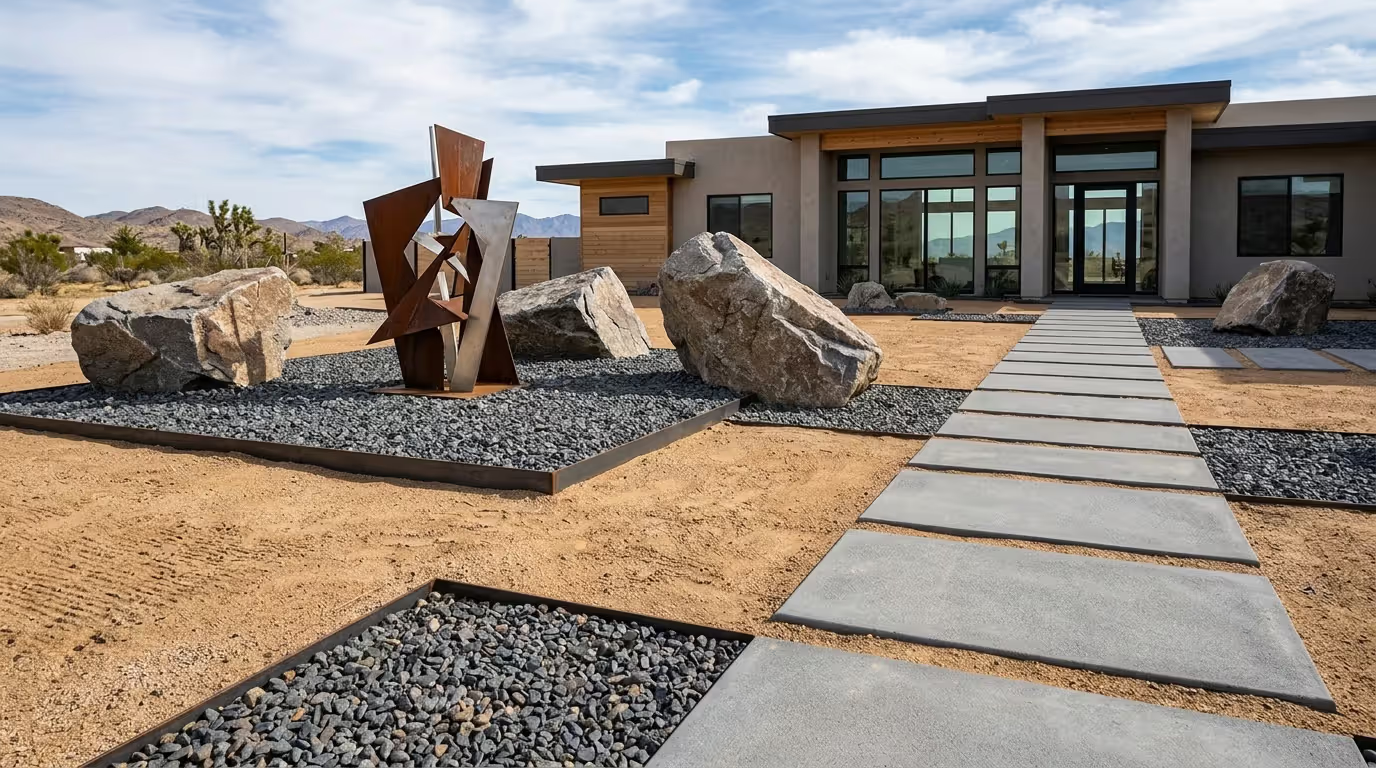
Zeroscape offers a cleaner, more minimalist aesthetic. Some find it elegant and modern. Others think it looks sterile or unfinished. Design flexibility exists but comes from hardscape choices—stone types, patterns, sculptural elements—rather than plant combinations.
One common mistake: assuming zeroscape is automatically cheaper because there are no plants. Quality hardscaping materials and professional installation can easily exceed the cost of a xeriscape plant palette.
Author: Marcus Eldridge;
Source: cribbslandscaping.com
Here's a quick reference comparing both approaches:
Feature
Xeriscape
Zeroscape
Water usage
30-70% less than traditional
Zero supplemental water
Plant coverage
40-70% living plants
0-10% (if any)
Maintenance time
2-4 hours weekly (seasonal)
1-2 hours monthly
Initial cost
$3-8 per sq ft
$5-12 per sq ft
Best climate zones
USDA zones 4-10 (varies by design)
Zones 7-11, arid regions
Aesthetic variety
High—many plant/color options
Moderate—hardscape dependent
HOA-friendliness
Generally acceptable
Often requires approval
When to Choose Xeriscape Over Zeroscape
Certain situations make xeriscape the smarter choice, even if zeroscape seems simpler.
If your HOA has covenants requiring a certain percentage of living landscape, xeriscape lets you comply while still slashing water use. Many communities have updated their rules since 2024 to encourage drought-tolerant yard design, but they still want to see green.
Resale value matters too. Real estate agents consistently report that buyers in most markets respond better to landscaping with living plants, even water-smart varieties. A xeriscape front yard signals environmental consciousness without the stark appearance that turns some buyers off.
Regional climate plays a role. In areas that receive regular seasonal rainfall—think parts of the Pacific Northwest, Mountain West, or even the upper Midwest—xeriscape plants can thrive on natural precipitation alone for much of the year. You get the benefits of living landscape without constant irrigation.
And let's be honest: many people simply want some greenery. The psychological benefits of plants are real. If you'll miss having flowers, texture changes through seasons, or the sound of leaves rustling, xeriscape backyard ideas give you that while still being responsible about water.
One counterintuitive point: xeriscape can actually cool your property more effectively than zeroscape. Plants release moisture through transpiration, creating a microclimate that can be 10-15 degrees cooler than hardscape on hot days. In already-hot climates, that matters for comfort and energy bills.
When Zeroscape Makes More Sense
But there are definitely scenarios where going full zeroscape is the right call.
Extreme drought regions where water restrictions prohibit even minimal landscape irrigation make the choice for you. Parts of the Southwest have implemented zero-outdoor-watering policies during critical shortage periods. In those areas, zeroscape isn't just practical—it's sometimes the only legal option.
If you're genuinely looking for minimal maintenance and you're okay with the aesthetic, zeroscape delivers. Retirees, frequent travelers, or owners of vacation properties often prefer not dealing with any plant care whatsoever.
Budget constraints can push you toward zeroscape too, but with a caveat. If you're doing the work yourself with basic materials (decomposed granite, simple borders), zeroscape can be quite affordable. If you're hiring professionals and want quality stone, pavers, and features, costs climb quickly.
Desert-inspired garden designs naturally lean zeroscape. In areas where the surrounding landscape is already sparse—think high desert, basin regions, or areas with caliche soil—a zeroscape approach feels contextually appropriate rather than jarring.
One thing to watch: some municipalities offer rebates for removing turf but require replacement with water-smart garden elements that include plants. Check your local water district's programs before committing to pure hardscape.
Design Ideas for Both Approaches
Author: Marcus Eldridge;
Source: cribbslandscaping.com
Let's talk practical application. How do these concepts look in real yards?
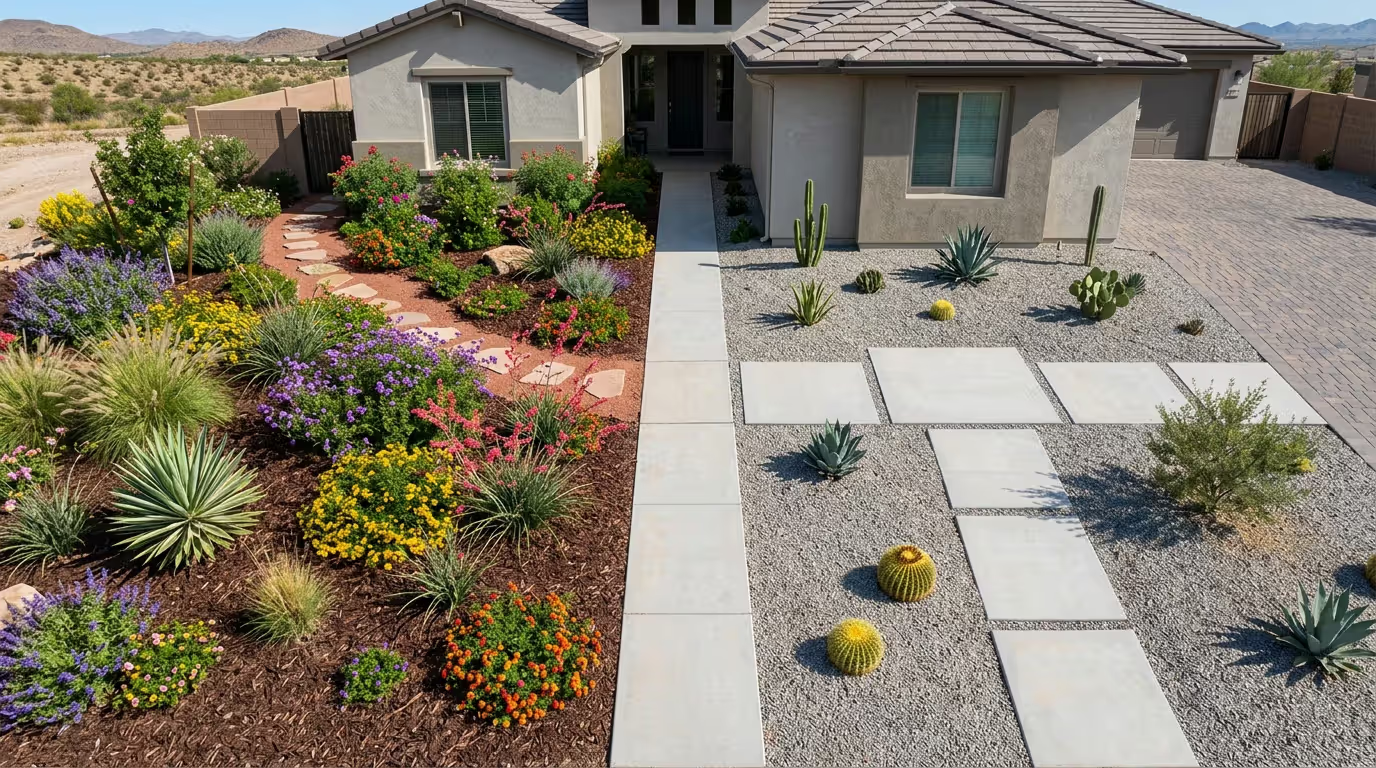
For a low water front yard using xeriscape principles, consider creating zones. Place your highest-water plants (if any) closest to the house where they're most visible and easier to maintain. Transition to increasingly drought-tolerant species as you move toward the street. Use a dry creek bed as a visual feature that also handles drainage—functional and attractive.
Plant groupings matter. Cluster plants with similar water needs together. Don't scatter individual specimens randomly across the yard. This lets you irrigate efficiently and creates stronger visual impact.
For xeriscape backyard ideas, think about how you use the space. If you want a patio area for entertaining, surround it with fragrant, low-water plants like lavender, Russian sage, or catmint. Create a focal point with a specimen plant—maybe a desert willow or a sculptural agave—and build supporting layers around it.
A popular approach combines both methods. Use zeroscape principles for high-visibility, low-traffic areas (side yards, parking strips) and xeriscape for spaces where you spend time. This hybrid approach maximizes water savings while keeping greenery where you'll appreciate it most.
For pure zeroscape, vary your hardscape materials to avoid monotony. Combine different stone sizes and colors. Use pavers to create pathways or patterns. Add vertical elements like steel sculptures, large boulders, or architectural features to break up horizontal planes.
Desert-inspired garden designs often incorporate dry-stacked stone walls, decomposed granite pathways, and large accent rocks that create visual interest without irrigation needs. The key is working with texture and form since you're not relying on color from flowers.
The most successful water-wise landscapes aren't about deprivation—they're about alignment. When you match your plant palette and design approach to your actual climate rather than fighting it with irrigation, you create spaces that look better, cost less to maintain, and support local ecosystems. Whether that means xeriscape with adapted natives or a thoughtfully designed zeroscape depends entirely on your site conditions and personal priorities.
— Mitchell Thomas
Common mistakes to avoid: Don't skip soil preparation even in xeriscape. Amending soil to improve drainage and water retention helps plants establish faster. Don't underlayer rock or gravel without proper weed barrier—you'll regret it within months. And don't assume "drought-tolerant" means "zero water forever." Most plants need establishment care.
FAQ: Zeroscape and Xeriscape Questions Answered
Can you have grass in a xeriscape yard?
Yes, but you'll want to be selective about type and placement. Warm-season grasses like buffalo grass and blue grama require far less water than Kentucky bluegrass or perennial ryegrass. The key is limiting turf to functional areas—maybe a small play space for kids or a pet area—rather than covering your entire yard. Many successful xeriscape designs include 10-20% turf in high-use zones and use drought-tolerant groundcovers or mulch everywhere else. You can also consider no-mow native grass mixes that only need cutting once or twice yearly.
Is zeroscape cheaper than xeriscape?
It depends entirely on materials and installation. A basic DIY zeroscape using pea gravel and simple edging can cost $2-4 per square foot. A professionally installed xeriscape with quality plants, irrigation, and soil amendments typically runs $3-8 per square foot. But if you're comparing high-end zeroscape with flagstone, decorative boulders, and professional grading against a DIY xeriscape, the zeroscape will cost significantly more. Long-term, zeroscape has lower maintenance costs since there's no irrigation system to repair or plants to replace.
Does xeriscape increase home value?
In most markets, yes—when done well. Quality xeriscape landscaping typically returns 70-100% of investment at resale, similar to traditional professional landscaping. In water-scarce regions, it can actually command a premium since buyers appreciate lower utility costs and environmental benefits. The caveat is design quality matters enormously. A thoughtfully designed xeriscape with good curb appeal adds value. A sparse, poorly executed yard with random plants in gravel can actually hurt value. Location matters too—xeriscape is increasingly valued in Western states but may be less appreciated in regions with abundant water.
What are the best drought-tolerant plants for xeriscape?
This varies by region, but some reliable performers across multiple climate zones include Russian sage, lavender, sedum varieties, ornamental grasses like blue fescue and Mexican feather grass, coneflowers, black-eyed Susans, and yarrow. For shrubs, consider barberry, potentilla, and sumac. In warmer zones, add agave, yucca, Texas sage, and desert marigold. The best strategy is contacting your local cooperative extension office for a region-specific list of natives and adapted plants. These will always outperform generic "drought-tolerant" species that aren't suited to your specific conditions.
Can I combine zeroscape and xeriscape in one yard?
Absolutely, and this is actually a smart approach for many homeowners. Use zeroscape principles in areas that are visible but not actively used—side yards, parking strips, or slopes that are difficult to maintain. Apply xeriscape design to your main yard areas where you spend time and want living plants. This hybrid method maximizes water savings while maintaining some greenery where it matters most. Just make sure transitions between zones look intentional rather than haphazard. Use consistent materials or design elements to tie different areas together visually.
How much water does xeriscape actually save?
A properly designed and established xeriscape typically uses 60-75% less water than a traditional lawn-dominated landscape. For an average 5,000 square foot yard in a semi-arid climate, that translates to roughly 40,000-60,000 gallons saved annually. The exact savings depend on your climate, plant selections, irrigation efficiency, and how much turf you're replacing. First-year savings are lower since new plants need establishment water. By year three, you should see maximum savings. Some municipalities offer water audits that can give you specific projections for your property.
Choosing between zeroscape and xeriscape isn't about finding the "right" answer. It's about matching a landscaping approach to your specific situation.
Consider your climate first. Are you facing permanent water scarcity or temporary restrictions? Does your area get seasonal rainfall that plants can use? Your water reality shapes what's practical.
Think about your time and interest in maintenance. Be honest here. If you love gardening and find plant care relaxing, xeriscape gives you that outlet with less water guilt. If yard work feels like a chore you'd rather minimize, zeroscape might be liberating.
Look at your neighborhood context. What do surrounding properties look like? While you shouldn't let neighbors dictate your choices, extreme outliers can affect property values and community relationships.
Budget matters, but think long-term. Initial installation is just the beginning. Factor in ongoing water costs, maintenance time (which has a dollar value), and potential repairs or replacements over 10-15 years.
And don't forget the less tangible factors. How does your yard make you feel? What do you want to see when you look outside? These aren't frivolous considerations—your home landscape affects your daily quality of life.
The good news? Both approaches represent responsible water stewardship compared to traditional landscaping. Whether you choose the living-plant efficiency of xeriscape or the zero-water commitment of zeroscape, you're making a choice that benefits your community's water future. That's worth doing, whichever path you take.
Forestry mulching grinds vegetation into nutrient-rich mulch on site, clearing land without debris removal or soil damage. Learn how the process works, compare costs to traditional clearing methods, and discover when mulching is the best choice for your property.
Soil solarization uses summer heat to sterilize garden beds naturally. This guide covers the complete process, from choosing materials and timing to avoiding common mistakes. Learn what pests it kills, how long it takes, and whether it works in your climate zone.
Transform your yard into an eco-friendly landscape that works with nature instead of against it. Discover native plants, water-saving techniques, organic care methods, and wildlife habitat features that reduce environmental impact while cutting maintenance costs by up to 60%.
Every garden needs water, but delivery method matters. Compare drip irrigation, sprinklers, soaker hoses, and automated systems. Learn which watering system fits your garden, how to install it efficiently, and avoid common mistakes that waste water and harm plants.
The content on this website is provided for general informational and educational purposes only. It is intended to explain concepts related to landscape design, outdoor spaces, plants, irrigation, hardscape and softscape, and sustainable landscaping.
All information on this website, including articles, guides, and examples, is presented for general educational purposes. Outcomes may vary depending on local climate, soil, plant selection, and project implementation.
This website does not provide professional design, construction, or horticultural advice, and the information presented should not be used as a substitute for consultation with qualified landscape architects, contractors, or horticulturists.
The website and its authors are not responsible for any errors or omissions, or for any outcomes resulting from decisions made based on the information provided on this website.