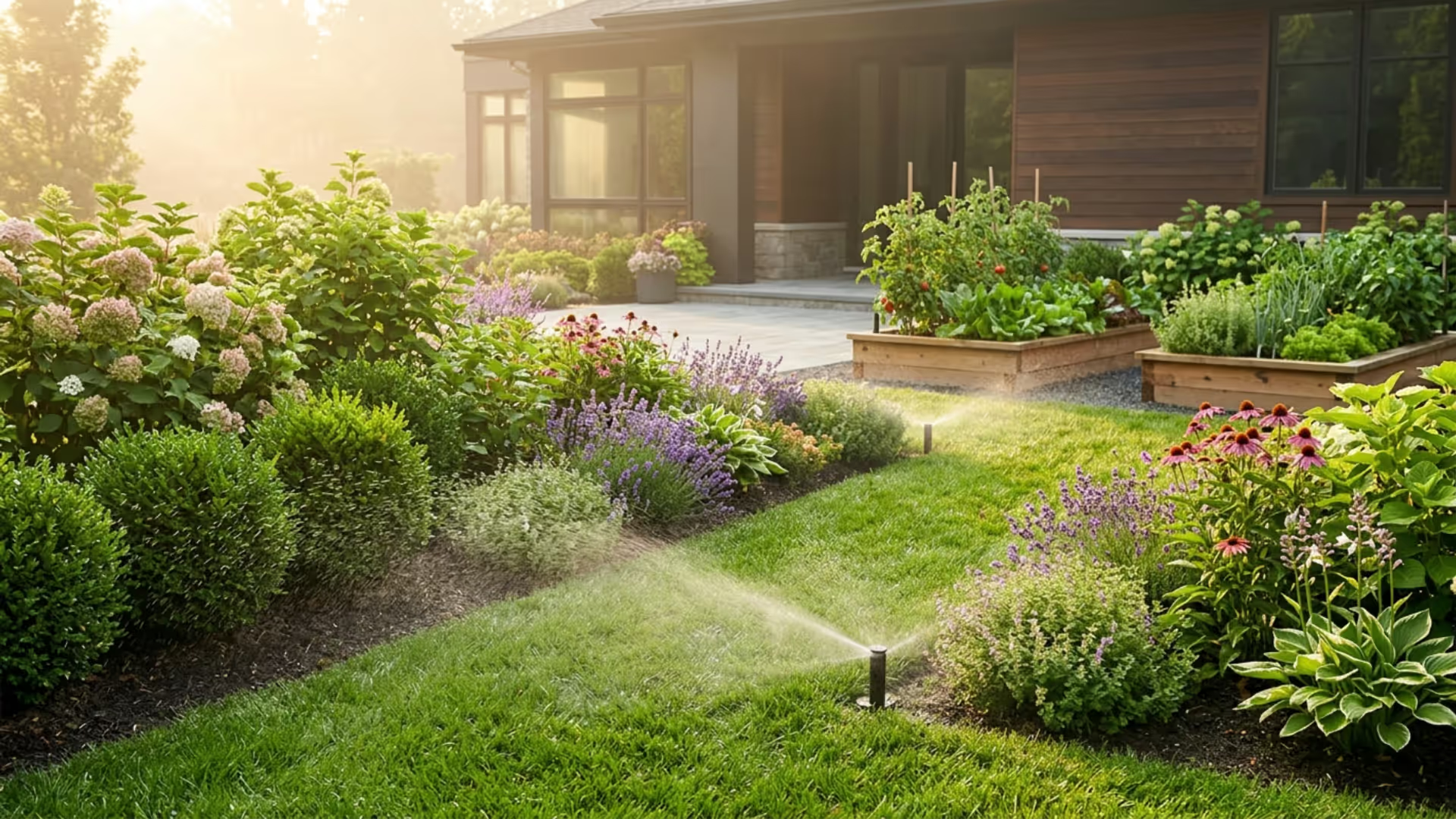
Every garden needs water. But how you deliver it matters more than most gardeners realize.
The right watering system can cut your water bill in half while growing healthier plants. The wrong one wastes thousands of gallons each season and still leaves your tomatoes thirsty. I've watched neighbors spend hours dragging hoses around their yards every evening while automated systems down the street handle the job in minutes.
Modern watering systems range from simple timers that cost twenty dollars to smart controllers that adjust for weather forecasts. Some spray water into the air. Others deliver it directly to roots. The best choice depends on what you're growing, your soil type, and how much time you want to spend managing irrigation.
Types of Garden Watering Systems Explained
Understanding your options makes choosing easier. Each system has clear strengths and limitations.
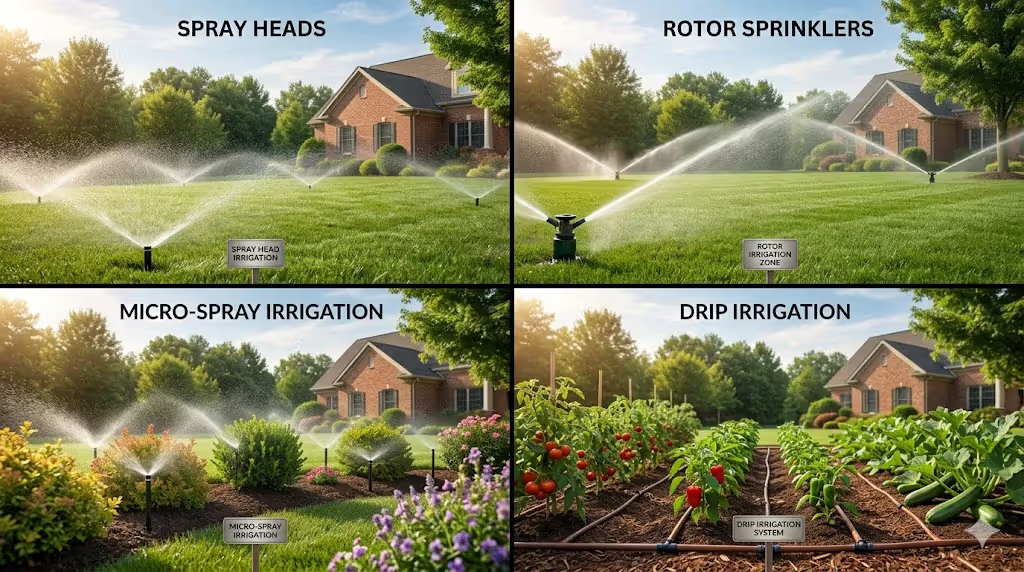
Drip Irrigation Systems
Drip systems deliver water directly to plant roots through a network of tubes, emitters, and valves. Water seeps out slowly—typically 0.5 to 2 gallons per hour per emitter—which means almost no evaporation loss.
The basic setup includes a main supply line, smaller distribution tubes, and emitters placed near each plant. You can customize emitter flow rates for different plants. Thirsty vegetables get 2-gallon-per-hour emitters. Established shrubs might need only 0.5 gallons per hour.
Installation takes a weekend for most home gardens. You'll lay tubing along plant rows, punch holes for emitters, and connect everything to a hose bib or main water line. No trenching required for above-ground systems.
The efficiency is remarkable. Drip irrigation uses 30 to 50 percent less water than sprinklers because you're not watering paths, driveways, or weed seeds between plants.
But drip systems need maintenance. Emitters clog from mineral deposits or debris. You'll spend time each season flushing lines and replacing clogged parts. Rodents sometimes chew through tubing. Surface systems also create visual clutter that some gardeners dislike.
Sprinkler Systems
Sprinklers throw water through the air to cover larger areas. They work well for lawns and densely planted beds where individual plant targeting isn't practical.
Options range from simple oscillating sprinklers you move by hand to permanent in-ground systems with pop-up heads. Spray patterns vary—some create circles, others rectangles, and adjustable models let you customize coverage.
The main advantage is coverage speed. A good sprinkler can water 1,500 square feet in 30 minutes. That's hard to match with other methods.
Water efficiency suffers, though. Wind blows spray off target. Hot days evaporate 20 to 30 percent before it reaches soil. You're also watering everything in the coverage area—including weeds, mulch, and empty spaces.
Sprinklers excel for lawns, ground covers, and newly seeded areas that need consistent moisture across the surface. They're less ideal for vegetable gardens where wet foliage invites disease.
Water conservation in home gardens isn't just about using less—it's about applying the right amount at the right time to the right place. Most gardeners overwater by 30 to 50 percent simply because they're guessing instead of measuring.
— Martinez Elena
Soaker Hoses and Drip Tape
These look similar but work differently. Soaker hoses are porous rubber tubes that "weep" water along their entire length. Drip tape is thin-walled plastic tubing with pre-spaced emitter holes.
Soaker hoses cost less—typically $15 to $30 for 50 feet. You snake them through beds and turn on the water. Simple. They work best for narrow plantings like perennial borders or foundation beds where you can lay the hose close to plants.
Water pressure matters with soaker hoses. Too much and the end nearest the faucet gushes while the far end barely drips. Most work best at 10 PSI, so you'll need a pressure regulator if your home water pressure runs 40 to 60 PSI like most municipal systems.
Drip tape costs more upfront but delivers more uniform watering. Emitter spacing—typically 8, 12, or 18 inches—determines coverage. The 12-inch spacing works well for most vegetable rows.
The pattern I see most often is gardeners choosing soaker hoses for perennials and drip tape for annual vegetables. Both last 3 to 5 seasons with proper winter storage.
One key difference: soaker hoses clog more easily than drip tape because water seeps through thousands of tiny pores. Drip tape has discrete emitter holes that resist clogging better.
Manual Watering with Garden Hoses
The old standby still has a place. Hand watering gives you complete control and lets you inspect plants closely while watering.
A quality hose, spray nozzle, and watering wand cost $50 to $100 total. You'll spend 15 to 45 minutes watering depending on garden size. That's time you could spend weeding or harvesting, but some gardeners enjoy the ritual.
Manual watering works well for containers, small gardens under 200 square feet, and spot-watering new transplants. It's also perfect for gardeners who like daily garden walks and don't mind the time investment.
The main drawback is inconsistency. You water when you remember, which might not align with plant needs. Vacation means finding someone to water or accepting that plants will suffer.
Author: Liam Ashcroft;
Source: cribbslandscaping.com
Drip vs Sprinkler Systems: Which One to Choose
This comparison determines success for most home gardeners. The systems serve different needs.
Moderate to high (winterization, head adjustments)
Difficult (professional recommended)
Water efficiency tilts heavily toward drip systems. You're delivering water exactly where roots need it with minimal evaporation. A sprinkler might use 1,000 gallons to deliver the same effective watering a drip system achieves with 600 gallons.
Cost comparison isn't straightforward. Basic drip systems for a 20x25-foot vegetable garden run $150 to $250 in materials. You can install it yourself in 6 to 8 hours. Sprinklers cost less initially—$30 to $60 for a decent oscillating model—but you'll use more water over time.
Installation complexity favors sprinklers for simplicity. Connect, turn on, done. Drip systems require planning your layout, cutting tubing to length, and placing emitters. Not difficult, but more involved.
The best use cases rarely overlap. Choose drip irrigation for:
Vegetable gardens where you want dry foliage
Raised beds with defined planting areas
Shrub and perennial borders
Sloped areas where sprinkler runoff is a problem
Regions with water restrictions or high water costs
Choose sprinklers for:
Lawns and turf areas
Newly seeded areas needing surface moisture
Ground covers and dense plantings
Situations where you need flexible, movable coverage
Maintenance requirements differ significantly. Drip systems need seasonal attention—flushing lines in spring, checking for clogs mid-season, winterizing in cold climates. Sprinklers need less frequent maintenance but require head adjustments and winterization for in-ground systems.
Many gardeners use both. Drip lines for the vegetable garden and a sprinkler for the lawn makes perfect sense.
How Automated Irrigation Works in Home Gardens
Automation transforms watering from a daily chore to a set-it-and-forget-it system. You're not just saving time—you're improving consistency.
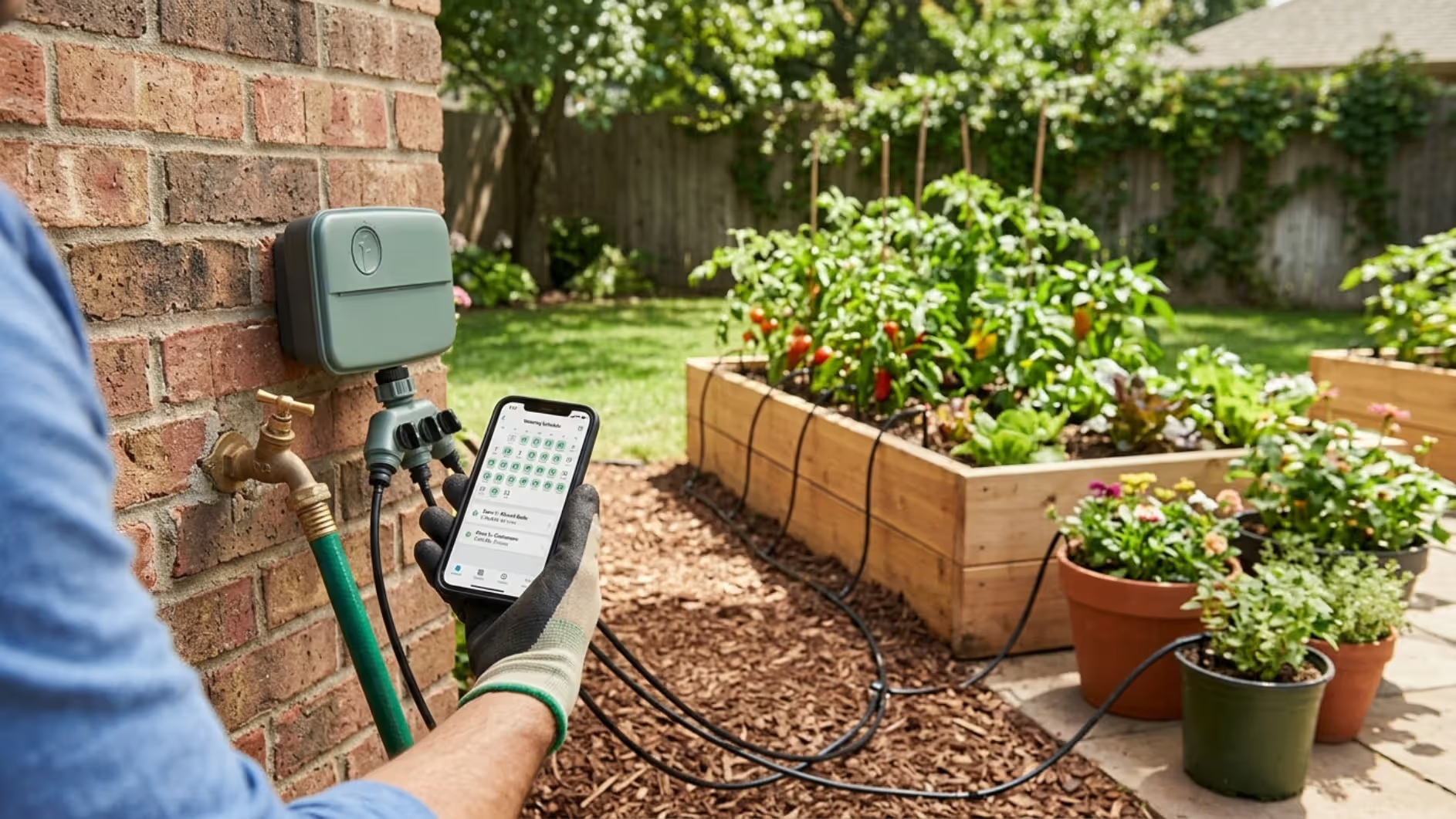
Basic automation starts with a hose timer. These battery-operated devices screw onto your outdoor faucet and control when water flows. Models range from $25 mechanical timers with a single daily cycle to $80 digital versions with multiple daily programs.
Smart controllers take automation further. They connect to your home WiFi and adjust watering based on weather data, soil moisture sensors, and plant needs. Prices range from $100 to $300 depending on the number of zones and features.
Here's how a typical smart system works: You tell the controller what you're growing, your soil type, sun exposure, and how your system delivers water. The controller calculates baseline watering needs. Then it monitors weather forecasts and skips watering when rain is coming or has recently fallen.
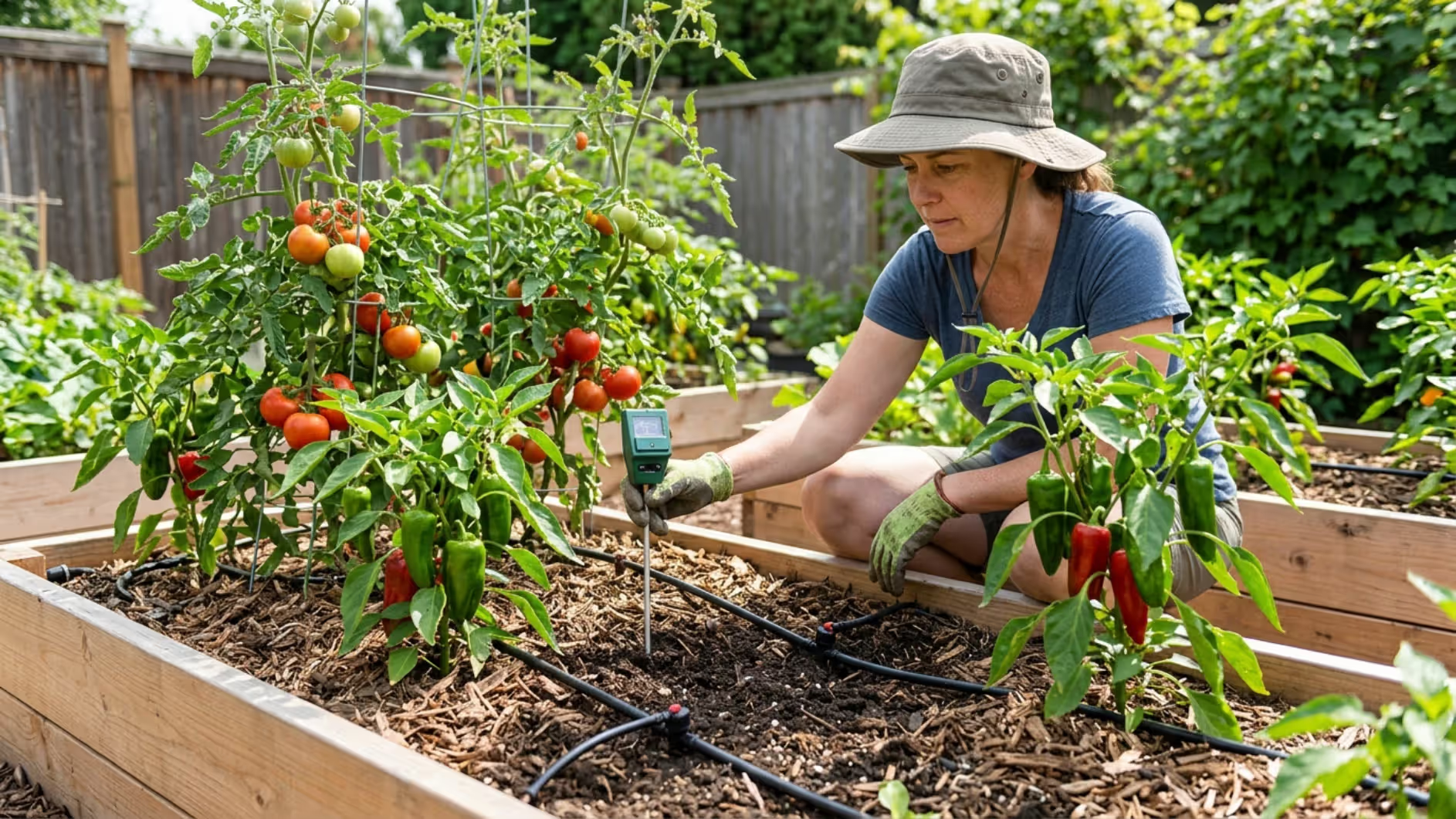
Some systems integrate soil moisture sensors that measure actual moisture levels 4 to 6 inches deep. When soil hits your target moisture level, watering stops regardless of the programmed schedule. This prevents overwatering during cool, cloudy periods when evaporation slows.
Setup takes 30 minutes to an hour. You'll connect the controller to your water supply, download the companion app, and answer questions about your garden. Most systems walk you through setup with clear prompts.
The scheduling capabilities impress most new users. You can program different zones to water at different times and durations. Your vegetable garden might water daily for 20 minutes at 6 AM. Established shrubs might water twice weekly for 45 minutes at 10 PM.
Smart systems also track water usage. You'll see exactly how many gallons you're using weekly and monthly. This data helps identify problems—a sudden spike might indicate a leak or broken emitter.
Author: Liam Ashcroft;
Source: cribbslandscaping.com
One counterintuitive point: smart controllers often increase initial watering amounts while decreasing frequency. Deep, infrequent watering encourages deeper root growth. Shallow daily watering creates shallow roots that need constant moisture.
The simpler option usually wins here for small gardens. A $40 hose timer handles most home vegetable gardens perfectly well. Save the smart controller investment for larger properties or situations where water costs are high enough to justify the expense through savings.
Setting Up Water-Efficient Garden Irrigation
Efficiency means matching water delivery to plant needs without waste. Three strategies deliver the biggest improvements.
Installing a Garden Hose Timer
This upgrade takes 10 minutes and immediately improves consistency. You'll stop forgetting to turn off the water and stop overwatering because you're not sure how long it's been running.
Start by choosing between mechanical and digital timers. Mechanical versions use a dial you twist to set duration—typically 15 to 120 minutes. They're bulletproof simple but only run one cycle per day. Digital timers offer multiple daily cycles and run on two AA batteries that last a full season.
Installation is straightforward:
Attach the timer to your outdoor faucet
Connect your hose or irrigation system to the timer's outlet
Set your watering schedule
Test the system
Most timers include a manual override button for immediate watering. You'll use this when transplanting or during heat waves.
The key setting is duration. Start conservative—you can always increase it. A vegetable garden with drip irrigation typically needs 20 to 40 minutes per cycle. Sprinklers might need 30 to 60 minutes to deliver equivalent moisture.
Check soil moisture 6 inches deep an hour after watering. If it's barely damp, increase duration by 10 minutes. If it's soggy, decrease by 10 minutes.
Rainwater Harvesting for Garden Use
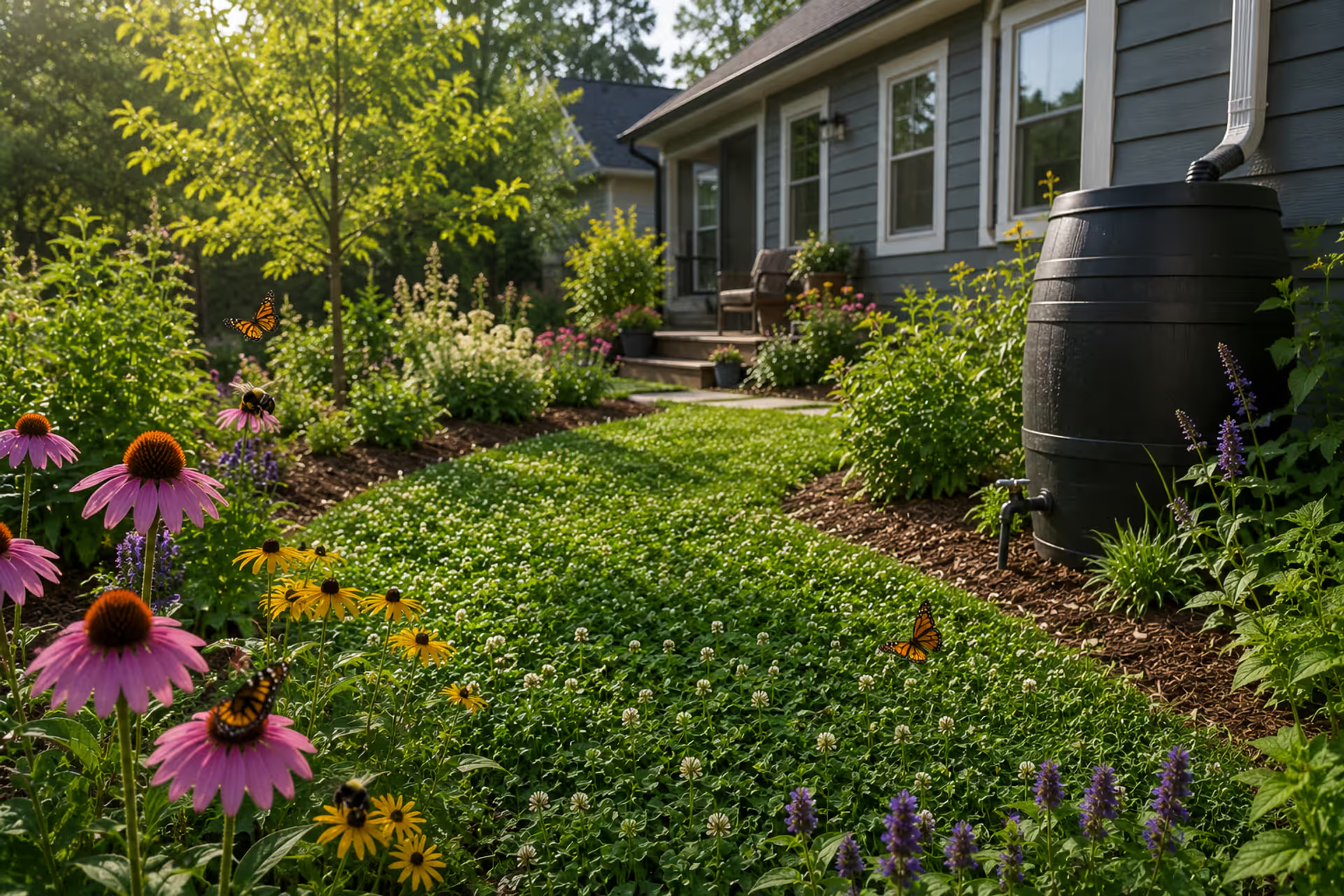
Collecting rainwater reduces your dependence on municipal water and saves money. A single inch of rain on a 1,000-square-foot roof produces about 600 gallons of water.
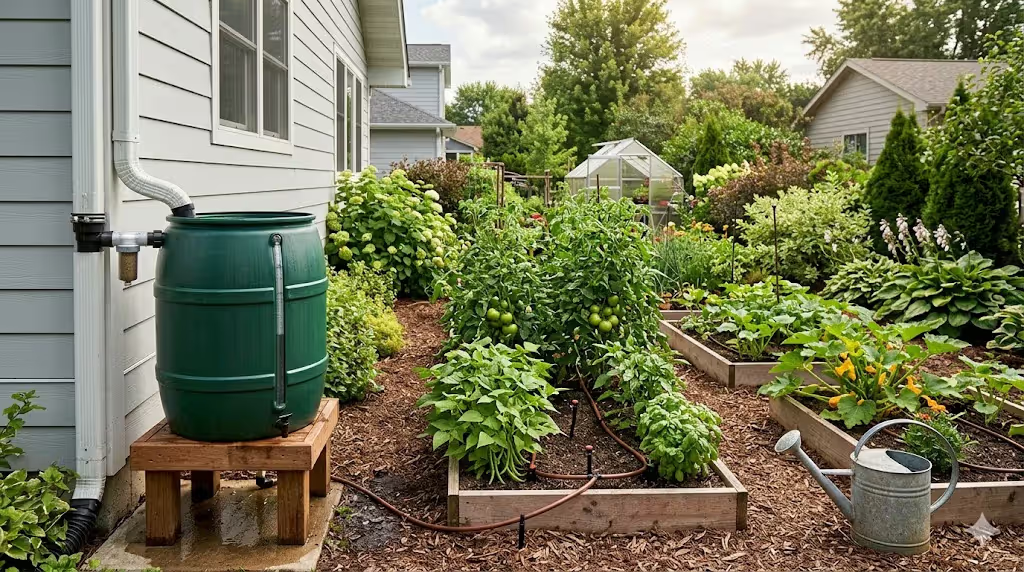
Basic systems start with a rain barrel—typically 50 to 80 gallons—connected to a downspout. Prices range from $80 to $200. You'll position the barrel on a platform or blocks to create gravity pressure for filling watering cans.
More ambitious setups use multiple barrels or larger tanks (200 to 500 gallons) with pumps for pressurized delivery. These cost $400 to $1,200 but store enough water for serious irrigation.
Key components include:
Debris screens to filter leaves and roof material
Overflow valves to direct excess water away from foundations
Spigots at the bottom for easy access
Mosquito-proof lids to prevent breeding
Connect your drip system directly to a rain barrel by adding a small pump (around $100) that maintains adequate pressure. This creates a completely off-grid watering system for small gardens.
One common mistake is placing barrels too far from the garden. You'll end up not using them because hauling water 100 feet gets old fast. Position storage within 20 feet of your main garden area.
Winter preparation matters in cold climates. Drain barrels completely and disconnect them before freezing temperatures arrive. Ice expansion can crack even heavy-duty plastic.
Author: Liam Ashcroft;
Source: cribbslandscaping.com
Scheduling Your Watering Cycles
When you water matters almost as much as how much you water. Early morning—between 5 and 9 AM—is ideal for most gardens. Foliage dries quickly as the day warms, which reduces disease pressure. Soil has all day to absorb moisture before plants need it during afternoon heat.
Evening watering—after 7 PM—works but keeps foliage wet longer. This invites fungal diseases, especially on tomatoes, squash, and roses. If evening is your only option, use drip irrigation to keep water off leaves.
Frequency depends on multiple factors. Sandy soil drains quickly and needs more frequent watering—possibly daily during summer heat. Clay soil holds moisture longer and might only need watering every 3 to 4 days.
A practical approach: water deeply and less frequently rather than shallowly and often. Deep watering encourages roots to grow down where moisture stays more consistent. Shallow watering creates surface roots that suffer when you miss a day.
Start with this baseline schedule and adjust based on observation:
Vegetables in active growth: every 2-3 days, 30-45 minutes
Established perennials: twice weekly, 45-60 minutes
New transplants: daily for the first week, then every 2 days
Containers: daily during summer, every 2-3 days in spring and fall
Weather changes everything. After significant rain (more than half an inch), skip your next scheduled watering. During heat waves above 95°F, you might need to add an extra cycle.
How Often to Water Different Garden Beds
Plant type, season, and growing stage all affect watering needs. Here's a practical guide:
Garden Type
Frequency
Duration
Best Time of Day
Seasonal Adjustments
Vegetable beds (in-ground)
Every 2-3 days
30-45 min (drip)
6-9 AM
Daily during heat waves; reduce to twice weekly in fall
Raised beds
Daily to every 2 days
20-30 min (drip)
6-9 AM
Twice daily in extreme heat; every 3 days in cool weather
Container gardens
Daily
5-10 min per container
7-9 AM
Twice daily in summer heat; every 2-3 days in spring/fall
Perennial borders
Twice weekly
45-60 min (drip or soaker)
6-9 AM or evening
Weekly once established; increase during bloom periods
Annual flower beds
Every 2-3 days
30-40 min
6-9 AM
Daily during peak summer; reduce in cool periods
Vegetables in active production need consistent moisture. Tomatoes, peppers, and squash suffer when moisture fluctuates wildly—you'll see blossom end rot on tomatoes and bitter cucumbers. Aim for steady, even moisture throughout the root zone.
Leafy greens like lettuce and spinach need more frequent watering because their shallow roots dry out quickly. Water every 1 to 2 days during their growing season.
Root vegetables (carrots, beets, radishes) need deep watering to encourage straight, well-formed roots. Shallow watering creates forked, misshapen carrots.
Raised beds dry out faster than in-ground gardens because they're exposed to air on all sides. The soil also tends to be looser and better-draining. You'll water raised beds 30 to 50 percent more frequently than equivalent in-ground plantings.
Containers are the thirstiest. Small pots (under 12 inches) might need twice-daily watering during July and August. Large containers (20+ inches) hold moisture better but still need daily attention during peak summer.
Perennials change dramatically after establishment. New perennials need regular watering for their entire first season. By year two, most need supplemental water only during dry spells. By year three, many perennials survive on rainfall alone except during droughts.
Seasonal adjustments prevent waste and plant stress. Spring watering starts light—soil stays moist longer in cool weather with less evaporation. Gradually increase frequency as temperatures rise. Peak watering happens in July and August. Start reducing again in September as temperatures moderate.
One pattern holds across all garden types: plants need more water during flowering and fruiting than during vegetative growth. A tomato plant needs 50 percent more water when loaded with ripening fruit than it did as a young transplant.
Author: Liam Ashcroft;
Source: cribbslandscaping.com
Common Watering System Mistakes to Avoid
These errors waste water and harm plants. Most are easy to fix once you recognize them.
Overwatering kills more plants than underwatering. Soggy soil suffocates roots by blocking oxygen. Signs include yellowing leaves, wilting despite wet soil, and fungal growth on soil surface. Stick your finger 3 inches into the soil—if it's wet, don't water yet.
Poor emitter placement wastes water. Emitters should sit 2 to 4 inches from plant stems, not right against them. Water spreads laterally through soil, so placing emitters too close can cause stem rot while placing them too far leaves roots dry.
Ignoring soil type leads to either drought or drowning. Sandy soil needs more frequent, shorter watering sessions. Clay soil needs less frequent but longer sessions to allow deep penetration without runoff. Run your system and watch—if water pools or runs off, you're applying it too fast.
Neglecting maintenance causes system failure. Clogged emitters deliver no water. Kinked hoses reduce pressure. Cracked tubing wastes water. Walk your system monthly during the growing season and look for problems.
Improper scheduling—especially watering at midday—loses 30 percent or more to evaporation. Those droplets on leaves can also act as tiny magnifying glasses that burn foliage in intense sun.
Running systems during rain seems obvious to avoid, but I see it constantly. If you're not using a smart controller or rain sensor, you need to manually skip watering after rain. A simple rain gauge helps—if you've received half an inch or more, skip the next cycle.
Using the same schedule year-round ignores seasonal needs. Your June watering schedule will drown plants in October. Adjust duration and frequency as seasons change.
Setting timers and forgetting them causes problems when plant needs change. New transplants need daily water for a week, then you should reduce frequency. Mature plants need less water than young ones.
Watering too shallowly encourages surface roots. Plants become dependent on frequent watering because roots never grow deep enough to access moisture reserves. Water less often but longer to encourage deep rooting.
FAQ: Garden Watering System Questions Answered
What is the most water-efficient watering system for gardens?
Drip irrigation is the most water-efficient option, using 85 to 95 percent of water effectively compared to 60 to 75 percent for sprinklers. The efficiency comes from delivering water directly to root zones with minimal evaporation loss. Subsurface drip systems—where tubing is buried 4 to 6 inches deep—are even more efficient but cost more and require professional installation. For most home gardeners, surface drip irrigation offers the best balance of efficiency, cost, and ease of installation.
How much does it cost to install a drip irrigation system?
A DIY drip system for a typical 500-square-foot vegetable garden costs $150 to $400 in materials. This includes mainline tubing, emitters, connectors, a pressure regulator, filter, and backflow preventer. Professional installation adds $300 to $800 in labor depending on system complexity and regional rates. Larger systems covering 1,000 to 2,000 square feet run $400 to $800 for materials, or $1,000 to $2,000 installed. The system typically pays for itself within 2 to 4 years through water savings in areas with metered water.
Can I use a smart watering system with my existing setup?
Yes, most smart controllers work with existing drip systems, sprinklers, or soaker hoses. You'll replace your current timer or manual valve with the smart controller. The controller connects to standard hose bibs or can be wired into existing irrigation valves. Setup requires WiFi access and takes 30 to 60 minutes. The system learns your garden's needs over the first few weeks and adjusts automatically. Some controllers also integrate with weather services and soil moisture sensors you can add later.
How do I know if my garden needs more water?
Check soil moisture 4 to 6 inches deep by pushing your finger or a soil probe into the ground. If it's dry at that depth, water. If it's moist, wait. Visual signs include wilting that doesn't recover overnight, leaf edges turning brown and crispy, and slowed growth. Plants also show subtle signs before severe stress—leaves lose their glossy appearance and feel slightly limp to the touch. A moisture meter ($15 to $30) takes the guesswork out and gives you numerical readings at various depths.
Is rainwater safe for vegetable gardens?
Rainwater is generally safe and often better than tap water because it lacks chlorine and has a neutral pH. However, roof material matters. Asphalt shingles can leach small amounts of petroleum compounds, though studies show this rarely reaches harmful levels for plants. Metal, tile, and rubber roofs are ideal. Avoid collecting rainwater from treated wood shake roofs. Always use screens to filter debris and never drink collected rainwater without proper treatment. For vegetables, rainwater is perfectly safe when collected from typical residential roofs.
What's the difference between soaker hoses and drip tape?
Soaker hoses are porous rubber tubes that weep water along their entire length, while drip tape is thin plastic tubing with pre-spaced emitter holes. Soaker hoses cost less ($15 to $30 for 50 feet) and work well for perennial borders and foundation plantings. They're more prone to clogging and deliver less uniform watering—the section nearest the water source gets more water. Drip tape costs more ($25 to $50 for 100 feet) but delivers consistent watering across its length and resists clogging better. For vegetable rows, drip tape is superior. For winding through established perennial beds, soaker hoses are easier to position.
The right watering system transforms your garden from a daily chore to a thriving, low-maintenance space. Drip irrigation offers unmatched efficiency for vegetables and raised beds. Sprinklers handle lawns and large areas effectively. Simple timers add consistency without complexity.
Start with your specific needs. What are you growing? How much time do you want to spend managing irrigation? What's your water situation—municipal with metering, well water, or restrictions?
Most gardeners succeed with a hybrid approach. Drip lines for the vegetable garden, a sprinkler for the lawn, and manual watering for containers creates a flexible system that handles everything well.
The investment pays back quickly through water savings, healthier plants, and time saved. A $200 drip system that saves 30 percent on water costs recovers its cost in two seasons in most areas. The improved plant health and yields are bonus returns.
Don't overthink it. Start simple, learn what works in your garden, and expand from there. Even a basic hose timer improves on random hand watering. You can always add smart features or expand coverage later.
Your plants don't care about the sophistication of your system. They care about getting the right amount of water at the right time. Any system that delivers consistent, appropriate moisture succeeds.
Forestry mulching grinds vegetation into nutrient-rich mulch on site, clearing land without debris removal or soil damage. Learn how the process works, compare costs to traditional clearing methods, and discover when mulching is the best choice for your property.
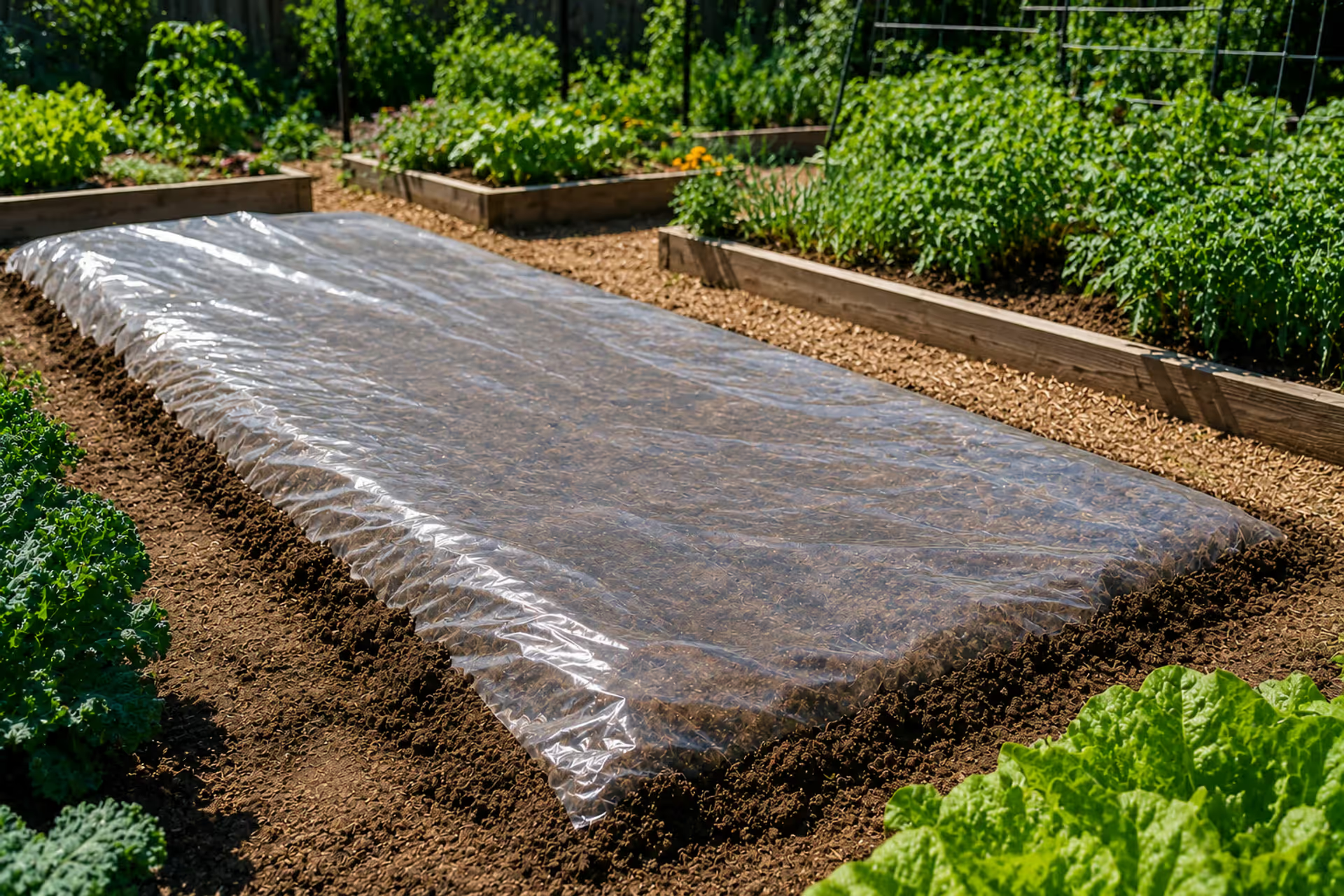
Soil solarization uses summer heat to sterilize garden beds naturally. This guide covers the complete process, from choosing materials and timing to avoiding common mistakes. Learn what pests it kills, how long it takes, and whether it works in your climate zone.
Transform your yard into an eco-friendly landscape that works with nature instead of against it. Discover native plants, water-saving techniques, organic care methods, and wildlife habitat features that reduce environmental impact while cutting maintenance costs by up to 60%.
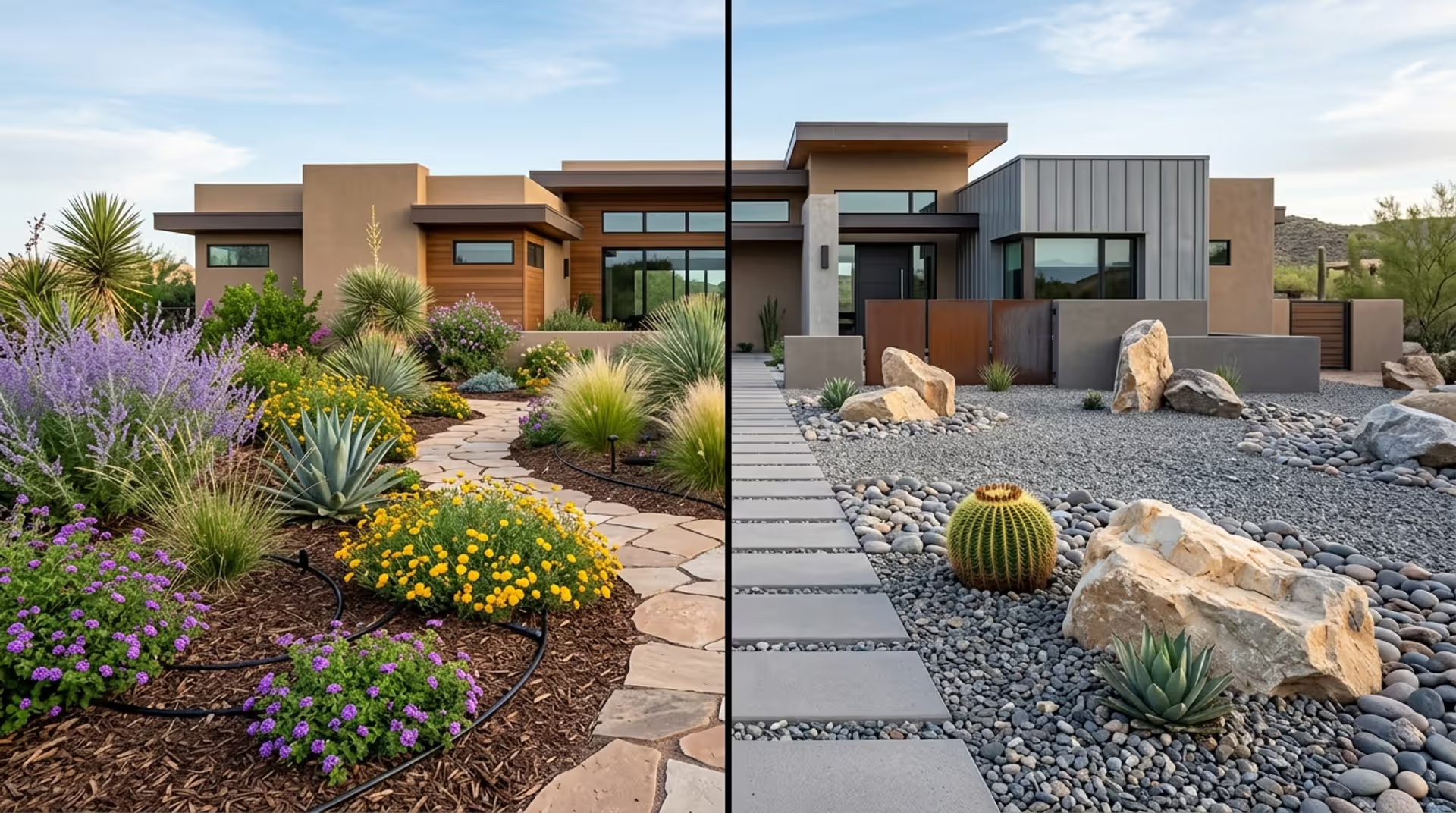
Zeroscape and xeriscape sound similar but represent very different approaches to water-wise landscaping. Learn the key differences in water usage, maintenance, costs, and aesthetics to decide which method works best for your climate, budget, and lifestyle.
The content on this website is provided for general informational and educational purposes only. It is intended to explain concepts related to landscape design, outdoor spaces, plants, irrigation, hardscape and softscape, and sustainable landscaping.
All information on this website, including articles, guides, and examples, is presented for general educational purposes. Outcomes may vary depending on local climate, soil, plant selection, and project implementation.
This website does not provide professional design, construction, or horticultural advice, and the information presented should not be used as a substitute for consultation with qualified landscape architects, contractors, or horticulturists.
The website and its authors are not responsible for any errors or omissions, or for any outcomes resulting from decisions made based on the information provided on this website.