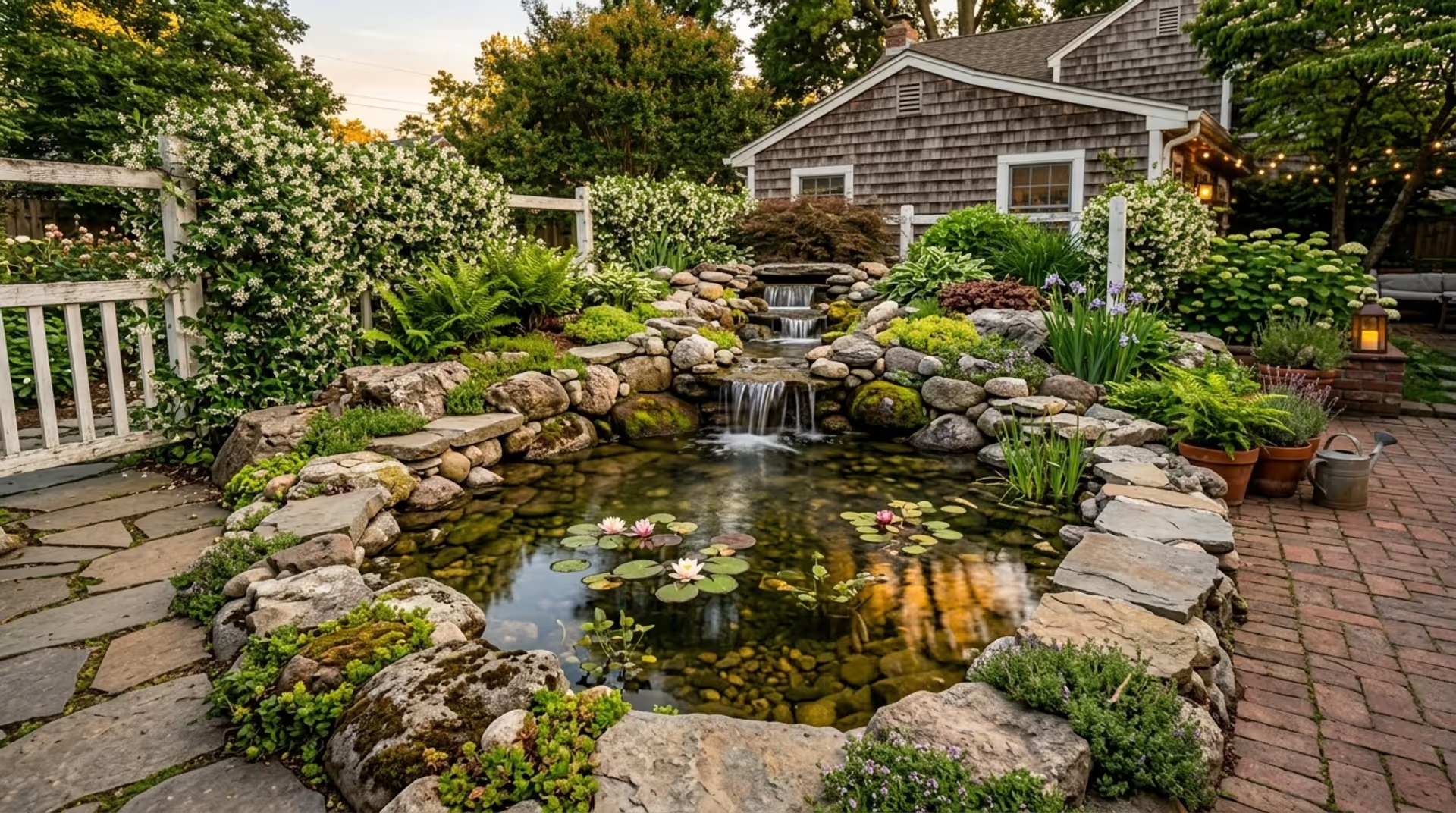
Water features transform ordinary yards into living landscapes. They add movement, sound, and a focal point that draws the eye and calms the mind. But building one isn't as simple as digging a hole and adding water. You'll need to understand your options, plan carefully, and execute with precision. Skip steps, and you're looking at leaks, algae blooms, or a pump that burns out in six months.
The good news? With the right approach, water feature construction becomes manageable—even for ambitious DIYers. This comprehensive guide covers everything from initial planning through long-term maintenance.
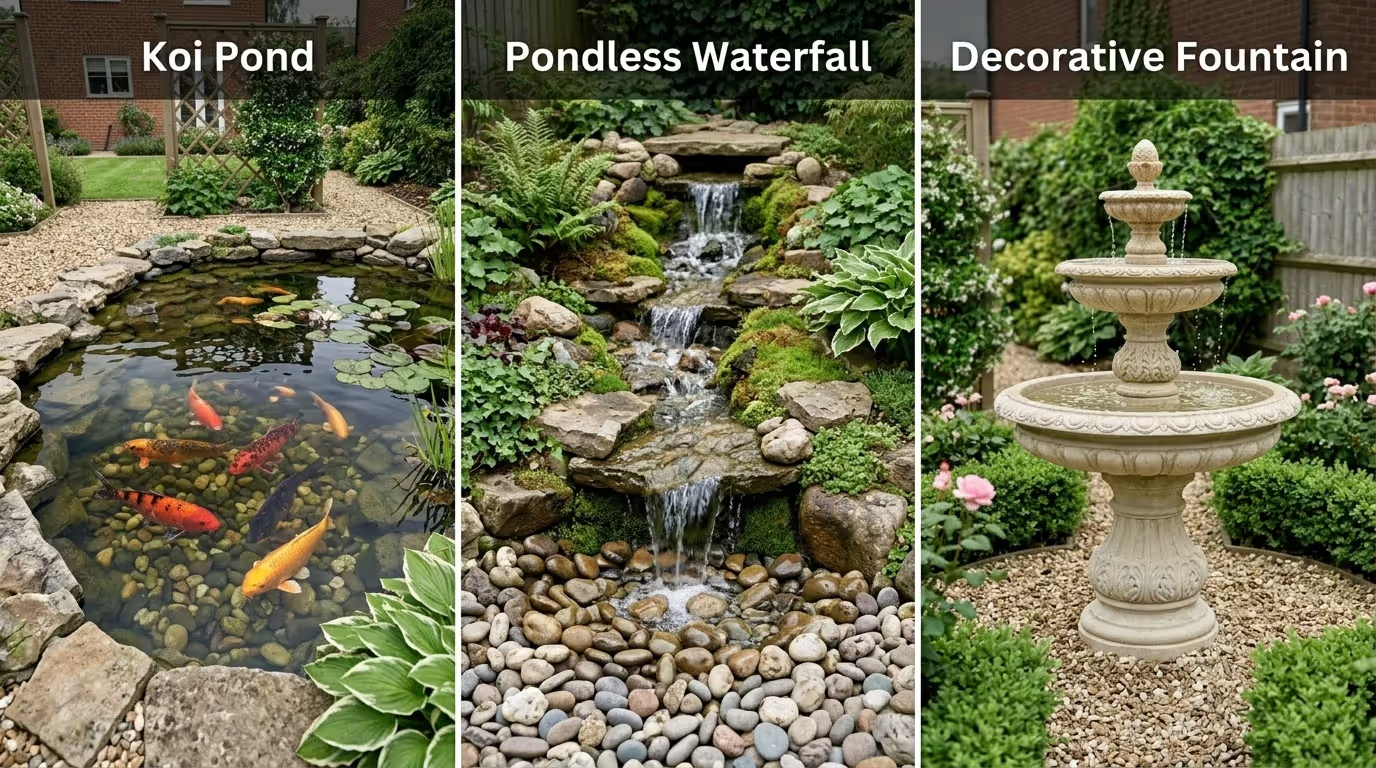
Types of Water Features for Your Property
Not all water features serve the same purpose. Some create drama. Others offer tranquility. Your choice depends on space, budget, and what you want from your landscape.
Ponds and Koi Pond Systems
Traditional ponds are the workhorses of water gardens. They range from small preformed shells to expansive custom-dug basins. A basic garden pond holds plants and maybe a few goldfish. Koi pond design takes things further—these systems need deeper water (at least 3 feet), robust filtration, and careful attention to water quality.
Koi are demanding. They produce more waste than goldfish, grow large, and live for decades. Your filtration system needs to handle the bioload, which means mechanical filters to catch debris and biological filters to process ammonia and nitrites. Most koi ponds also include bottom drains, skimmers, and UV clarifiers.
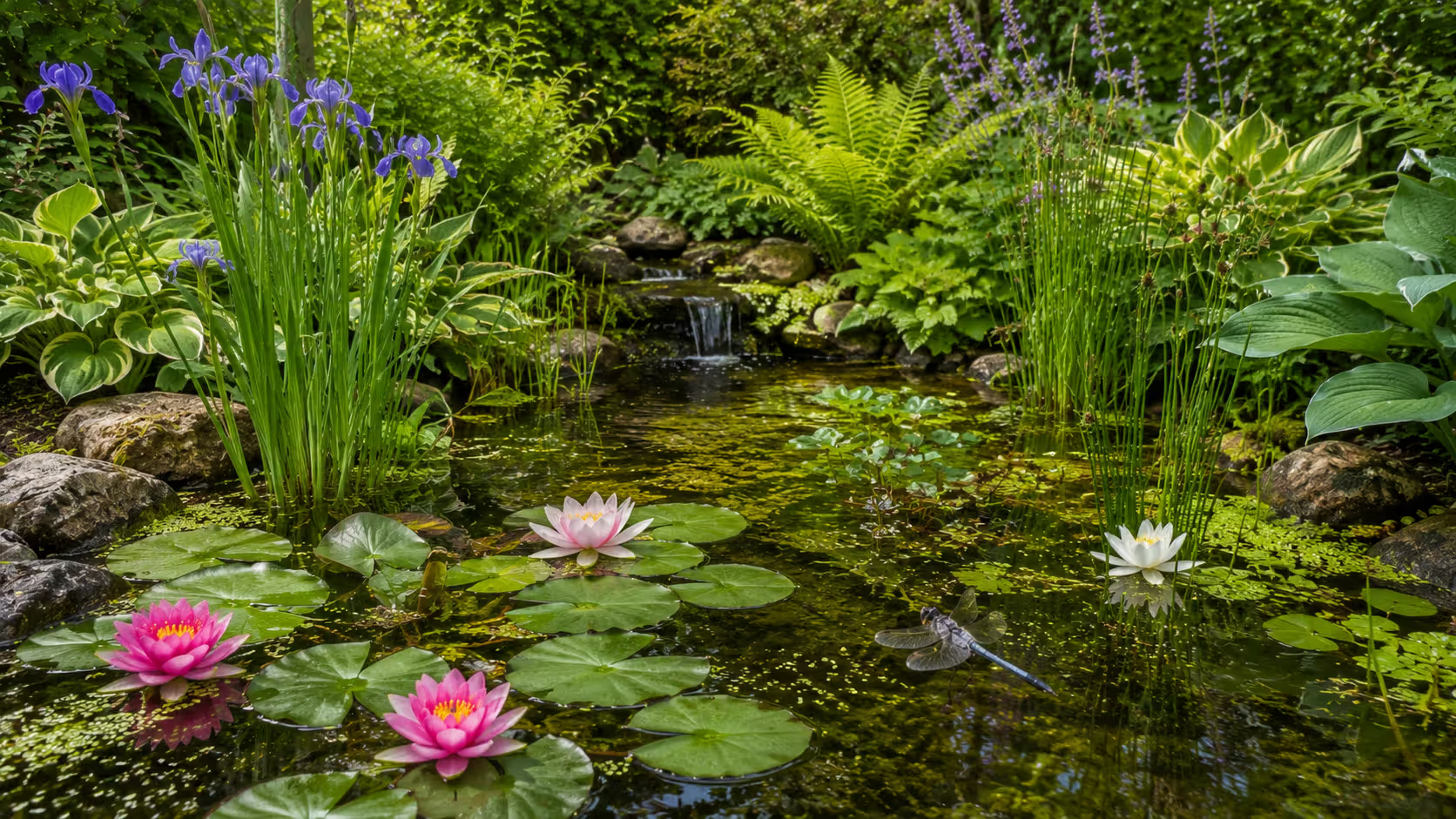
If you're not ready for that level of commitment, a simple wildlife pond works beautifully. Shallow edges, native plants, and minimal intervention create habitat for frogs, dragonflies, and birds.
Waterfall and Pondless Waterfall Options
Waterfalls add vertical interest and sound. Traditional waterfalls connect to a pond, creating a complete ecosystem. Water cascades down rocks, returns to the pond, and gets pumped back up. The pattern I see most often is homeowners underestimating the water flow needed—a trickle looks disappointing. You want enough volume to create white water over the rocks.
Pondless waterfall features solve several problems at once. Water disappears into a gravel-filled basin underground, eliminating the open water that worries parents of small children. Maintenance drops because there's no pond to clean. And you can install them in tighter spaces.
The trade-off? No fish. No water lilies. Just the sight and sound of falling water.
Fountains and Stream Features
Fountains range from simple bubbling urns to elaborate tiered designs. They're the easiest water features to install—many require nothing more than a small reservoir, pump, and decorative element. Fountain garden design works well in formal settings or small courtyards where a pond would overwhelm the space.
Stream garden features mimic natural waterways. They work best on sloped properties where gravity helps move water downhill. A well-designed stream meanders through the landscape, widening and narrowing, with small pools and riffles. Building one requires more rock work and careful grading than a simple pond, but the result looks organic.
Author: Olivia Maren;
Source: cribbslandscaping.com
Planning Your Water Feature Project
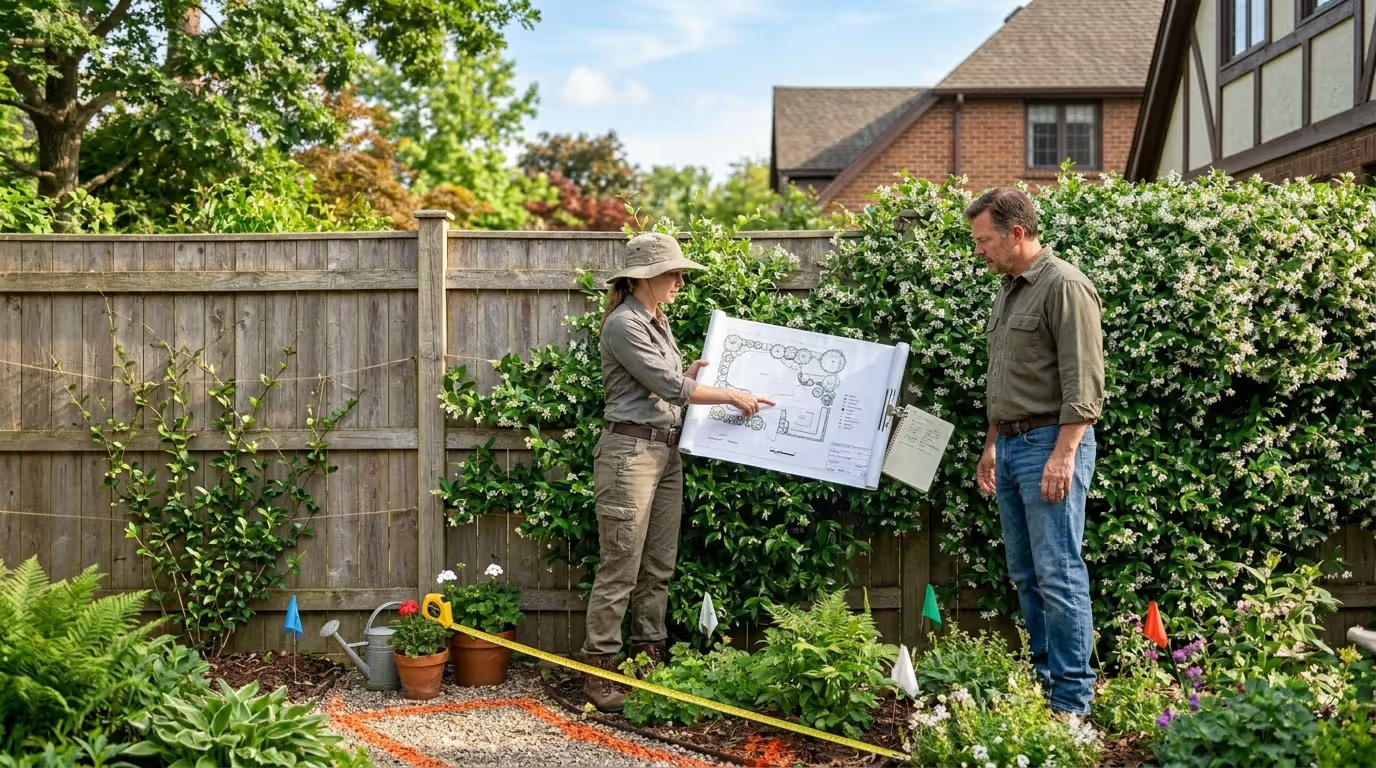
Proper planning prevents most construction headaches. Start here, not with a shovel.
First, assess your site. Observe your yard throughout different hours—morning, afternoon, and evening. Notice low spots where rainfall tends to pool. Identify which sections receive continuous sunlight compared to shaded areas. Most aquatic plants thrive with 4-6 hours of direct sunlight, though excessive sun in hot climates accelerates algae growth and evaporation.
Check for underground utilities before you dig. One call to 811 gets utilities marked for free. Hitting a gas line or electrical cable turns your project into a disaster.
Budget honestly. A small DIY pond might cost $500-1,500 in materials. A professional koi pond installation easily runs $10,000-30,000 or more. Backyard waterfall ideas often sound simple until you price out pumps, liners, and rocks—then costs climb fast.
Permits vary by location. Many municipalities don't require permits for small decorative ponds, but anything over a certain depth or size might trigger requirements. Fencing rules apply if the water is more than 18-24 inches deep in some jurisdictions. Contact your municipal planning office during the early planning stages to understand local requirements.
Climate matters more than people realize. If you're in a freeze zone, you'll need to plan for winter. Shallow ponds can freeze solid, killing fish and cracking liners. Pumps left running in ice can burn out. You'll either need depth (at least 18 inches below the frost line for fish survival) or a plan to drain and winterize.
Author: Olivia Maren;
Source: cribbslandscaping.com
Design Considerations Before Construction
Good design makes construction easier and the final result more satisfying.
Scale appropriately. A tiny pond in a sprawling yard looks lost. An oversized feature in a small space dominates everything. A general rule: your water feature should occupy roughly 2-5% of your visible landscape area. But this varies depending on whether it's a focal point or accent.
Match your landscape style. Natural swimming pond designs with irregular shapes and planted edges suit informal, naturalistic gardens. Formal fountains with geometric lines belong in structured landscapes. Fighting your existing style creates visual tension.
Water circulation keeps everything healthy. Stagnant water breeds mosquitoes and turns murky. Proper pump sizing means turning over your pond's complete water volume every one to two hours. For example, a 1,000-gallon installation requires a pump with at least 500-1,000 GPH capacity.
Filtration requirements scale with your ambitions. A simple plant-heavy pond might need nothing more than a small pump and some mechanical filtration. A pond design guide for koi will specify multi-chamber filter systems with biological media, UV sterilizers, and regular backflushing schedules.
Lighting extends enjoyment into evening hours. Submersible LED fixtures highlight waterfalls and underwater features. Uplights on surrounding plants create depth. Most systems now run on low-voltage transformers for safety around water.
Sound preferences are personal. Some people want a gentle trickle. Others prefer a rushing cascade. The height of your waterfall and the volume of water flow determine the sound level. You can adjust this with valve controls on your pump line.
Construction Process and Installation Steps
Now we get to the actual building. Take your time here. Rushing leads to mistakes that are expensive to fix later.
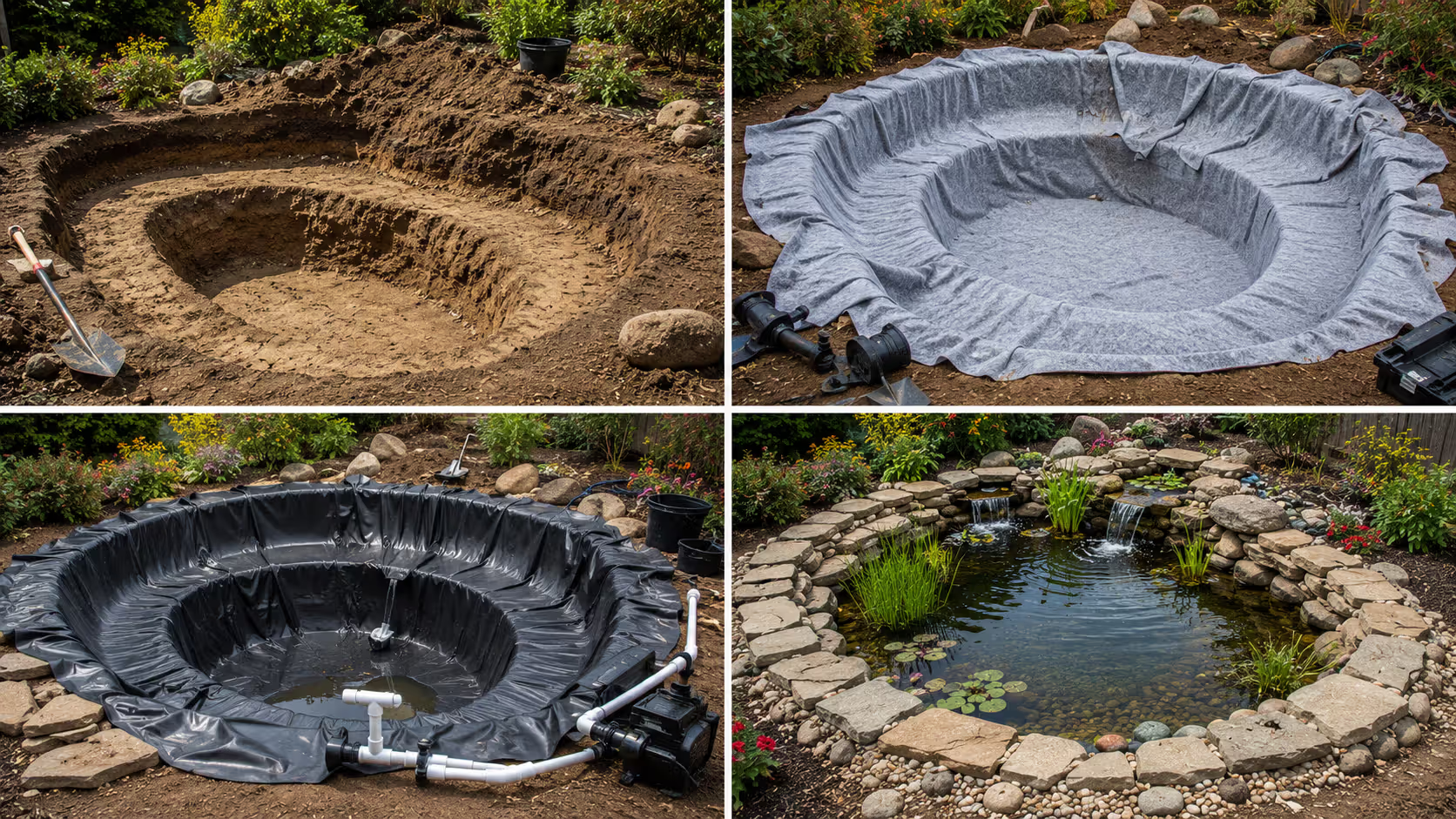
Excavation comes first. Mark your outline with spray paint or a garden hose. Dig to your planned depth, creating shelves at different levels for plants. Pond edges should slope gently—vertical walls can collapse. Remove rocks, roots, and anything sharp that might puncture your liner.
Check level constantly. A pond that's off-level looks wrong and causes water to pool on one side. Use a long straight board and a level, checking multiple directions.
Liner installation requires care. Most builders use EPDM rubber liners (45-60 mil thickness) for durability. Underlayment fabric goes down first to protect against punctures. Lay the liner loosely, letting it conform to the contours. Don't pull it tight—you need slack for settling.
Fold corners neatly rather than cutting. Overlap edges by at least 12 inches beyond the waterline. You'll trim excess later, but leave plenty while you work.
Plumbing and pumps connect everything. Your pump sits in the deepest part of the pond (or in a separate pump chamber for koi ponds). Flexible PVC tubing runs from the pump to your waterfall or filter. Use check valves to prevent backflow and ball valves to control flow rate.
Size your pump correctly. For waterfalls, plan on approximately 100 GPH for each inch of spillway width. An 18-inch-wide waterfall needs roughly 1,800 GPH minimum. Increase this calculation by 25% when water must climb higher than 3-4 feet vertically.
Rock and edging placement makes or breaks the natural look. Flat rocks stacked like pancakes scream "artificial." Instead, vary sizes, bury the bottom third of each rock, and tilt them at different angles. Larger rocks go at the base. Smaller ones fill gaps.
For waterfall construction, create a slight backward tilt on spillway rocks so water doesn't seep underneath. Waterfall foam (black expanding foam) seals gaps and directs water where you want it.
Edge rocks should overhang the liner by 1-2 inches, hiding it completely. Nothing ruins the effect faster than visible black rubber.
Electrical work must meet code. GFCI protection is mandatory for outdoor water features. Most pumps run on standard 120V, but larger systems might need 240V. If you're not comfortable with electrical, hire this part out. Water and electricity don't forgive mistakes.
Bury conduit at proper depth (usually 18 inches minimum) and use waterproof junction boxes. Plan for future needs—running an extra line now is easier than digging later.
Testing happens before you finish the edging. Fill the pond and run the system for 24-48 hours. Check for leaks, listen for unusual pump sounds, and verify water flow. It's much easier to adjust now than after you've mortared in the capstones.
Author: Olivia Maren;
Source: cribbslandscaping.com
Plant Selection and Landscaping Integration
Plants turn a hole with water into a living ecosystem. They filter nutrients, produce oxygen, and provide habitat.
Aquatic plants fall into categories based on where they grow. Deep water plants like water lilies root in pots 12-18 inches underwater, with leaves floating on the surface. They shade the water, reducing algae. One lily covers about 10-12 square feet of surface.
Marginal plants grow in shallow water along pond edges—typically 0-6 inches deep. Cattails, iris, and pickerel rush fit here. These species create a gradual visual shift from aquatic to terrestrial zones.
Submerged plants stay underwater, acting as natural filters. Anacharis and hornwort are common choices. They compete with algae for nutrients.
Floating plants like water hyacinth and water lettuce need no soil. They multiply quickly (sometimes too quickly) and provide shade. In warm climates, they can become invasive—check local regulations.
Water feature plants need the right depth. Most marginals die if planted too deep. Water lilies won't bloom if too shallow. Use aquatic planting baskets filled with heavy clay soil, not potting mix (which floats).
Around the pond, choose plants that tolerate moisture. Ferns, hostas, astilbe, and ligularia thrive in the humid microclimate near water. Avoid plants that drop excessive leaves or flowers into the water—decomposition consumes oxygen and creates muck.
Seasonal considerations matter. Hardy water lilies die back in winter and return in spring. Tropical varieties must be treated as annuals in cold climates or brought indoors. Plant in late spring after water temperatures stabilize above 60°F.
Author: Olivia Maren;
Source: cribbslandscaping.com
Cost Factors and Budgeting
Let's talk numbers. Water feature construction costs vary wildly based on type, size, and who does the work.
Material costs for a basic DIY pond:
Liner and underlayment: $200-600
Pump: $100-400
Rocks and gravel: $200-800
Plants: $50-200
Plumbing and electrical: $100-300
Total: $650-2,300 for a modest 8x10 pond.
Professional installation multiplies this. Labor typically equals or exceeds materials. A contractor-built pond of the same size runs $3,000-7,000.
Different garden water feature types carry different price tags. Pondless waterfalls cost less than ponds (no excavation for a large basin, less liner). Fountains are cheapest—a bubbling urn setup might cost $300-800 DIY, $1,500-3,000 installed.
Koi pond design demands premium components. Serious systems include:
Bottom drains: $200-500
Multi-chamber filtration: $500-3,000
UV clarifiers: $200-800
Air pumps and diffusers: $100-400
A proper koi pond rarely costs less than $8,000-15,000 professionally installed.
Ongoing maintenance costs include:
Electricity for pumps: $10-50/month depending on pump size
Water (evaporation replacement): $5-20/month
Fish food: $10-30/month for koi
Beneficial bacteria and water treatments: $15-40/month
Filter media replacement: $50-200/year
Hidden expenses catch people off guard. You'll need a net for leaves. A pond vacuum for cleaning. Replacement parts when pumps fail. Test kits for water quality. These add up to several hundred dollars in the first year.
The simpler option usually wins here. A low-maintenance pondless waterfall costs less to build and run than an elaborate koi pond.
Water Feature Type
Average Cost Range
Maintenance Level
Installation Difficulty
Space Requirements
Best Use Case
Garden Pond
$1,500-$7,000
Moderate
Moderate
100-400 sq ft
Wildlife habitat, aquatic plants, small fish
Koi Pond
$8,000-$30,000+
High
Advanced
200-800+ sq ft
Serious fish keeping, showcase feature
Pondless Waterfall
$2,500-$8,000
Low
Moderate
50-150 sq ft
Child-safe, low maintenance, small yards
Fountain
$500-$4,000
Low
Easy
10-50 sq ft
Formal gardens, patios, tight spaces
Stream Feature
$3,000-$12,000
Moderate
Advanced
100-500 sq ft
Sloped properties, naturalistic landscapes
The biggest mistake I see is clients who skip the planning phase and jump straight to construction. They don't consider sun exposure, drainage patterns, or how the feature integrates with their existing landscape. Then they're surprised when they have algae problems, or the waterfall looks out of place, or they're spending hours every week on maintenance they didn't anticipate. Proper site assessment and realistic expectation-setting prevent 90% of the issues that come up later.
— Michael Chen, Landscape Architect
Maintenance Requirements and Common Mistakes
Water features need regular attention. Not daily, but you can't ignore them.
Seasonal maintenance follows a pattern. Spring means cleaning out debris that accumulated over winter, dividing overgrown plants, and restarting pumps. Check for winter damage to liners or rocks.
Summer requires monitoring water levels (evaporation accelerates) and watching for algae blooms. String algae grows in warm weather, especially if nutrient levels are high. Remove it manually or use beneficial bacteria to outcompete it.
Fall means netting the pond to catch leaves. Decomposing leaves release tannins and consume oxygen. A net saves hours of skimming and prevents muck buildup.
Winter preparation depends on your climate. In mild areas, keep pumps running to maintain oxygen for fish. In freeze zones, you have choices: remove pumps and use a pond heater or bubbler to maintain a hole in the ice, or drain the pond completely if you don't have fish.
Water quality management centers on the nitrogen cycle. Waste from fish and decomposing organic matter creates ammonia in the water. Helpful bacterial colonies then transform ammonia into nitrites, followed by conversion to nitrates. Aquatic plants then absorb these nitrates as nutrients. The system balances itself if you don't overstock fish or overfeed.
Test kits monitor ammonia, nitrites, nitrates, and pH. New ponds take 4-6 weeks to establish bacterial colonies. During this period, water quality swings wildly. Patience matters.
Pump and filter care extends equipment life. During active growing season, rinse mechanical filters every 7-10 days. Rinse biological media in pond water, never tap water (chlorine kills beneficial bacteria). Inspect pump intakes monthly for clogs.
Pumps should run 24/7 during warm months. Turning them off at night saves a few dollars but stresses fish by reducing oxygen levels.
Common mistakes I see repeatedly:
Building too small. People underestimate how much water volume they want. A 6x8 pond looks tiny once installed. Go bigger than your first instinct.
Inadequate filtration for fish loads. One koi produces waste equivalent to several goldfish. Undersized filters can't keep up, leading to cloudy water and sick fish.
Poor rock placement that creates dead zones where debris accumulates. Water should circulate through the entire pond, not just the area near the pump.
Forgetting about predators. Herons, raccoons, and neighborhood cats all see your pond as a buffet. Physical barriers like netting, visual deterrents such as decoys, or automated sprinklers triggered by motion sensors provide protection for your fish.
Using the wrong soil in plant baskets. Potting mix floats and clouds the water. Heavy clay soil or aquatic planting media works properly.
Not planning for electricity. Running an extension cord to your pond is temporary at best, dangerous at worst. Install proper outdoor outlets during construction.
Overfeeding fish. They don't need much. Uneaten food rots, spiking ammonia levels. Feed only what they consume in 2-3 minutes, once daily.
FAQ: Water Feature Construction Questions Answered
Can I build a water feature myself?
Yes, many homeowners successfully build small ponds, fountains, and pondless waterfalls. However, larger projects with electrical systems, complex plumbing, and advanced filtration are often best handled by experienced professionals to ensure long-term performance and safety.
How deep should a koi pond be?
A koi pond should be at least 3 feet deep, though 4 to 6 feet is often recommended in colder climates. Greater depth provides more stable water temperatures and better protection from predators.
Do water features attract mosquitoes?
Properly designed water features with continuous circulation do not usually attract mosquitoes. Mosquitoes prefer stagnant water. Pumps, waterfalls, and fountains keep the water moving, which prevents mosquito larvae from developing.
How much does it cost to build a backyard water feature?
The cost depends on the size and complexity of the project. A small DIY fountain may cost $500–$1,500, while a professionally installed garden pond typically ranges from $3,000 to $7,000. Large koi ponds with advanced filtration systems often cost $10,000 to $30,000 or more.
What is the easiest water feature to maintain?
A pondless waterfall is usually the lowest-maintenance option. Because there is no standing pond, there are fewer issues with algae, fish care, and debris accumulation. It still provides the sound and visual appeal of moving water without the upkeep of a traditional pond.
A thoughtfully designed water feature adds far more than visual beauty to your landscape. It introduces movement, soothing sound, and a sense of calm that transforms an ordinary yard into a more inviting and enjoyable outdoor space. Whether you choose a simple fountain, a pondless waterfall, or a fully integrated koi pond, success depends on careful planning, quality materials, and realistic expectations.
Start by selecting a feature that fits your available space, maintenance preferences, and budget. Pay close attention to drainage, filtration, and long-term upkeep. When built correctly, a water feature becomes a lasting centerpiece that enhances your property and creates a peaceful retreat you can enjoy for many years.
Discover practical exterior walkout basement ideas including patio layouts, landscaping solutions, and drainage strategies. Learn how to turn your below-grade outdoor space into a functional, attractive area with expert tips on materials, plantings, and design.
Transform your rooftop into a functional outdoor living space. Learn about structural requirements, weight limits, flooring options, wind-resistant furniture, container gardening, and design layouts for rooftops of all sizes.
Discover how to fit a functional half circle driveway into a compact front yard. This guide covers layout planning, material selection, landscaping strategies, common mistakes to avoid, and realistic cost estimates for creating an attractive semicircular driveway that improves traffic flow and curb appeal.
Discover practical stock tank pool deck ideas for small backyards. Learn how to build DIY decking, choose materials, add landscaping, and create privacy screens around your galvanized tank pool with expert installation tips and budget-friendly designs.
The content on this website is provided for general informational and educational purposes only. It is intended to explain concepts related to landscape design, outdoor spaces, plants, irrigation, hardscape and softscape, and sustainable landscaping.
All information on this website, including articles, guides, and examples, is presented for general educational purposes. Outcomes may vary depending on local climate, soil, plant selection, and project implementation.
This website does not provide professional design, construction, or horticultural advice, and the information presented should not be used as a substitute for consultation with qualified landscape architects, contractors, or horticulturists.
The website and its authors are not responsible for any errors or omissions, or for any outcomes resulting from decisions made based on the information provided on this website.