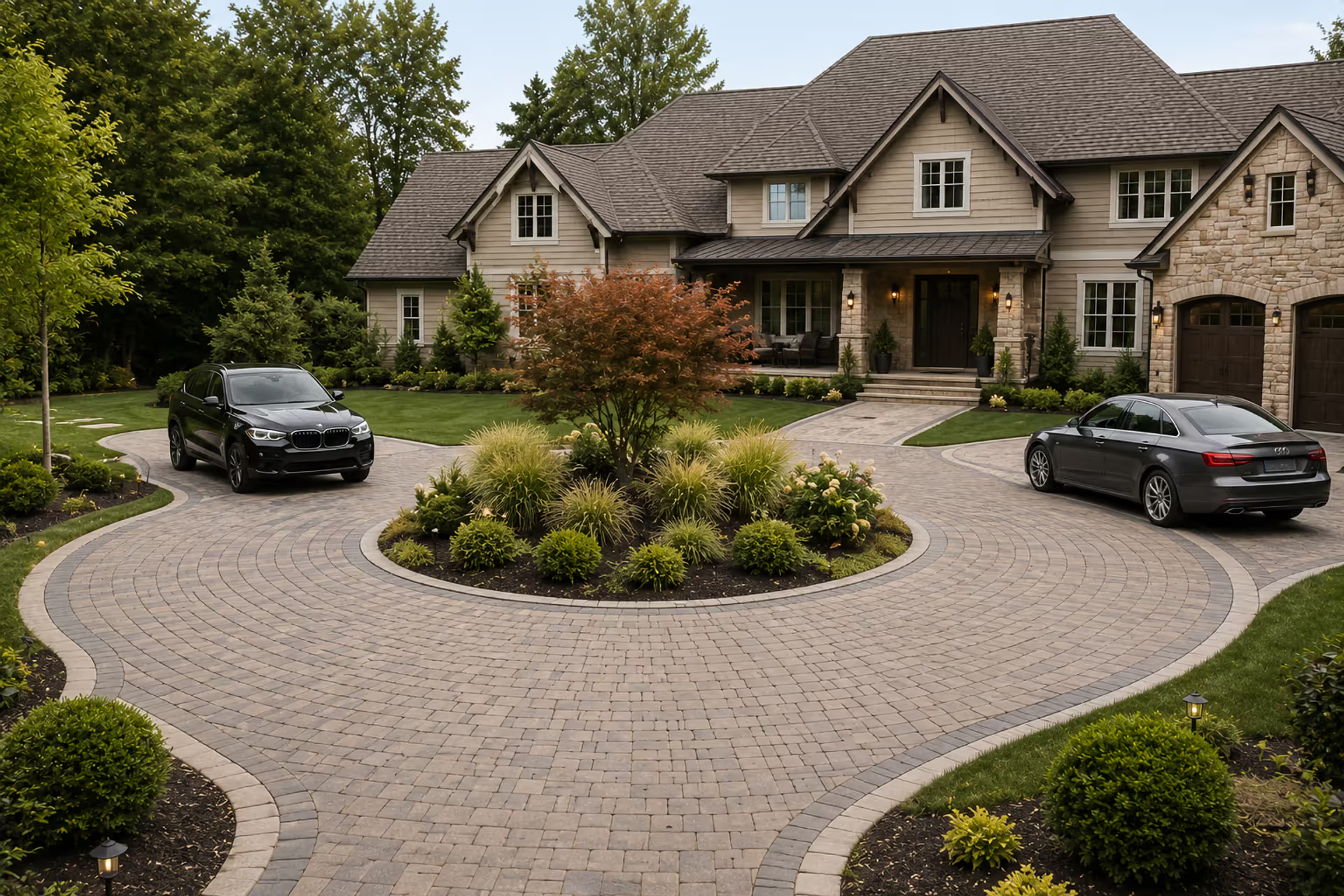
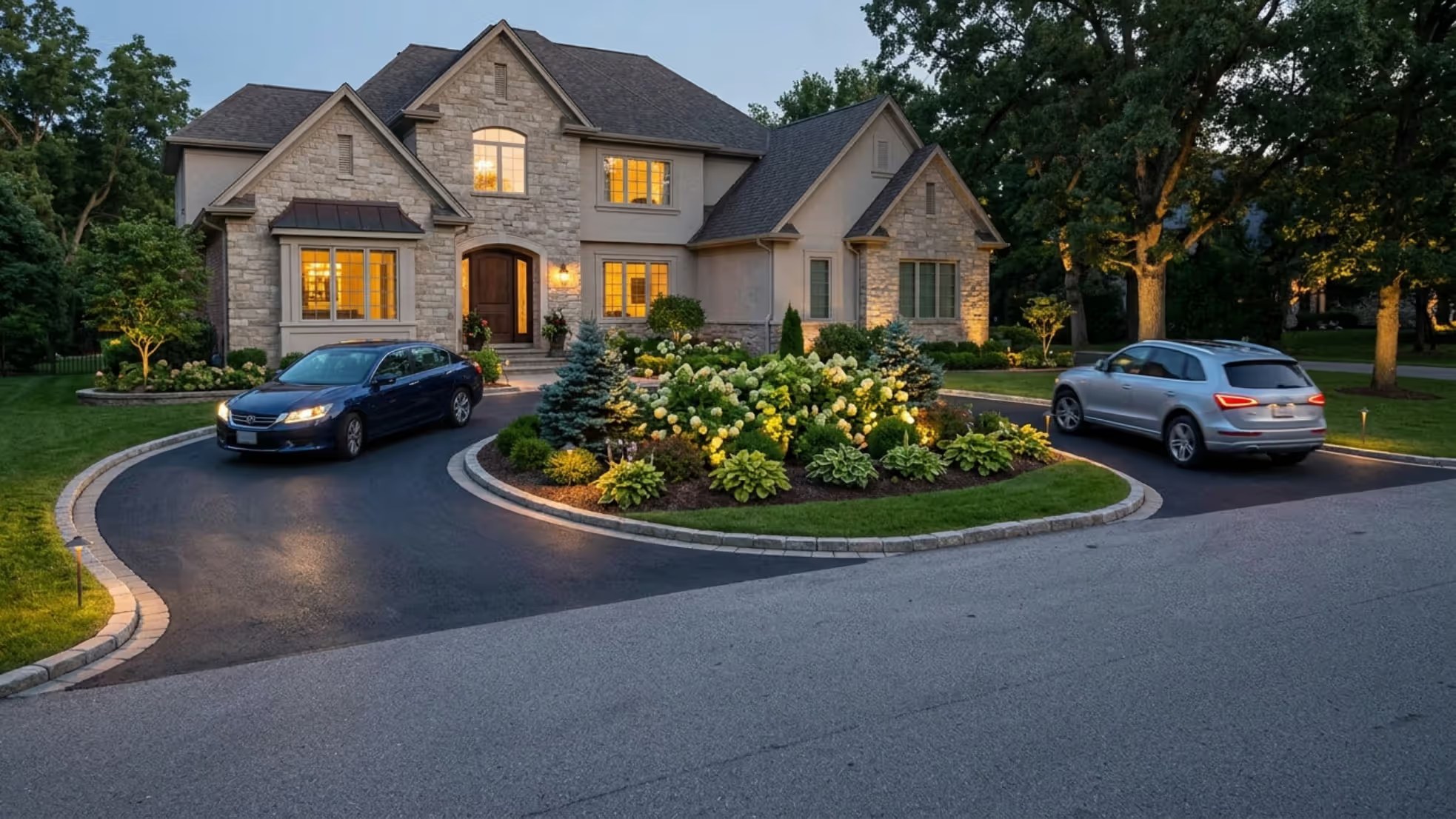
Got a cramped front yard and tired of backing into traffic every morning? A semicircular driveway might sound like a luxury reserved for sprawling estates, but here's the thing—when you nail the dimensions and layout, even a modest suburban lot can handle one. You'll stop playing automotive Tetris every time someone visits, and your property value gets a boost too.
Why Half Circle Driveways Work for Compact Spaces
My neighbor has a standard straight driveway. Every single morning, she reverses blindly onto our busy street while checking her phone and hoping for the best. Her guests park in a line like train cars—first one in becomes the last one out. Meanwhile, the house three doors down installed a horseshoe layout two years ago, and their morning routine looks completely different.
That semicircle driveway layout solves the backing-out problem instantly. You've got two street connections, so departure always means pulling forward. Zero blind reversing. Zero coordination required when multiple vehicles need to leave.
The appearance shift catches people off guard. Straight driveways tunnel your vision directly to the garage door—not exactly inspiring. A curve pulls your gaze sideways across the property. Narrow lots suddenly read wider because your eye travels the arc instead of hitting a dead end. The landscaping gets framed properly instead of being squeezed into leftover corners.
Here's what changes practically:
UPS trucks actually loop through instead of tearing up your lawn during three-point turns
Two cars can come and go independently without coordination
Your snow plow guy charges less because he's not constantly reversing
Ambulances and fire trucks get straight-through access
That center island creates parking area landscaping possibilities you didn't have before. Instead of staring at a concrete rectangle, you're looking at a garden feature that becomes your property's signature element.
What surprises most homeowners? The daily convenience factor outweighs the curb appeal benefits. Sure, it looks better—but the real win is never backing into traffic again.
Planning Your Semicircle Driveway Layout
Dimensions make or break this entire concept. Too tight and you're sawing the steering wheel back and forth. Too generous and you've paved your entire front yard.
Author: Marcus Eldridge;
Source: cribbslandscaping.com
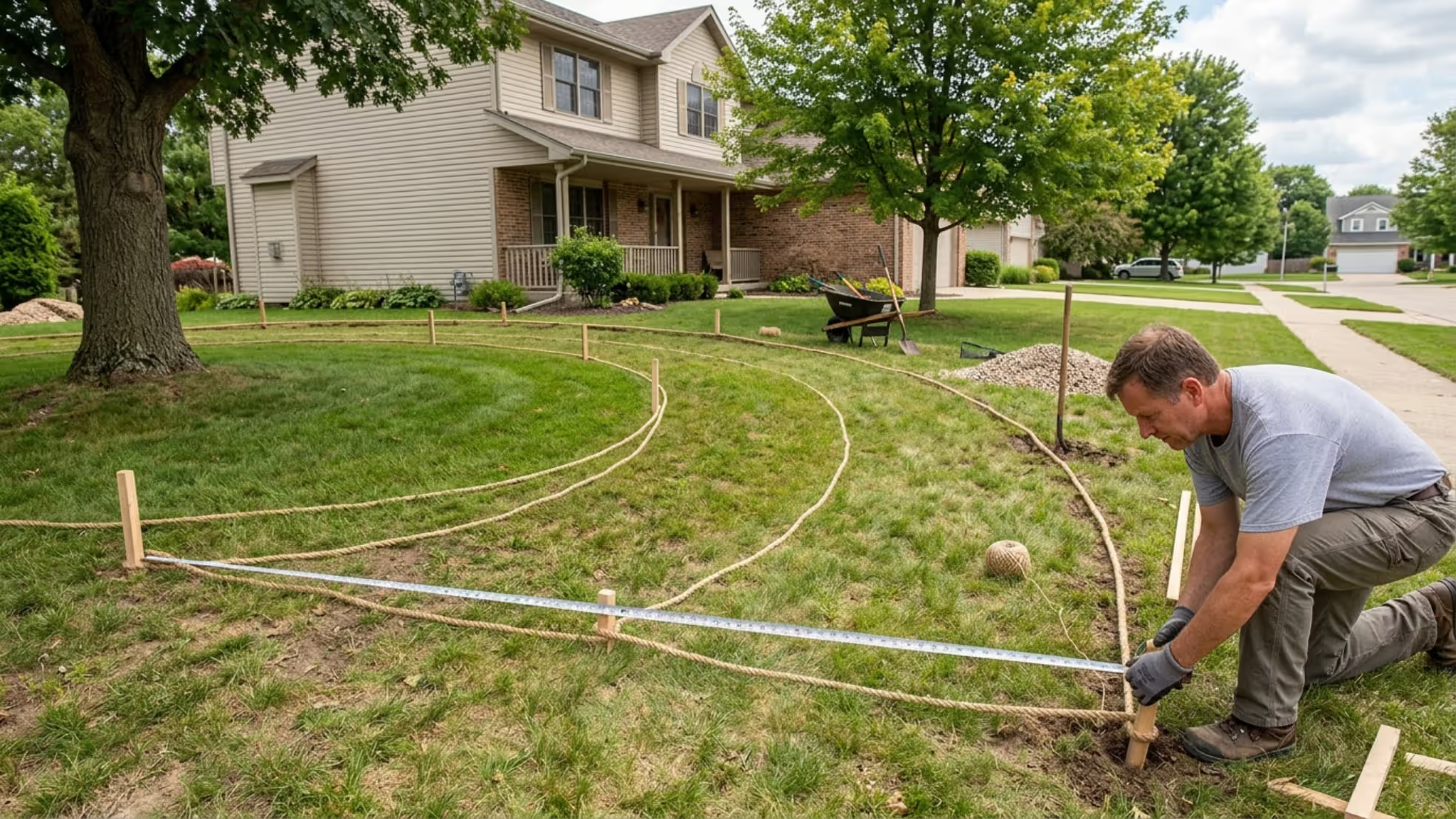
Measuring Your Available Space
Grab a measuring tape and check your street frontage first. You're looking for 35 feet minimum—anything less forces uncomfortably sharp turns that scrape bumpers and stress suspensions. Sweet spot? Somewhere between 40 and 50 feet gives you breathing room for proper curves and landscaping.
Now measure front to back. Street edge to wherever your driveway needs to terminate—garage, parking pad, whatever. Most functional circular driveway design needs 20 to 30 feet of depth. Shallower than that and you're basically creating a wide U-turn instead of a proper semicircle.
Your measurement checklist:
Frontage: 35 feet bare minimum, 40-50 feels right
Front-to-back depth: 20-30 feet depending on lot configuration
Lane width: 10-12 feet handles one vehicle, 18-20 accommodates passing
Island diameter: 12-20 feet works for typical residential scales
Setback rules will steal some of this space. Your municipality probably requires specific clearances from property lines, underground utilities, and sidewalks. A quick call to the planning department saves you from expensive redesigns later.
Entry and Exit Angle Considerations
Where your horseshoe driveway ideas meet the street determines whether drivers navigate smoothly or curse your name daily. Angles matter more than most people realize.
Target entry angles between 30 and 45 degrees relative to the street. This range accommodates everything from compact sedans to full-size pickups without requiring Formula 1 driving skills. Steeper than 45 degrees and you're asking people to make uncomfortably sharp turns. Gentler than 30 and you're wasting yard space on unnecessary pavement.
Turnaround radius deserves serious attention. Standard passenger vehicles handle a 15-foot radius comfortably. Drive an SUV or truck regularly? Bump that to 18 feet minimum. When Amazon shows up in their oversized delivery van, they'll appreciate 20+ feet.
Property lines often force compromises—you can't always hit ideal numbers. When space gets tight, prioritize the exit angle. People tolerate a slightly awkward entrance way better than struggling to exit into traffic while checking blind spots.
I've watched homeowners try to shoehorn semicircular driveways into lots that simply don't have the dimensions. They convince themselves it'll work, then regret it immediately. Five extra feet of frontage represents the difference between elegant and cramped. If your lot genuinely can't accommodate proper turning radiuses, a well-landscaped straight driveway with a turnaround bulb often serves you better than a forced curve that never feels right.
— Mitchell Sarah
Material and Paver Options for Curved Driveways
Curves stress materials differently than straight sections. Some products bend willingly. Others crack, shift, or look terrible when forced into arcs.
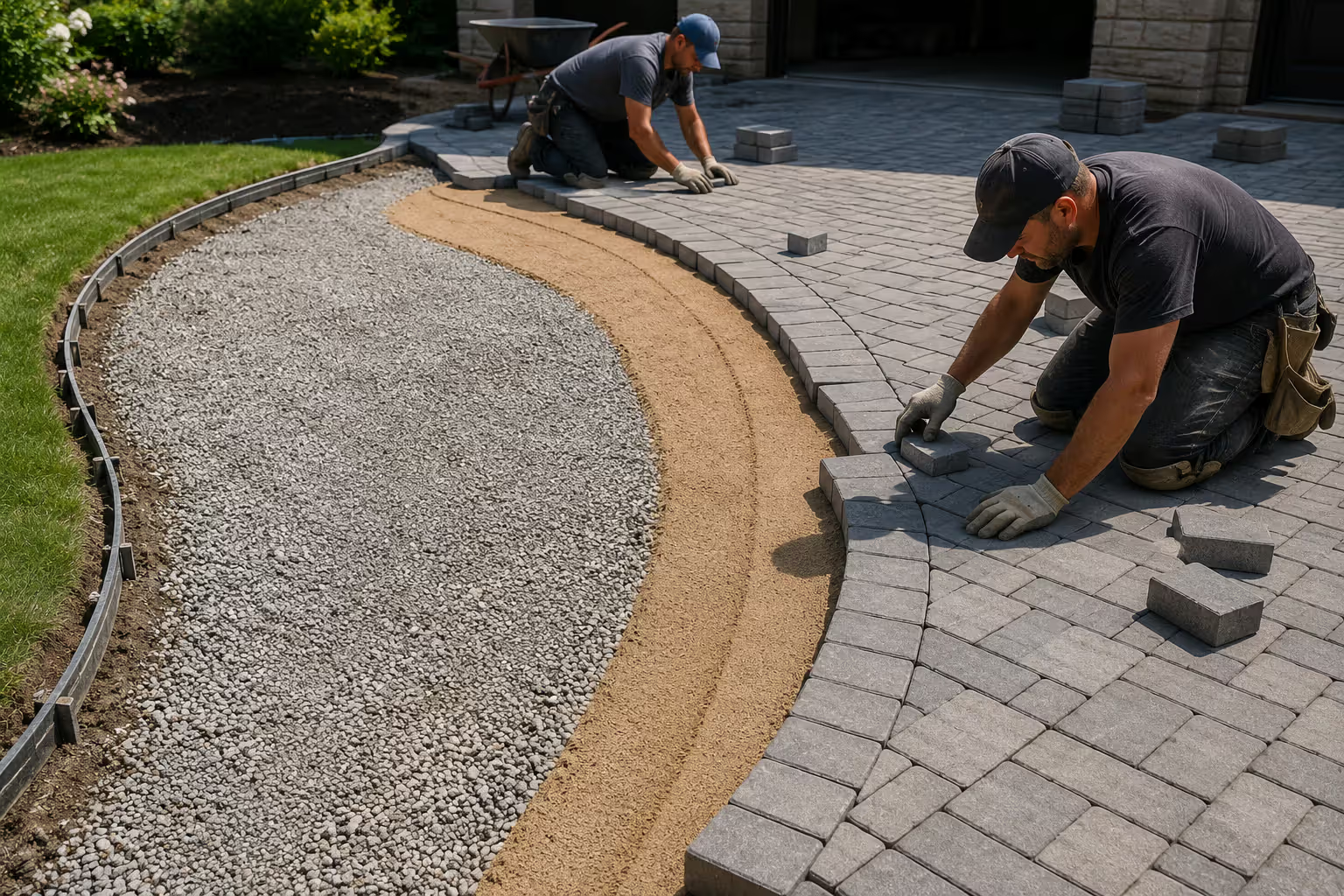
Individual pavers dominate curved applications for good reason. Each unit follows any radius you design without cutting waste or fighting the material's natural properties. Brick pavers, concrete units, and natural stone all excel at front entrance pavers design because you maintain crisp edges while creating flowing patterns that emphasize the curve.
Asphalt tolerates gentle curves acceptably but hates tight radiuses. The material wants straight lines. Force it into sharp turns and you'll see cracking within two or three years as the base settles unevenly underneath. I've seen too many asphalt horseshoe driveways develop spiderweb cracks right at the tightest curve points.
Poured concrete works, technically, but curved formwork costs significantly more than straight. Your contractor needs to place expansion joints strategically to prevent cracking as temperatures shift. Unless budget absolutely demands concrete, pavers usually make more sense for curves.
Gravel offers the budget-friendliest path and conforms to any shape effortlessly. But expect constant battles with edge migration unless you install solid decorative driveway edging. Metal or heavy-duty plastic strips keep gravel contained and maintain the clean lines that separate intentional design from neglected driveway.
Author: Marcus Eldridge;
Source: cribbslandscaping.com
Material Comparison for Curved Driveway Applications
Casual aesthetic appropriate for informal settings
Installation complexity for curves adds 15-25% to labor costs compared with straight equivalents. Cutting pavers to fit radiuses takes time. Forming concrete curves demands experience and patience. Factor this into your budget from the start.
The best curve materials share one characteristic: they're composed of small, individual units. Pavers, brick, small stones—these adapt naturally to any radius without requiring special techniques or creating weak points.
Landscaping Ideas for Half Circle Driveways
The space your semicircle creates—both inside the curve and along its edges—represents prime front yard driveway landscaping real estate. Every visitor sees it. Every photo of your house includes it. Don't waste it on patchy grass and wishful thinking.
Center Island Garden Design
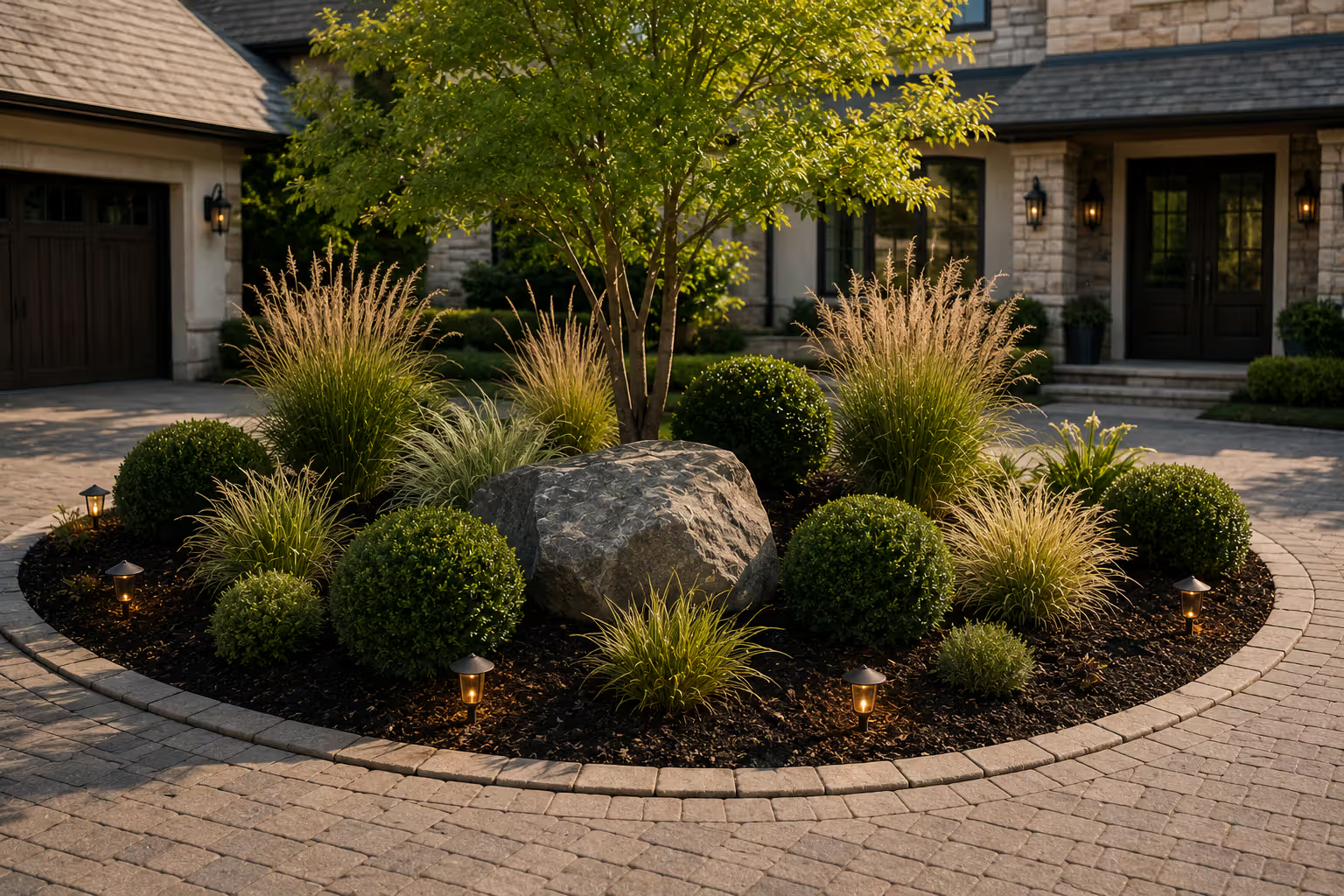
Your driveway island garden becomes the signature element everyone remembers. Make it count, but make it maintainable—you won't want to drag hoses across the pavement or spend Saturday afternoons weeding in the middle of traffic flow.
Low-effort plants deliver high impact. Choose specimens that thrive on benign neglect:
Ornamental grasses like 'Morning Light' maiden grass or 'Heavy Metal' switchgrass that move dramatically in wind
Compact evergreens such as 'Green Velvet' boxwood or 'Blue Star' juniper providing year-round structure
Regional native perennials already adapted to your rainfall and temperature swings
Spreading groundcovers like creeping thyme or sedum that choke out weeds naturally
Build height in layers. Taller elements—think 3-4 feet maximum—go toward the center. Graduate down to shorter plantings at 12-18 inches around the perimeter. This preserves sight lines for drivers while creating dimensional interest.
One focal point anchors everything. Maybe a sculptural Japanese maple, a substantial boulder with interesting texture, a compact fountain, or even a piece of garden art. Keep it proportional though—oversized elements overwhelm small islands and look ridiculous.
Lighting shouldn't be an afterthought you tackle later. Low-voltage LED uplights make key plants pop after sunset. Path lights ringing the island edge improve safety without glare. Solar options eliminate trenching and wiring headaches entirely.
Author: Marcus Eldridge;
Source: cribbslandscaping.com
Driveway Border and Strip Planting
That driveway landscape strip—the ribbon separating pavement from lawn—softens hard edges and injects seasonal color into an otherwise utilitarian space.
Width determines your plant palette. A skinny 12-inch strip limits you to groundcovers and compact perennials. Give yourself 24-36 inches and suddenly you can incorporate shrubs, ornamental grasses, and properly layered plantings.
Curved driveway planting should echo the arc, not fight it. Forget rigid, formal arrangements. Let plants drift and overlap naturally. Repeat three or four key species at intervals to create visual rhythm without monotony.
Seasonal interest keeps things fresh year-round:
Spring bulbs like daffodils and alliums for early punch
Summer bloomers—coneflowers, black-eyed Susans, daylilies—for mid-season color
Fall foliage plants like 'October Glory' red maple or burning bush for late-season drama
Evergreen structure from boxwood or holly carrying visual weight through winter
Mulch depth matters more along driveways than in typical garden beds. You need 3-4 inches to suppress weeds effectively and retain moisture. Replenish annually to maintain depth and keep everything looking fresh instead of tired.
Edging and Hardscape Accents
Clean edges separate professional results from amateur attempts. Quality decorative driveway edging defines boundaries crisply and prevents material migration that makes everything look sloppy within months.
Material choices range from subtle to statement-making:
Steel or aluminum strips for clean, contemporary lines that disappear visually
Brick or stone borders echoing traditional architecture
Concrete curbing offering durability and crisp definition
Belgian block for formal, upscale character
Your edging should complement the driveway material, not compete for attention. Ornate pavers need simple edging. Plain concrete driveways benefit from more decorative borders that add visual interest.
Hardscape accents inject personality. Short decorative walls at entry points, stone pillars flanking street connections, or low retaining walls around the center island—these elements break up large paved expanses and add crucial vertical dimension.
Common Mistakes When Installing a Horseshoe Driveway
Even thoughtfully planned horseshoe driveway ideas fail during execution. These problems show up repeatedly.
Insufficient turning radius causes more complaints than any other issue. What measures acceptably on paper feels cramped when you're actually steering a vehicle through it. Add two feet to your calculated minimums. That extra space costs relatively little but prevents years of frustration.
Drainage planning gets ignored until water pools in awkward spots. Curved designs naturally create low points that collect runoff. Everything needs to slope away from structures. Install catch basins at obvious low spots. In areas where water consistently collects, permeable paving materials that allow infiltration solve problems before they start.
Local code violations force expensive corrections. Municipalities regulate numerous aspects:
Setback distances from property boundaries
Curb cut dimensions, spacing, and approval processes
Stormwater management and drainage requirements
Permit applications for new paving and street access
One phone call to your planning department before breaking ground prevents thousand-dollar mistakes. Take the five minutes.
Inadequate base preparation reveals itself quickly. Curves stress paving materials differently than straight sections. The base layer needs 6-8 inches of properly compacted gravel minimum. Contractors who skimp here deliver driveways that settle, crack, and shift within months.
Utility location ignorance creates disasters. That innocent grass strip might hide water mains, gas lines, fiber optic cables, or electrical conduits. Call 811 for free utility marking before any excavation. Every single time, no exceptions.
Author: Marcus Eldridge;
Source: cribbslandscaping.com
Cost Factors and Installation Timeline
Budget reality check: a half circle driveway for small yard costs more than a straight equivalent because curves add complexity that translates directly into labor hours.
Installed price ranges by material (2026 pricing):
Gravel: $2,500-5,000 for typical small yard applications
Asphalt: $4,000-8,000 depending on thickness specifications and site prep
Poured concrete: $6,000-12,000 with standard broom finish
Concrete pavers: $8,000-15,000 for common patterns and colors
Brick or natural stone: $12,000-25,000 for premium installations
These figures assume 600-800 square feet of paving—typical for small yard semicircles. Your actual costs fluctuate with regional labor rates, site accessibility, and material selections.
DIY versus professional installation presents a legitimate decision point. Gravel driveways suit determined DIYers with access to proper equipment. You'll need a plate compactor rental, multiple wheelbarrows, and strong backs. Budget a long weekend minimum.
Paver installation demands more skill but remains DIY-feasible for experienced homeowners comfortable with physical work. Expect two full weekends for layout, excavation, base preparation, and installation. Rent a quality plate compactor and wet saw for radius cuts.
Asphalt and concrete require professional crews—no realistic DIY path exists. Equipment costs alone put these beyond homeowner scope. Plus, mistakes in grading or material mixing create permanent problems you'll stare at for decades.
Permit requirements vary wildly by jurisdiction. Some municipalities require permits for any new paving over a certain square footage. Others only regulate curb cuts or significant drainage changes. Budget $100-500 for permits where required, and factor in 2-4 weeks for approval.
Realistic completion timeline:
Gravel: 2-3 days with professional crew, 4-5 days DIY
Asphalt: 3-5 days including base preparation and paving
Concrete: 5-7 days including forming, pouring, and initial curing
Pavers: 7-10 days for excavation, base installation, and paver placement
Weather delays extend every timeline. Rain stops most driveway work completely. Schedule projects during your region's dry season—late spring through early fall in most climates.
FAQ: Half Circle Driveway Questions Answered
What is the minimum yard size needed for a half circle driveway?
Your lot needs at least 35 feet of street frontage and 20 feet of depth from street to parking area for a functional semicircle with reasonable turning radius. Standard vehicles can navigate this, but it feels tight. Smaller lots sometimes accommodate modified designs, though you'll sacrifice either turning comfort or usable yard space. Properties with 40-50 feet of frontage handle semicircular layouts much better and leave room for meaningful landscaping that doesn't feel squeezed.
Do I need a permit to install a semicircle driveway?
This depends entirely on your location—regulations vary dramatically between municipalities. Most jurisdictions require permits for new curb cuts or modifications to existing street access points. The paving itself might not trigger permit requirements, but connecting to the public street almost always does. Some communities also regulate drainage modifications and total impervious surface coverage on your lot. Contact your local planning or building department before starting design work. Permit fees typically range from $100-500, and approval processes take 2-6 weeks in most areas.
What's a realistic budget for installing a half circle driveway on a small yard?
For a typical 600-800 square foot semicircle, costs in 2026 break down roughly as follows: gravel runs $2,500-5,000, asphalt costs $4,000-8,000, poured concrete falls between $6,000-12,000, concrete pavers come in at $8,000-15,000, and brick or natural stone reaches $12,000-25,000 for premium installations. Regional labor rates, site accessibility, and material choices shift these numbers. Don't forget to budget $100-500 for permits where required, plus an extra 2-4 weeks for approval before work can begin.
What plants should I put in the center island, and which should I avoid?
Stick with low-maintenance, drought-tolerant species since dragging hoses across pavement and weeding in traffic flow gets old fast. Strong choices include ornamental grasses like 'Karl Foerster' feather reed grass or 'Morning Light' maiden grass, compact evergreens such as 'Green Velvet' boxwood or 'Blue Star' juniper, and regional native perennials already adapted to your climate. Build height in layers with taller elements (3-4 feet maximum) in the center graduating down to 12-18 inch plantings at the perimeter to preserve sight lines for drivers. Avoid plants that drop messy fruit, develop aggressive root systems, or require regular deadheading.
What are the most common mistakes that ruin a semicircle driveway installation?
Insufficient turning radius tops the list—what looks fine on paper feels cramped when you're actually steering through it, so add two feet to your calculated minimums. Drainage problems come second because curved designs naturally create low points where water pools, requiring proper sloping and sometimes catch basins. Inadequate base preparation causes early failure since curves stress paving materials differently than straight sections; you need 6-8 inches of properly compacted gravel minimum. Skipping the 811 utility marking call before excavation can hit water mains, gas lines, or electrical conduits hidden under that innocent-looking grass strip. And finally, ignoring local codes for setbacks, curb cut dimensions, and stormwater requirements forces expensive corrections—one call to your planning department before breaking ground prevents these issues entirely.
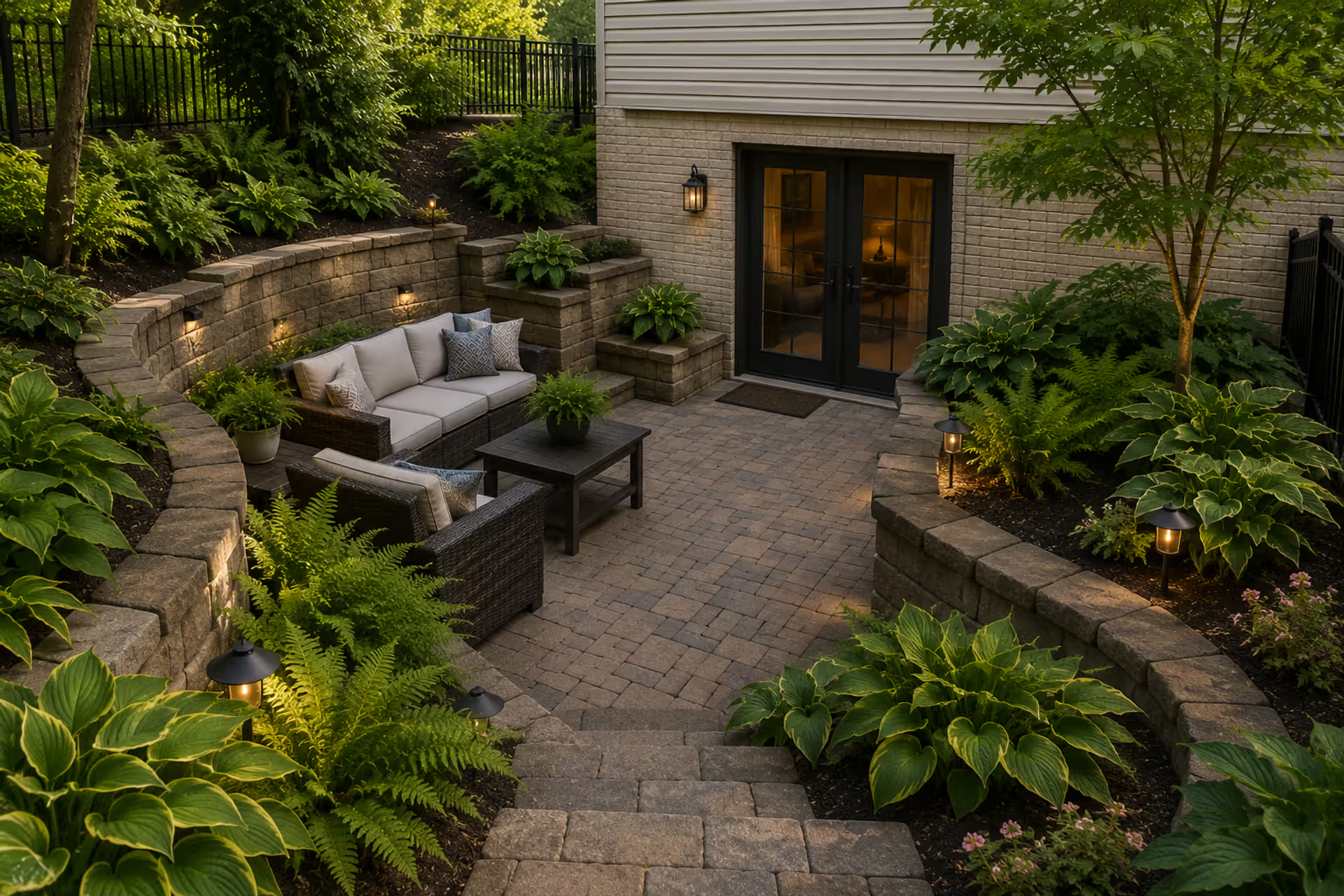
Discover practical exterior walkout basement ideas including patio layouts, landscaping solutions, and drainage strategies. Learn how to turn your below-grade outdoor space into a functional, attractive area with expert tips on materials, plantings, and design.
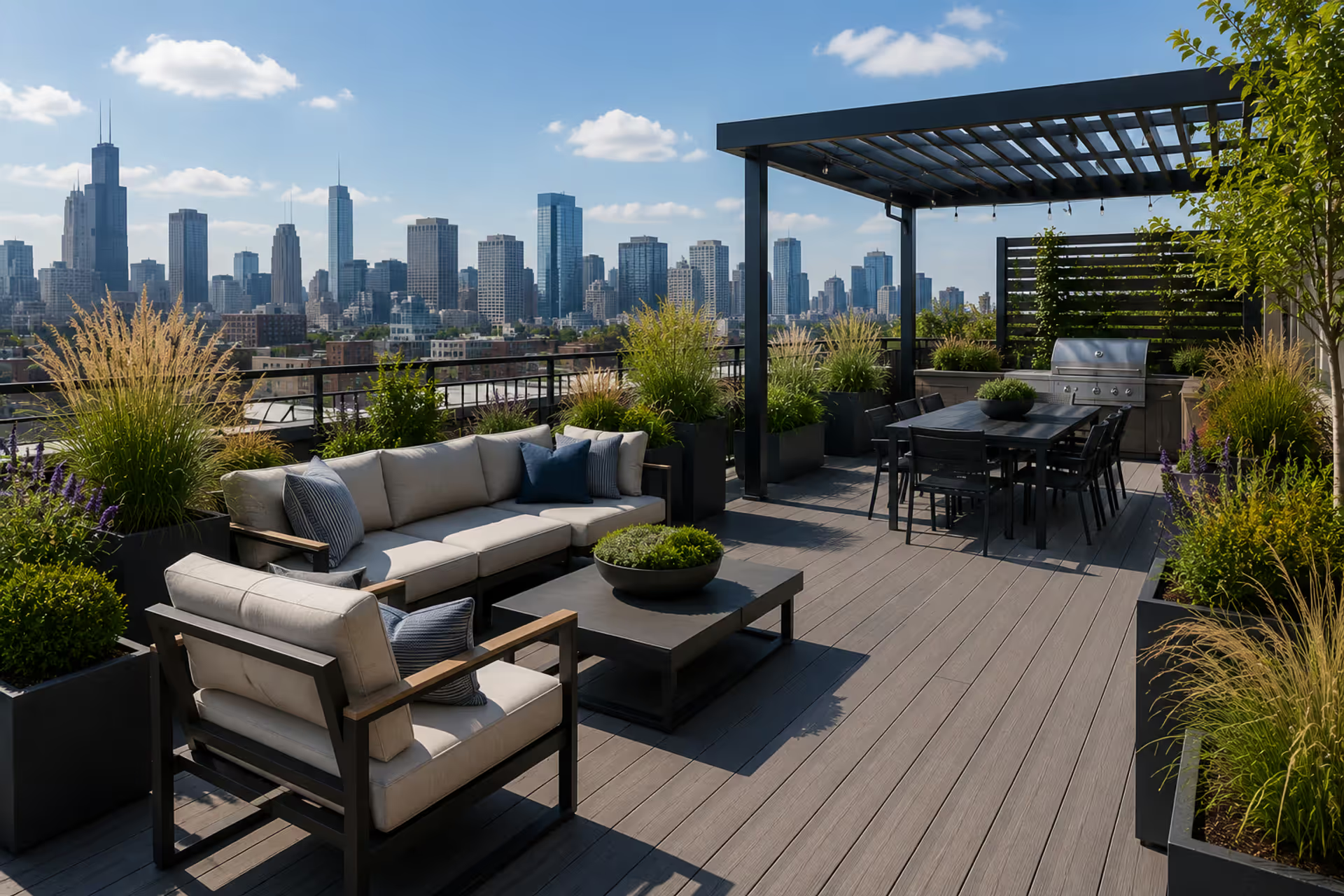
Transform your rooftop into a functional outdoor living space. Learn about structural requirements, weight limits, flooring options, wind-resistant furniture, container gardening, and design layouts for rooftops of all sizes.
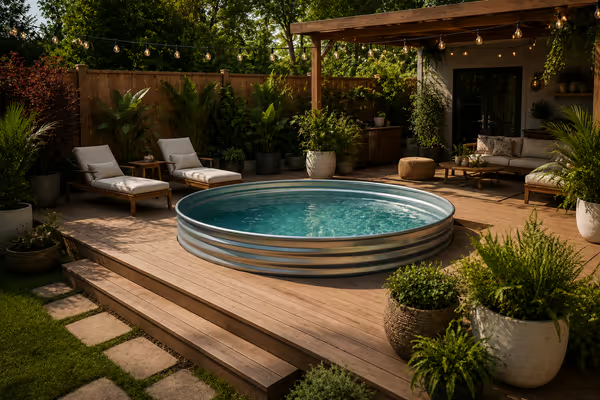
Discover practical stock tank pool deck ideas for small backyards. Learn how to build DIY decking, choose materials, add landscaping, and create privacy screens around your galvanized tank pool with expert installation tips and budget-friendly designs.
Thousands of US homeowners are converting aging inground pools into functional spaces—gardens, ponds, sunken lounges, and more. Learn the costs, processes, and creative alternatives to expensive pool removal that can transform your backyard.
The content on this website is provided for general informational and educational purposes only. It is intended to explain concepts related to landscape design, outdoor spaces, plants, irrigation, hardscape and softscape, and sustainable landscaping.
All information on this website, including articles, guides, and examples, is presented for general educational purposes. Outcomes may vary depending on local climate, soil, plant selection, and project implementation.
This website does not provide professional design, construction, or horticultural advice, and the information presented should not be used as a substitute for consultation with qualified landscape architects, contractors, or horticulturists.
The website and its authors are not responsible for any errors or omissions, or for any outcomes resulting from decisions made based on the information provided on this website.