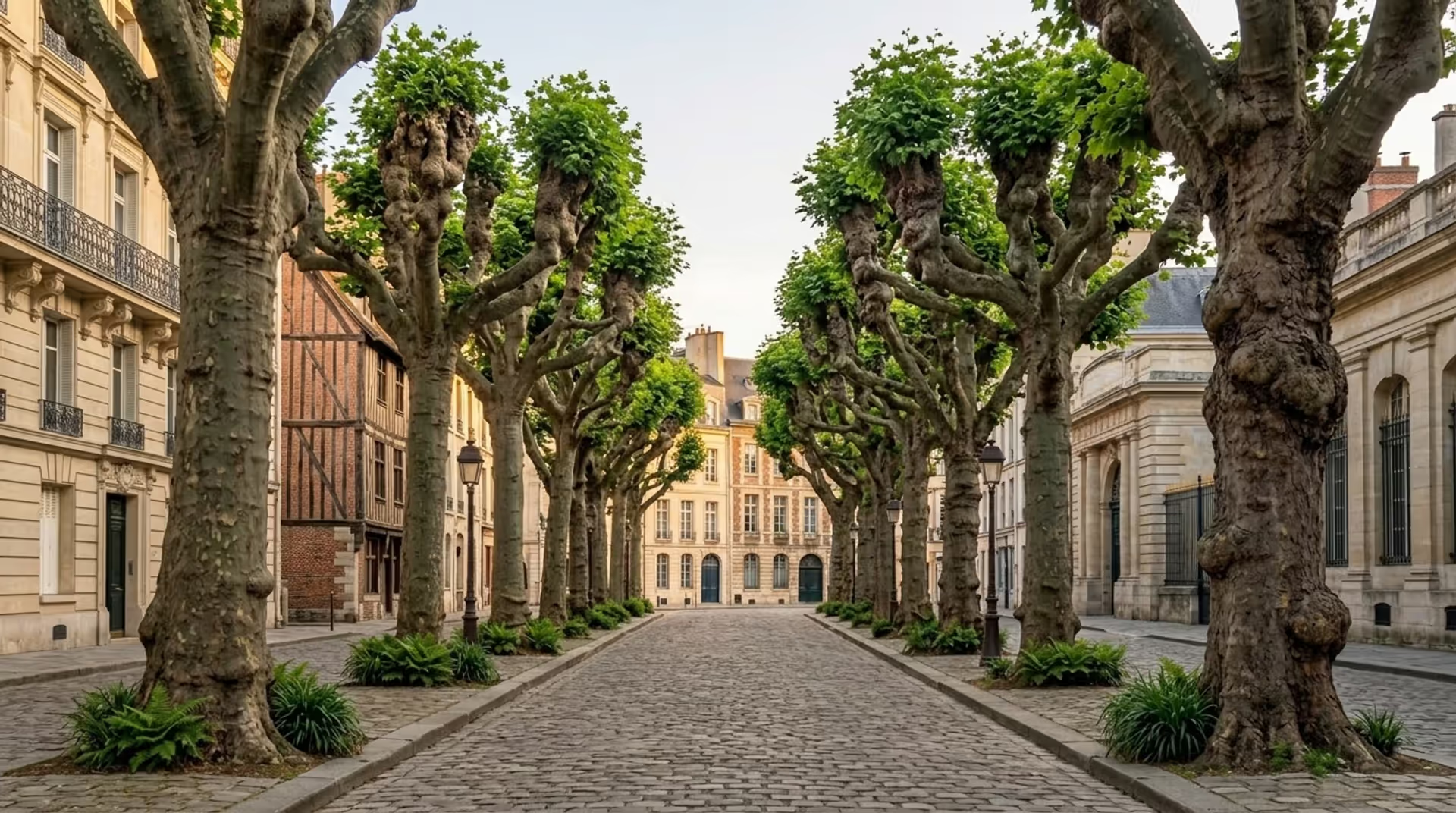
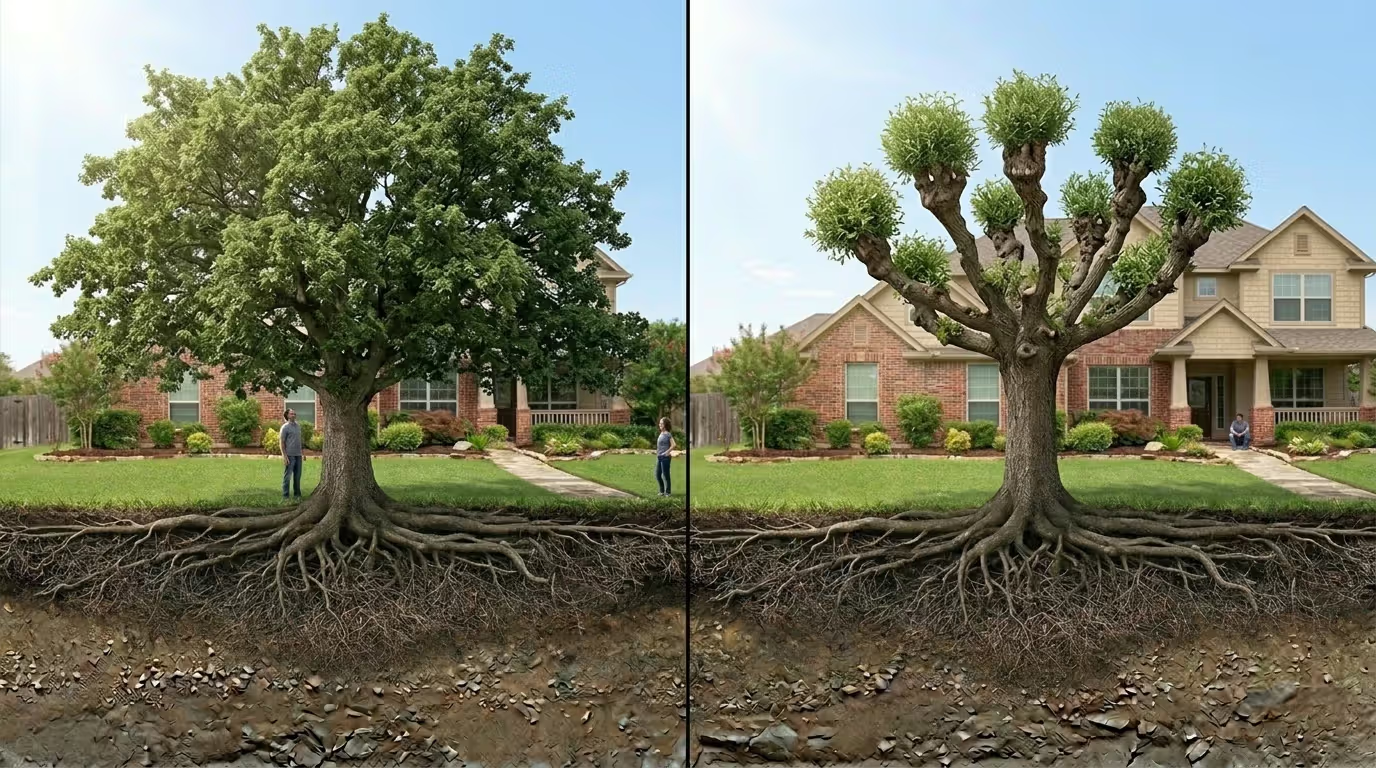
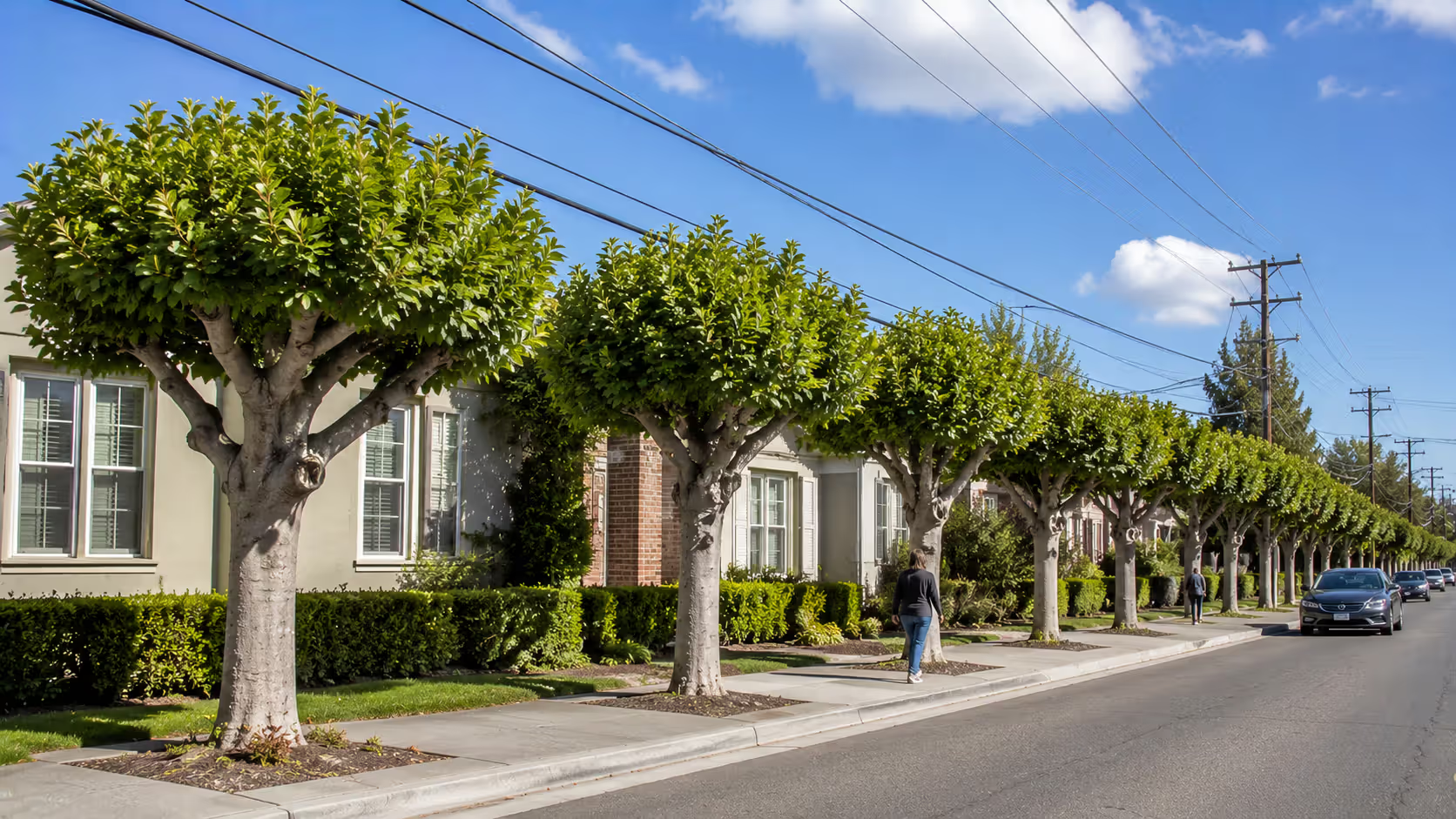
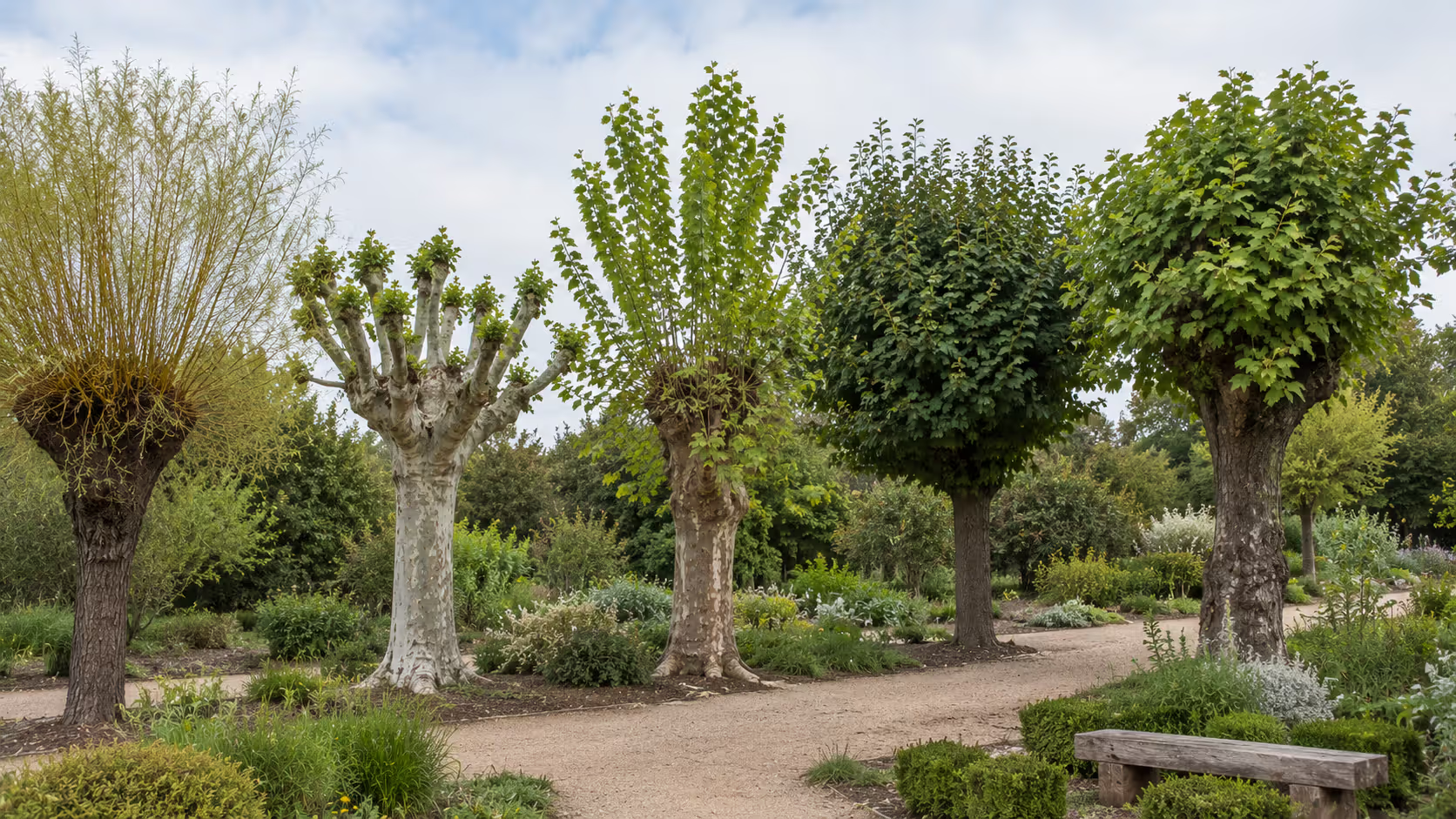
When you walk past a row of trees that look like they've been given a severe haircut—thick trunks topped with a knot of branches sprouting in all directions—you're looking at pollarded trees. This ancient tree management technique has shaped European landscapes for centuries and is gaining renewed attention in the US as property managers look for ways to control tree size without removing them entirely. But pollarding isn't just aggressive pruning. It's a specific, ongoing commitment that changes how a tree grows for the rest of its life.
What Is Tree Pollarding and How Does It Work?
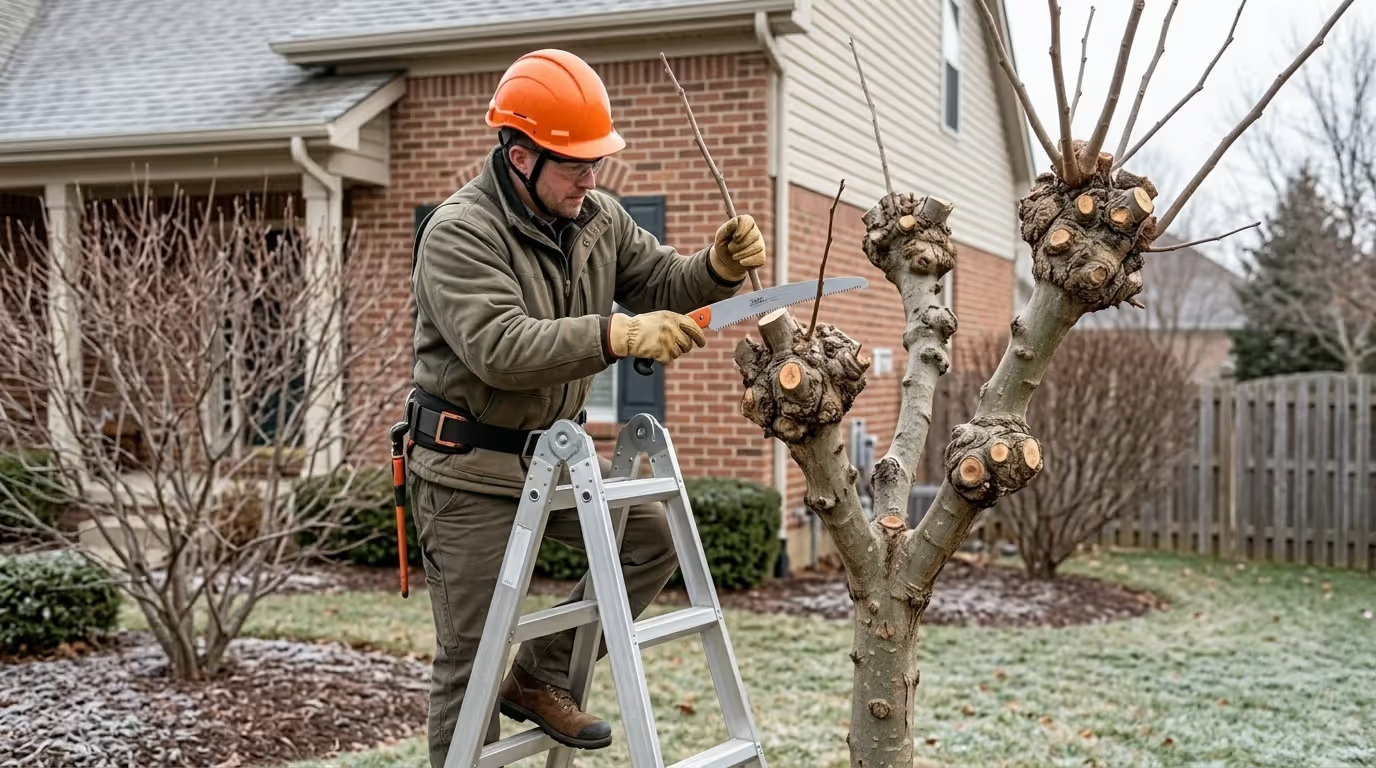
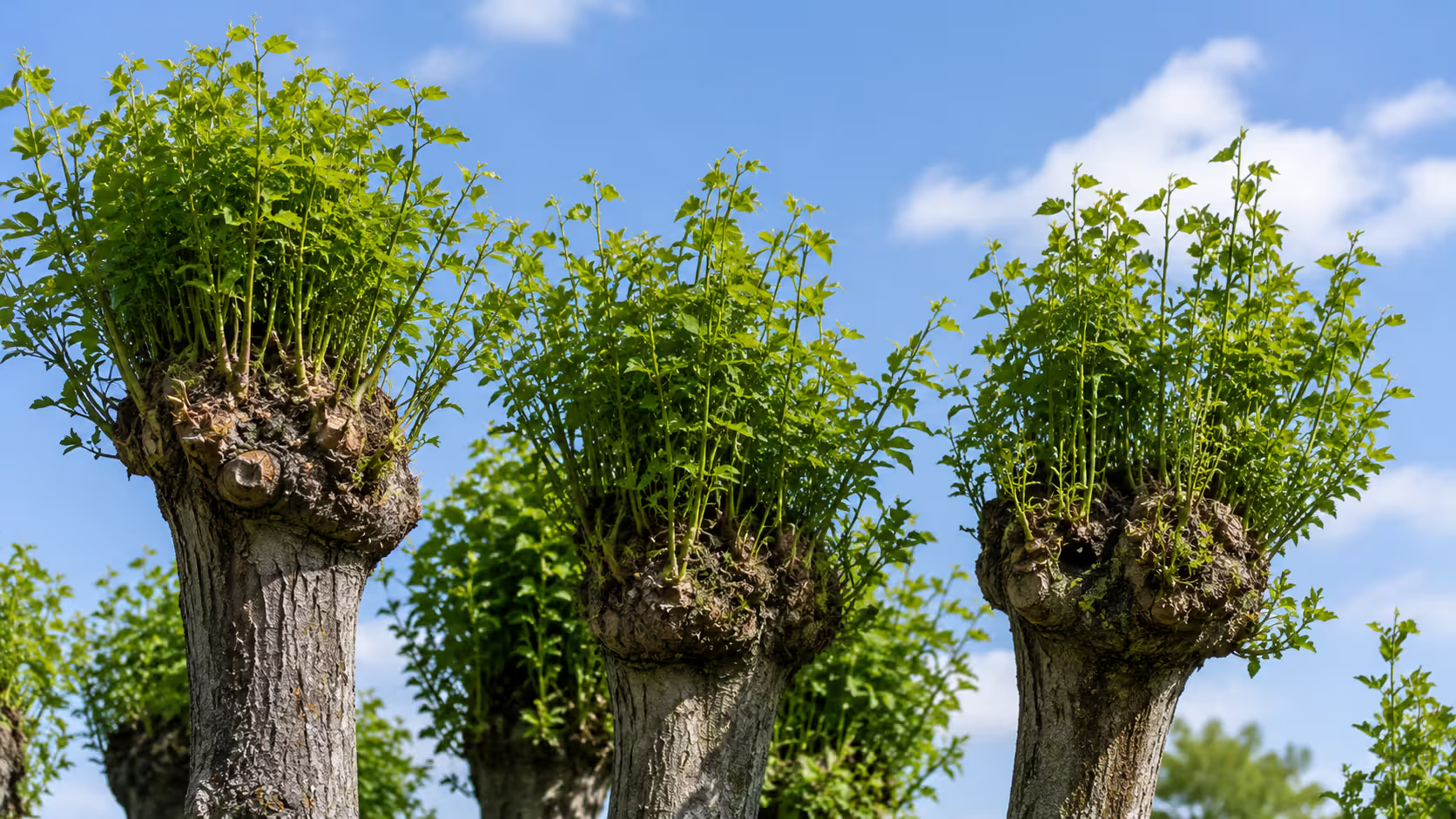
Pollarding is a pruning method where you cut all branches back to the main trunk at a uniform height, usually 6 to 15 feet above ground. The tree responds by sprouting dense clusters of new shoots from these cut points, called pollard heads or bolling points. Year after year, you remove this new growth at the same points, creating those distinctive knobby crowns.
The technique originated in medieval Europe, where farmers needed a renewable source of wood for fuel and fencing while keeping trees alive. Cutting branches at head height kept regrowth out of reach from grazing livestock. Today, you'll see it used mainly for size control in urban settings.
Pollarded trees appearance is unmistakable. During dormancy, they look almost skeletal—thick trunks ending abruptly in bulbous knots. In growing season, they explode with dense, uniform foliage sprouting from those same points. The contrast between winter and summer appearance is dramatic.
The process works because certain tree species compartmentalize wounds and store energy in their trunks. When you remove all the branches, the tree pushes out vigorous new growth to replace lost photosynthetic capacity. But here's the catch: once you start pollarding, you can't really stop. The pollard heads become permanent features that need regular attention.
Author: Marcus Eldridge;
Source: cribbslandscaping.com
Why Pollard a Tree? Key Benefits and Practical Uses
Tree pollarding benefits go beyond just keeping a tree small. You're actually extending the tree's lifespan in many cases. Pollarded trees can live for centuries because regular cutting prevents the weight and wind resistance that cause mature trees to split or topple.
Size control is the obvious advantage. A London plane tree might naturally reach 100 feet tall, but pollarded specimens stay at 20 to 30 feet. Perfect for narrow streets, small yards, or anywhere overhead space is limited.
Safety near utility lines drives many pollarding decisions. Rather than constantly battling regrowth near power cables, establishing a pollard point below the lines creates a predictable, manageable canopy. The pattern I see most often is utility companies requesting pollarding for trees planted too close to infrastructure years ago.
The dense regrowth serves specific purposes. In Europe, pollarded willows provide annual harvests of flexible shoots for basket weaving and fencing. Some property managers pollard specifically for the thick summer shade followed by complete winter sun exposure—ideal for passive solar heating.
Tree canopy management becomes simpler with pollarding. You know exactly where growth will occur and can plan maintenance schedules years in advance. No surprise branches extending into buildings or over roofs.
There's also the aesthetic angle. Historic districts sometimes require pollarding to maintain period-appropriate streetscapes. The formal, sculptural look fits certain architectural styles perfectly.
Author: Marcus Eldridge;
Source: cribbslandscaping.com
Pollarding vs Other Tree Maintenance Methods
Understanding pollarding vs pruning helps clarify what you're actually signing up for. Standard pruning selectively removes branches to improve structure, health, or clearance. You're working with the tree's natural form. Pollarding completely overrides natural growth patterns, forcing the tree into an artificial shape.
Pollarding vs Pruning
Regular pruning might happen every 3 to 5 years or as needed. You remove dead wood, crossing branches, or limbs that pose problems. The tree still looks like a tree.
Pollarding requires cuts every 1 to 3 years on a strict schedule. Miss a cycle, and you get thick, heavy branches growing from weak attachment points—a safety hazard. The tree looks nothing like its natural form.
Standard pruning works on any healthy tree. Pollarding only works on specific species that tolerate repeated severe cutting.
Crown Reduction vs Pollarding
Crown reduction vs pollarding confuses many people because both reduce tree size. Crown reduction removes branch tips throughout the canopy, maintaining the tree's overall shape while making it smaller. You're reducing height and spread by 15 to 30 percent typically.
Pollarding removes entire branches back to specific points on the trunk or main scaffold limbs. It's more severe and creates that distinctive clubbed appearance.
Crown reduction is often a one-time or occasional intervention. Pollarding is a permanent management system. Once you start, you're committed to regular cycles forever.
Method
Purpose
Frequency
Best For
Tree Response
Cost Range
Standard Pruning
Health, structure, clearance
Every 3–5 years as needed
Any healthy tree species
Maintains natural form
$200–$800 per session
Crown Reduction
Moderate size control
Every 5–7 years
Mature trees in confined spaces
Reduced but natural shape
$400–$1,500 per session
Pollarding
Severe size restriction
Every 1–3 years, ongoing
Young trees of suitable species
Artificial knobbed form
$300–$1,000 per cycle
The cost comparison matters. Pollarding looks cheaper per session, but you're paying every 1 to 3 years indefinitely. Over a tree's lifetime, it's often more expensive than alternatives.
Which Trees Are Suitable for Pollarding?
Not every tree survives pollarding. You need species that compartmentalize wounds well, store energy in their trunks, and produce vigorous epicormic growth (shoots from dormant buds).
Trees suitable for pollarding include:
Willows (Salix species) — The gold standard. They regrow so aggressively you can pollard annually. Crack willow and white willow handle it best.
London plane (Platanus × acerifolia) — Extremely common in urban pollarding programs. Tolerates pollution, compacted soil, and repeated cutting.
Sycamores (Platanus occidentalis) — The American native cousin of London plane. A pollarded sycamore develops those characteristic knuckled branches and provides dense summer shade. You'll see them lining historic streets throughout the Mid-Atlantic states.
Lindens/Limes (Tilia species) — Popular in European formal gardens. Little-leaf linden works particularly well in US zones 3–7.
Hornbeam (Carpinus betulus) — Excellent for pleached hedges and formal pollards in cooler climates.
Mulberry (Morus species) — Both white and black mulberry respond well. Fruitless cultivars avoid the mess.
Ash (Fraxinus species) — Traditionally pollarded, though emerald ash borer makes this risky in affected areas.
Oak (Quercus robur, Q. petraea) — European oaks pollard well, but American oaks generally don't. Know your species.
Trees that don't pollard well include most conifers, birches, cherries, maples (with few exceptions), and most fruit trees. These species either can't produce the necessary regrowth or develop decay problems from the wounds.
Age matters too. Start pollarding when trees are young—ideally under 20 years old. Older trees have thicker branches that create larger wounds and may not develop proper pollard heads.
Author: Marcus Eldridge;
Source: cribbslandscaping.com
How to Pollard a Tree: Step-by-Step Process
Learning how to pollard a tree properly prevents years of problems. This isn't something you improvise.
Step 1: Choose the right time. Pollard during dormancy—late fall through early spring before bud break. In most US regions, that's December through February. Never pollard when the tree is actively growing.
Step 2: Establish pollard points. On young trees (3 to 6 inches trunk diameter), cut the main trunk at your desired height—usually 6 to 10 feet. On slightly older trees, you might create pollard points on main scaffold branches instead. Make clean cuts just above a node or branch collar.
Step 3: Use proper tools. Sharp bypass pruners for small shoots, loppers for branches up to 2 inches, and a pruning saw for anything larger. Chainsaws work for initial pollarding but require skill to avoid damaging the trunk.
Step 4: Make correct cuts. Cut back to the same point each cycle—right at the pollard head. Don't leave stubs, but don't cut into the swollen knob either. The pollard head is where all the energy storage and regrowth happens.
Author: Marcus Eldridge;
Source: cribbslandscaping.com
Step 5: Remove all growth. When pollarding, you cut everything back. Leaving some branches defeats the purpose and creates unbalanced regrowth.
Step 6: Establish your cycle. Most pollarded trees need cutting every 1 to 3 years. Vigorous species like willow may need annual attention. Slower growers like hornbeam can go 2 to 3 years.
When to hire an arborist: If your tree is over 15 feet tall, near power lines, or you're unsure about species suitability, hire a certified arborist. Initial pollarding on mature trees requires expertise to avoid killing the tree. Expect to pay $400 to $1,200 for professional initial pollarding, depending on tree size.
Pollarding is a commitment, not a one-time fix. I've seen too many property owners start pollarding to solve a size problem, then abandon the tree after a few years. Those oversized shoots growing from weak pollard heads become dangerous, and the tree often has to come down. If you can't maintain the cycle, choose a different pruning method or plant a smaller tree species from the start.
— Martinez Rebecca
Pollard Tree Regrowth and Ongoing Maintenance
Pollard tree regrowth follows predictable patterns once you establish the system. In the first growing season after cutting, expect shoots to grow 3 to 6 feet on vigorous species. Willows might push 8 feet or more. This growth comes from stored energy in the trunk and pollard heads.
Year two without cutting, those shoots thicken and extend another 3 to 5 feet. By year three, you have substantial branches—often too heavy for the attachment points. This is why timing matters.
The maintenance schedule depends on your goals and the species. For maximum size control and formal appearance, pollard annually. The tree never gets very large, and cuts remain small. For a fuller canopy and less frequent intervention, extend to every 2 or 3 years. The tree gets bigger between cycles, and you're cutting thicker branches.
Tree canopy management becomes routine. You know the tree will produce a dense, rounded crown of shoots from the pollard heads. In summer, you get full shade. In winter after cutting, you get a sculptural framework and maximum light.
Watch for a few issues during maintenance:
Decay in pollard heads — Older pollards sometimes develop hollow knobs. As long as new shoots keep emerging vigorously, this isn't necessarily a problem. But if decay extends into the trunk, consult an arborist.
Uneven regrowth — If one side produces fewer shoots, that pollard head may be failing. You might need to re-establish it with a fresh cut or adjust your technique.
Water sprouts on the trunk — Shoots emerging below pollard heads should be removed promptly. They divert energy and create unwanted growth.
One counterintuitive point: pollarded trees often need more water and fertilizer than unpollarded ones. You're forcing massive annual regrowth, which demands resources. Mulch around the base and water during drought.
Author: Marcus Eldridge;
Source: cribbslandscaping.com
Common Mistakes and When to Avoid Pollarding
The biggest mistake is starting pollarding without understanding it's permanent. You can't pollard a tree for five years, then let it grow naturally. Those pollard heads become permanent weak points. Branches growing from them will always have poor attachment.
Wrong species — I've seen people try to pollard red maples, dogwoods, even pines. These trees either die or develop severe decay. Stick to proven species.
Improper timing — Pollarding during active growth stresses the tree severely. It may survive, but you're inviting disease and pest problems.
Inconsistent cutting points — Moving your cuts up or down the trunk each cycle prevents proper pollard head formation. You end up with a mess of wounds instead of organized regrowth points.
One-time pollarding — Cutting a mature tree back severely, then abandoning it, is called topping, not pollarding. It's harmful and dangerous. The tree produces weakly attached regrowth that becomes a hazard.
Pollarding mature trees never cut before — A 40-year-old oak that's always grown naturally won't transition to pollarding well. The wounds are too large, and the tree hasn't developed the necessary energy storage in the trunk. Start young or don't start at all.
When to choose alternatives:
If you can't commit to regular maintenance, plant a smaller species instead
If the tree is already mature and unpollarded, use crown reduction
If you want natural appearance, standard pruning works better
If the species isn't suitable, don't force it
Sometimes the simpler option wins. Removing an oversized tree and planting an appropriately sized replacement costs less long-term than decades of pollarding maintenance.
FAQ: Pollarding Trees Questions Answered
How much does it cost to pollard a tree?
Professional pollarding typically costs $300 to $1,000 per session, depending on tree size, accessibility, and regional labor rates. Initial pollarding on larger trees runs $400 to $1,200 because it's more complex. Since you'll need this service every 1 to 3 years indefinitely, budget $200 to $500 annually for ongoing maintenance on average-sized trees. DIY pollarding on small trees costs only your time and basic pruning tools ($50 to $150 for quality equipment), but requires knowledge and physical ability to work safely at height.
What time of year should you pollard trees?
Pollard trees during dormancy—late fall through early spring before buds swell. In most US climates, December through February is ideal. Avoid pollarding in late spring or summer when trees are actively growing, as this causes excessive stress and sap loss. Also avoid early fall, when trees are storing energy for winter. Late winter (January to February) is often best because wounds have maximum time to compartmentalize before the growing season, and there's no foliage to dispose of.
Can pollarding damage or kill a tree?
Pollarding won't kill suitable species when done properly, but it can severely damage or kill trees if you choose the wrong species, cut at the wrong time, or fail to maintain the cycle. Trees not adapted to pollarding develop decay in the large wounds and may die within a few years. Even suitable species can suffer if you pollard during active growth or abandon the maintenance schedule, allowing heavy branches to develop on weak attachments. Once established correctly on appropriate species, pollarding actually extends tree lifespan by preventing the structural failures common in large, mature trees.
Do I need a permit to pollard trees on my property?
Permit requirements vary by municipality. Many cities regulate significant tree pruning through tree ordinances, especially for large or heritage trees. Some jurisdictions specifically restrict pollarding or require arborist certification for the work. Historic districts often have additional landscape regulations. Before pollarding, check with your city's planning department, code enforcement office, or urban forestry division. Homeowners associations may also have restrictions. Expect permits to cost $0 to $200 where required, with processing times of 1 to 4 weeks.
How long does it take for a pollarded tree to regrow?
Pollarded trees typically produce 3 to 6 feet of new growth in the first season after cutting, with vigorous species like willow reaching 6 to 8 feet. By the second year without cutting, shoots extend another 3 to 5 feet and begin to thicken substantially. Full, dense canopy development happens within one growing season on established pollards—you'll have good shade by mid-summer. The speed depends on species, tree health, soil quality, and water availability. Newly pollarded trees may take 2 to 3 cycles to develop proper pollard heads and achieve the characteristic dense regrowth pattern.
What's the difference between pollarding and topping?
Pollarding is a planned, ongoing management system where you cut branches back to the same points repeatedly, creating specialized regrowth structures called pollard heads. Topping is indiscriminate cutting of branches to reduce tree height, usually done once without follow-up. Topped trees develop decay, weak regrowth from poor attachment points, and often become hazardous or die. Pollarding, when done correctly on suitable species, maintains tree health and safety through regular maintenance. Topping is considered harmful and is condemned by arboricultural standards, while pollarding is a legitimate technique with centuries of proven success on appropriate trees.
Pollarding trees works brilliantly in the right situations—when you need permanent size control, have a suitable species, and can commit to regular maintenance. Historic streetscapes, formal gardens, and properties with overhead restrictions benefit from this technique.
But it's not a casual choice. You're fundamentally changing how the tree grows for its entire remaining life. Miss maintenance cycles, and you create hazards. Choose the wrong species, and you kill the tree.
Before you start, honestly assess your situation. Can you maintain the 1- to 3-year cutting cycle for decades? Is your tree a proven pollarding species? Would a smaller tree species or crown reduction serve you better?
If you decide pollarding fits your needs, start with young trees, hire a certified arborist for initial setup, and mark your calendar for regular maintenance. Done right, you'll have healthy, manageable trees that can outlive several generations of standard trees.
The distinctive look of pollarded trees adds character to landscapes. Just make sure you understand what you're signing up for before making that first cut.
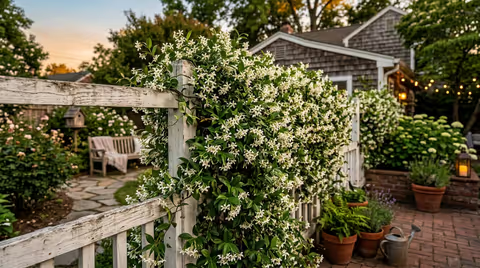
Star jasmine creates fragrant, evergreen coverage but grows vigorously. This guide explains whether it's truly invasive, how fast it spreads, control strategies, and complete care instructions for US gardeners in zones 8-11.
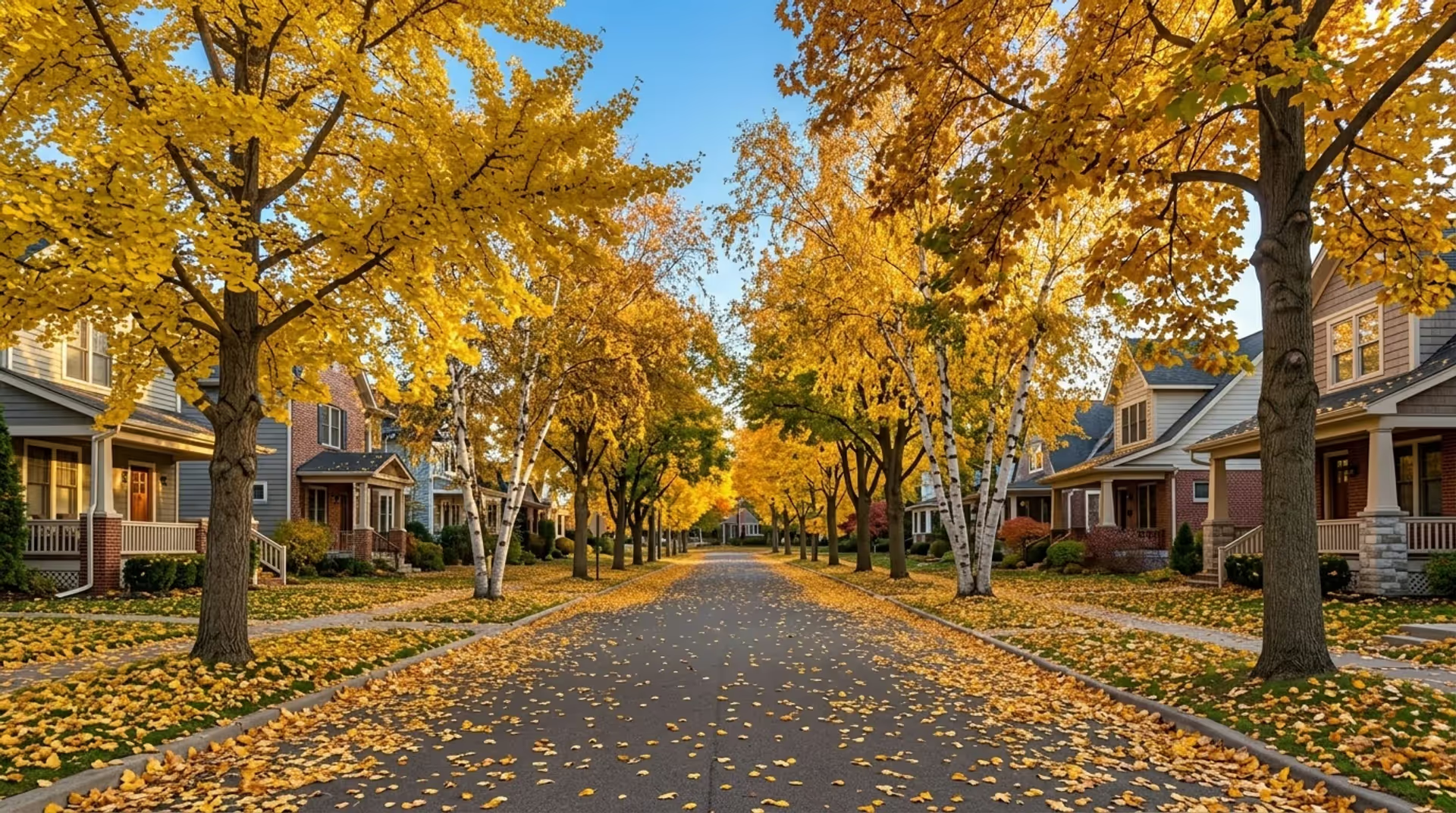
You've probably noticed entire hillsides glowing gold during autumn walks. Yellow fall foliage creates stunning displays, but not every tree joins the show. Learn which species reliably turn brilliant yellow year after year, the science behind the color change, and how to choose the perfect yellow fall tree for your landscape.
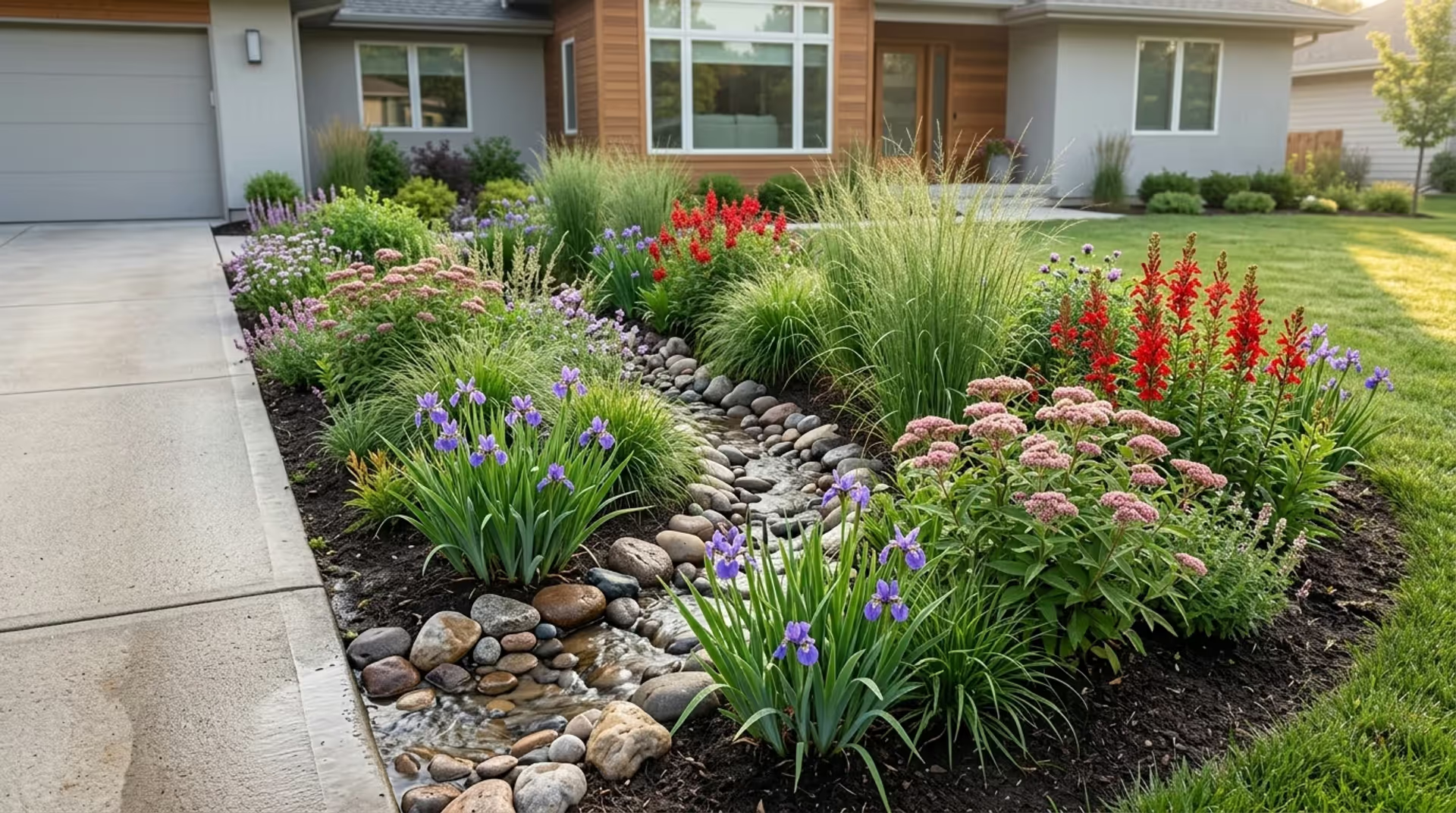
Learn which plants thrive in bioswales and drainage areas. This comprehensive guide covers native species by region, moisture-tolerant options, planting zones, design principles, and common mistakes to avoid when creating functional rain gardens and bioswales.
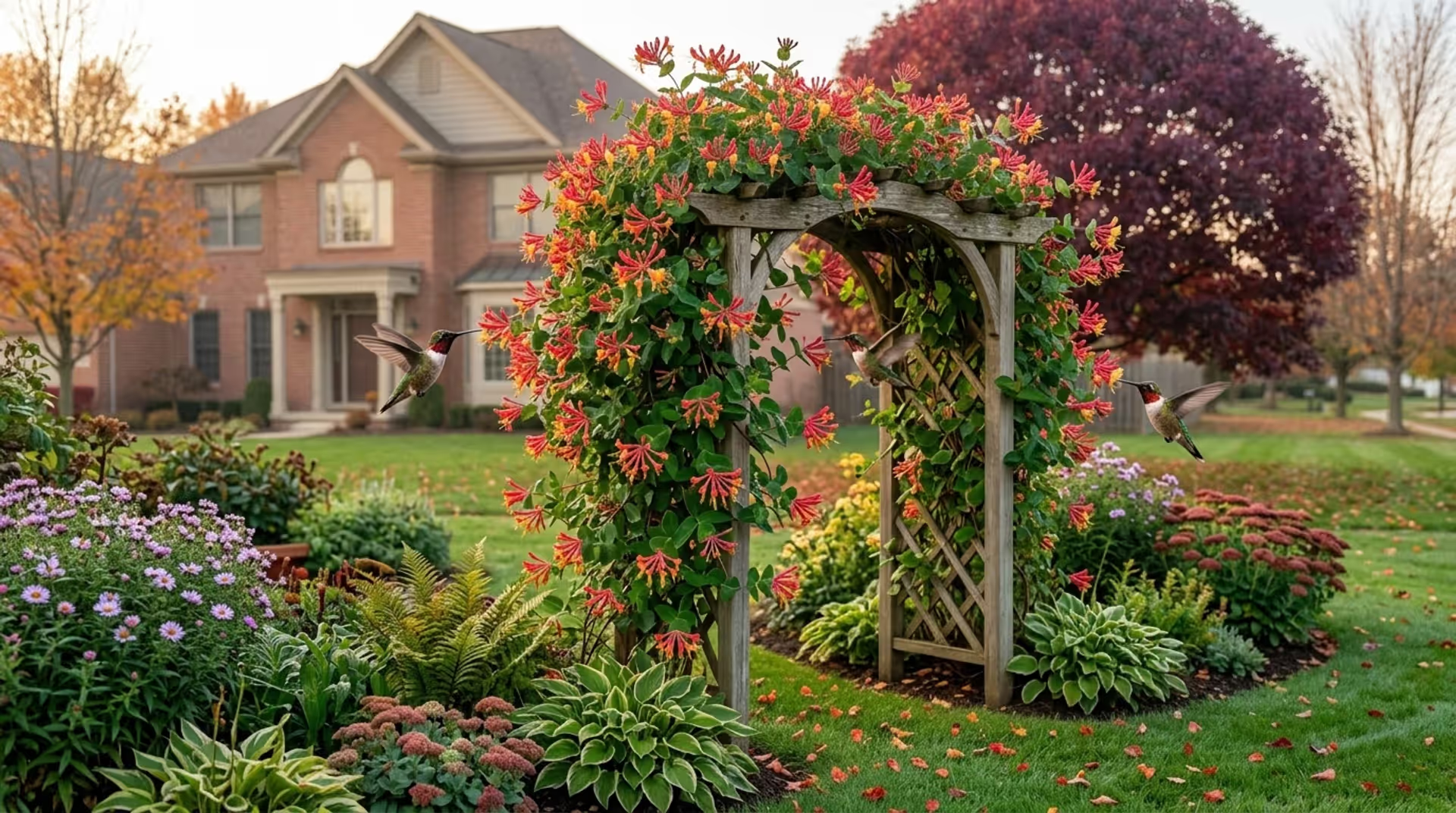
Lonicera plants offer more than sweet-smelling vines. This guide covers climbing, shrub, and ground cover varieties, plus care tips for hedges, wildlife gardens, and responsible planting. Learn which honeysuckles attract hummingbirds and which to avoid for ecological reasons.
The content on this website is provided for general informational and educational purposes only. It is intended to explain concepts related to landscape design, outdoor spaces, plants, irrigation, hardscape and softscape, and sustainable landscaping.
All information on this website, including articles, guides, and examples, is presented for general educational purposes. Outcomes may vary depending on local climate, soil, plant selection, and project implementation.
This website does not provide professional design, construction, or horticultural advice, and the information presented should not be used as a substitute for consultation with qualified landscape architects, contractors, or horticulturists.
The website and its authors are not responsible for any errors or omissions, or for any outcomes resulting from decisions made based on the information provided on this website.