Walk through any established neighborhood in spring and you'll catch it—that unmistakable honeysuckle perfume drifting over fences. Most people recognize the scent but couldn't tell you there are nearly 180 different lonicera species, each with distinct personalities. I've seen gardeners plant Japanese honeysuckle thinking they're getting a charming ground cover, only to spend years fighting an invasive monster. Others miss out on winter honeysuckle's February blooms because they've never heard of Lonicera fragrantissima. Here's what you actually need to know about growing these plants successfully.
What Is Lonicera and Why Grow It
Lonicera serves as the scientific designation for what we commonly call honeysuckle—a plant family spanning woody vines, upright shrubs, and low-spreading types. Around 180 distinct species exist worldwide, with origins throughout the Northern Hemisphere. You'll find native North American species, European imports, and Asian varieties all growing in US landscapes today.
Why bother with them? Three compelling reasons stand out.
First, the fragrance. Some varieties—particularly L. periclymenum and L. fragrantissima—produce scent so powerful you'll smell them from 30 feet away. We're talking about genuine perfume, not the faint hint you get from most flowering shrubs.
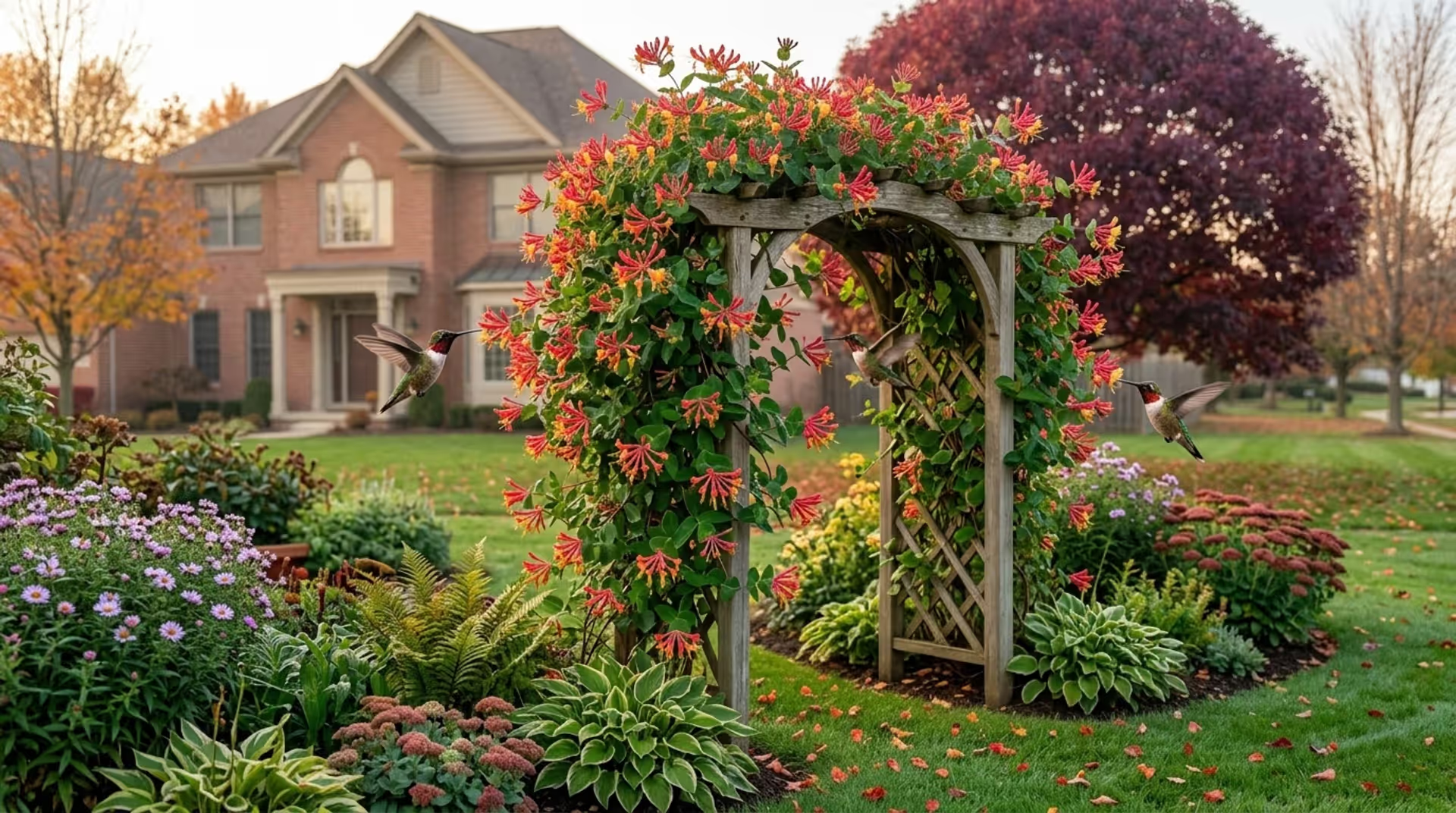
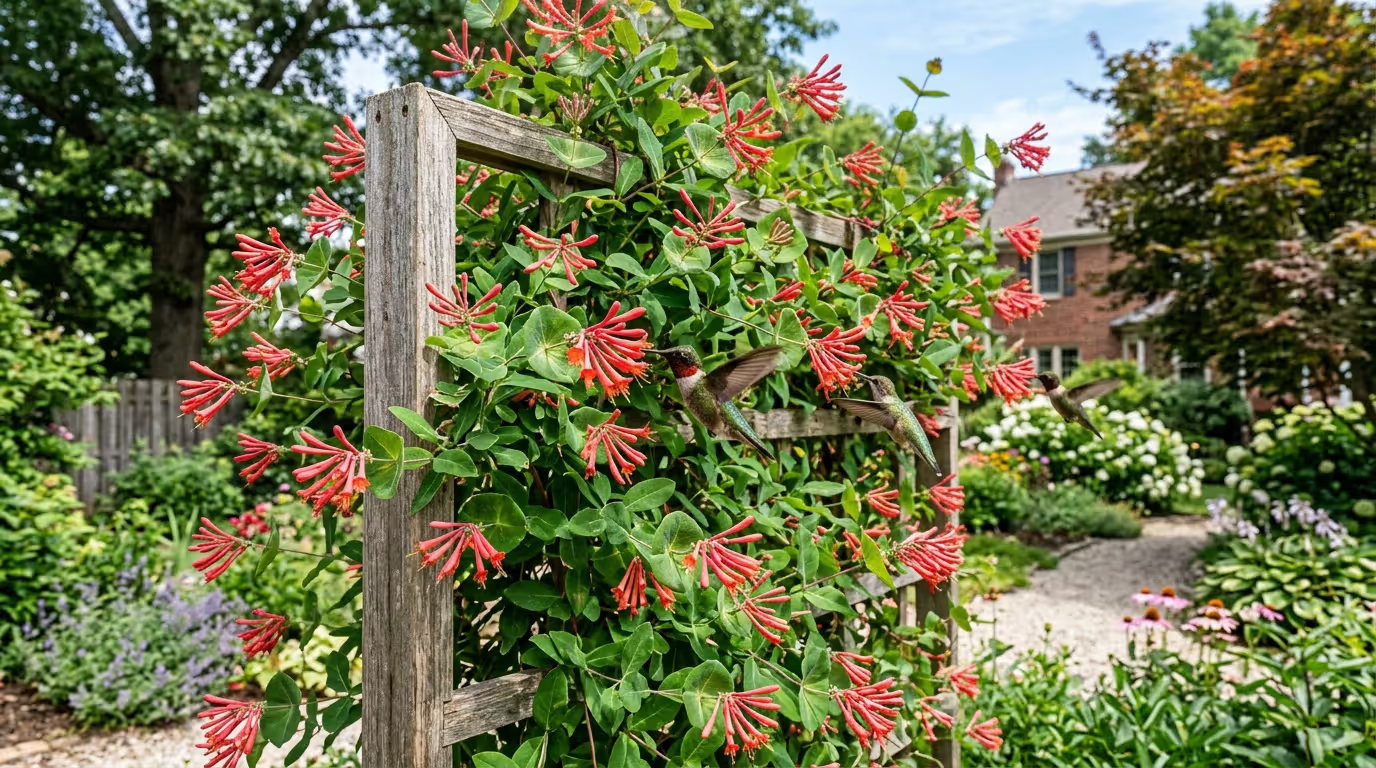
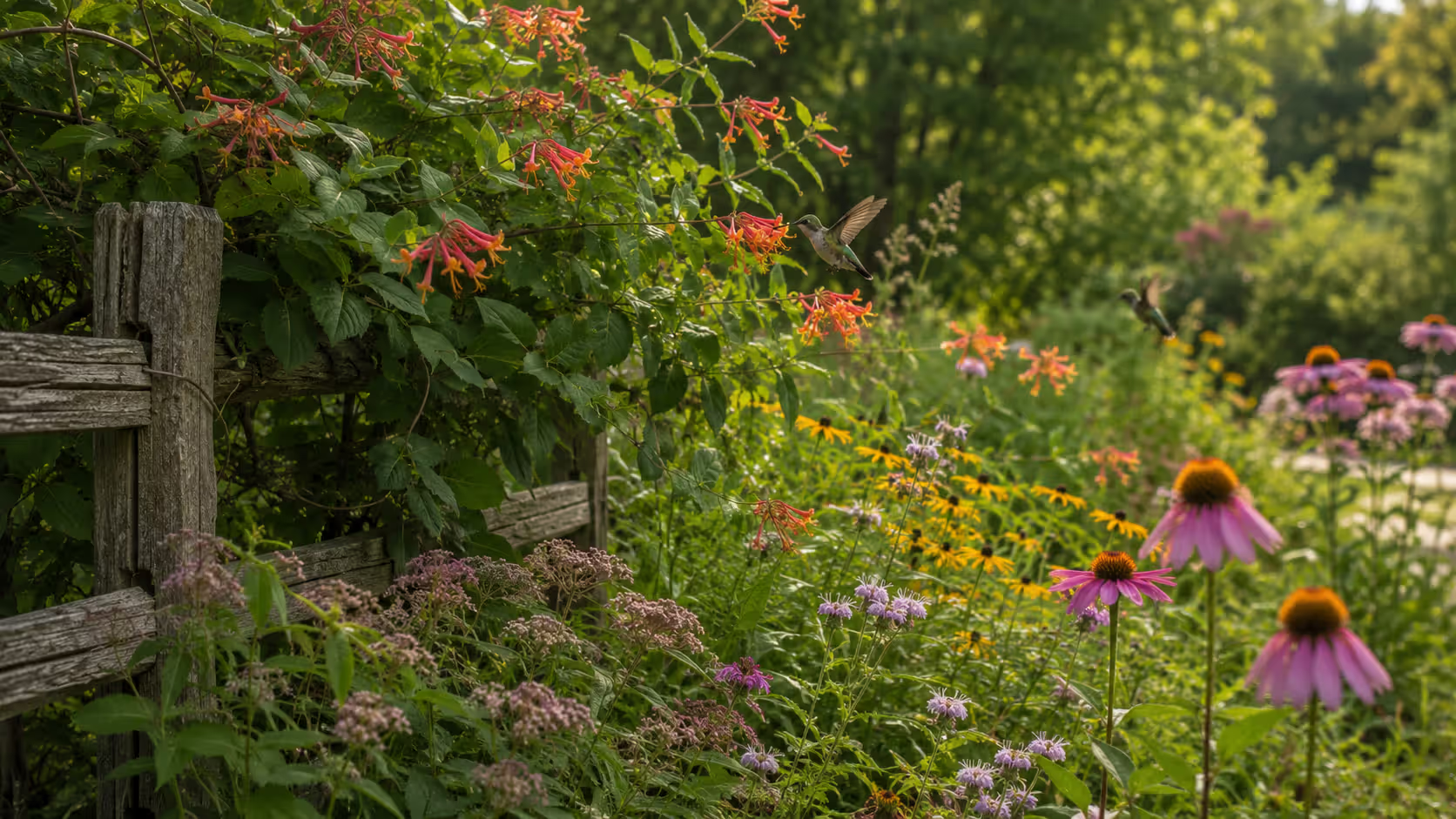
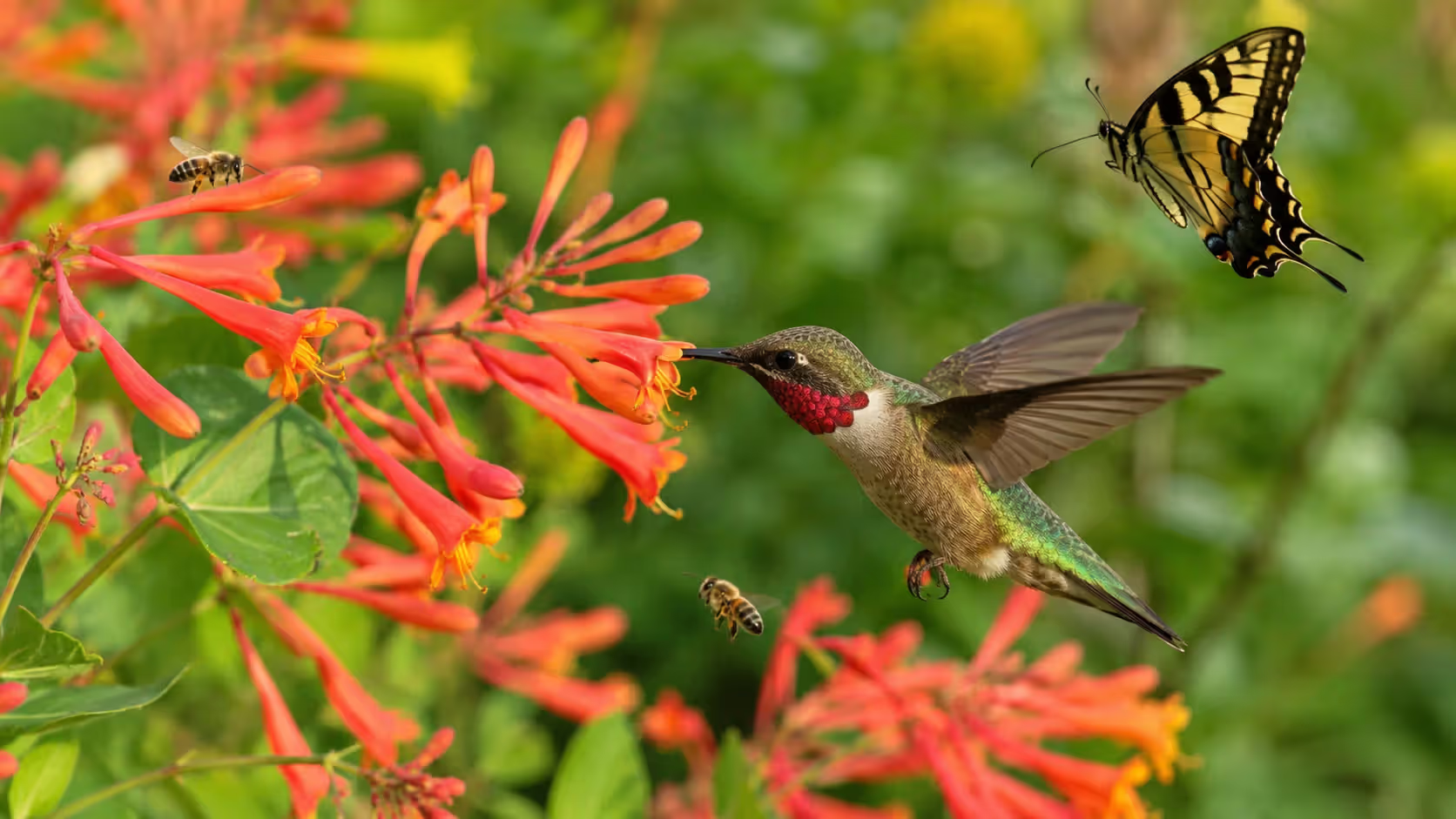
Second, hummingbirds go absolutely crazy for trumpet-shaped honeysuckle blooms. Plant Lonicera sempervirens near a window and you'll have daily entertainment from May through September. I've counted six ruby-throats working a single mature vine simultaneously during peak season.
Third, versatility. Need a 3-foot formal hedge? L. nitida handles it. Want a 20-foot privacy screen on a fence? Climbing varieties deliver. Looking for winter interest when everything else looks dead? L. fragrantissima blooms on bare branches in January.
Different species show wildly different growth patterns. Lonicera sempervirens climbs and twines, reaching 15-20 feet up trellises or trees. Meanwhile, Lonicera fragrantissima forms a rounded shrub 8 feet tall and equally wide. Lonicera japonica (which you should probably avoid) roots wherever stems touch ground, creating dense horizontal mats.
Most honeysuckles handle cold well. You'll find suitable varieties for USDA zones 3 through 10, covering essentially the entire continental United States. L. tatarica survives Minnesota winters. L. nitida thrives in coastal California.
Here's the critical warning, though: Japanese honeysuckle and Amur honeysuckle have escaped gardens throughout the eastern US, smothering native forests and costing millions in control efforts. Species selection matters enormously—both for garden performance and environmental responsibility.
Author: Sienna Calder;
Source: cribbslandscaping.com
Popular Lonicera Varieties for Different Garden Uses
Climbing and Flowering Types
Native trumpet honeysuckle (Lonicera sempervirens) should be your default choice for vertical coverage. Coral-red tubular flowers appear in clusters from late May through frost, creating reliable hummingbird habitat without the invasive baggage of Asian species. Expect 12-20 feet of growth on supports, with semi-evergreen leaves in zones 7-9. Cultivars like 'Major Wheeler' bloom more heavily than the straight species, while 'Alabama Crimson' offers deeper red color.
Lonicera × heckrottii (goldflame honeysuckle) combines pink outer petals with yellow throats in a showy display. This hybrid blooms intensely in June, then produces scattered flowers through October. Growth tops out around 12-15 feet, making it manageable for smaller arbors or mailbox posts. Fragrance is moderate—pleasant but not overpowering.
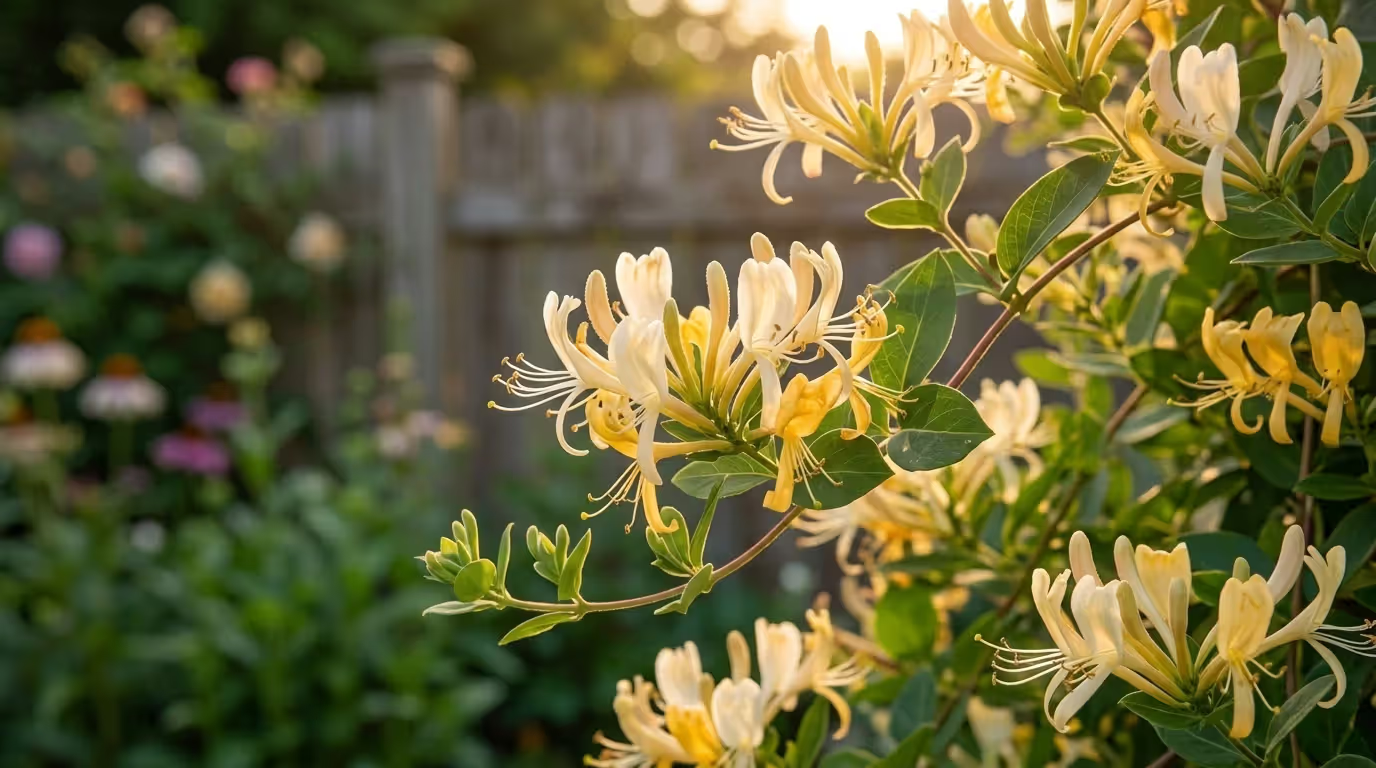
European woodbine (Lonicera periclymenum) brings cottage-garden romance with creamy flowers aging to golden yellow. The evening fragrance is legendary—plan to sit near it on summer nights. 'Serotina' extends bloom season into August, while 'Graham Thomas' offers especially strong scent. Growth reaches 15-20 feet.
Shrub Varieties
Lonicera fragrantissima earns its common name "winter honeysuckle" honestly. Small cream-colored flowers emerge on leafless stems anywhere from late December to early March depending on your location. The scent combines lemon, vanilla, and honey notes that carry surprisingly far in cold air. The plant itself looks fairly ordinary the rest of the year—a semi-evergreen shrub 8-10 feet tall with arching branches. But those winter blooms justify the space.
Tatarian honeysuckle (Lonicera tatarica) tolerates zone 3 cold and produces pink, white, or red flowers in May. It grows quickly to 10-12 feet and handles urban pollution well. The downside? Aggressive self-seeding in many regions. Use it only where you can manage volunteer seedlings or choose native alternatives instead.
Skip Amur honeysuckle (Lonicera maackii) entirely. Yes, some nurseries still sell it. Yes, it grows fast and smells nice. It's also invasive across 27 states and counting. Just don't.
Author: Sienna Calder;
Source: cribbslandscaping.com
Ground Cover Options
Finding responsible ground cover honeysuckles gets tricky. Lonicera japonica spreads effectively through rooting stems and covers ground fast—which is exactly why it's now strangling forests from Massachusetts to Texas. Even in western states where it isn't invasive yet, planting it risks future problems.
Honeyberry (Lonicera caerulea) offers an alternative, though gardeners grow it mainly for edible blue berries rather than ornamental effect. Plants stay under 5 feet tall and produce tart fruits that taste like blueberry-raspberry hybrids. Not a true ground cover, but useful for edible landscaping.
Native limber honeysuckle (Lonicera dioica) twines loosely and stays around 3 feet when grown without support. It won't create the dense carpet you'd get from Japanese honeysuckle, but it fills space without ecological risks.
Hedge-Forming Species
Lonicera nitida (box honeysuckle) was practically designed for formal hedging. Tiny evergreen leaves and dense twiggy growth respond beautifully to shearing, creating tight surfaces comparable to boxwood. Left unpruned, plants reach 5-6 feet, but most people maintain them at 2-4 feet for crisp hedge lines or parterre edges. The cultivar 'Baggesen's Gold' features chartreuse foliage that lights up shady corners.
Growth rate runs 12-18 inches annually in decent conditions. You can establish a respectable 3-foot hedge within two growing seasons starting from gallon containers. Regular trimming actually increases density rather than slowing growth. Hardy in zones 7-9, it performs best on the West Coast but struggles with extreme cold and high humidity.
Lonicera pileata (privet honeysuckle) creates lower barriers, naturally topping out around 2-3 feet while spreading 6-8 feet wide. Small white flowers go largely unnoticed, but purple-black berries add fall interest. Use it for foundation plantings or low property divisions in zones 6-9.
Lonicera sempervirens is one of the best native alternatives for gardeners who want fragrance and hummingbird activity without the invasive risk. It performs reliably across a wide range of conditions and requires minimal intervention once established.
— Thompson Sarah
Comparison of Popular Lonicera Species
Species Name
Growth Habit
Height/Spread
Bloom Time
Fragrance
Best Use
Hardiness Zones
L. sempervirens
Twining vine
10-20 ft / 3-6 ft
May-Sept
Subtle
Vertical gardens, wildlife support
4-9
L. fragrantissima
Arching shrub
6-10 ft / 6-10 ft
Jan-Mar
Intense
Winter color, mixed plantings
5-8
L. nitida
Compact evergreen
3-6 ft / 3-6 ft
May-June
Minimal
Clipped hedges, formal designs
7-9
L. periclymenum
Twining vine
12-20 ft / 3-5 ft
June-Sept
Powerful (evening)
Arbors, patio areas
5-9
L. pileata
Spreading evergreen
2-3 ft / 6-8 ft
May
Light
Short barriers, foundations
6-9
L. × heckrottii
Moderate climber
10-15 ft / 4-6 ft
June-Oct
Medium
Small supports, containers
5-9
L. tatarica
Upright shrub
8-12 ft / 8-10 ft
May-June
Light
Cold-climate screens
3-8
How to Plant and Care for Lonicera
Most honeysuckles tolerate average garden soil without complaint. They prefer drainage that prevents standing water—clay works fine as long as it doesn't form puddles that persist for days. Sandy ground works too, though you'll water more frequently during establishment.
Sunlight needs vary considerably. Climbing forms like L. sempervirens bloom most prolifically with 6+ hours of direct sun but still perform acceptably in partial shade. Shrub types such as L. nitida actually benefit from afternoon shade in hot climates (zones 8-9), preventing leaf scorch. L. fragrantissima flowers surprisingly well even in fairly heavy shade beneath deciduous trees.
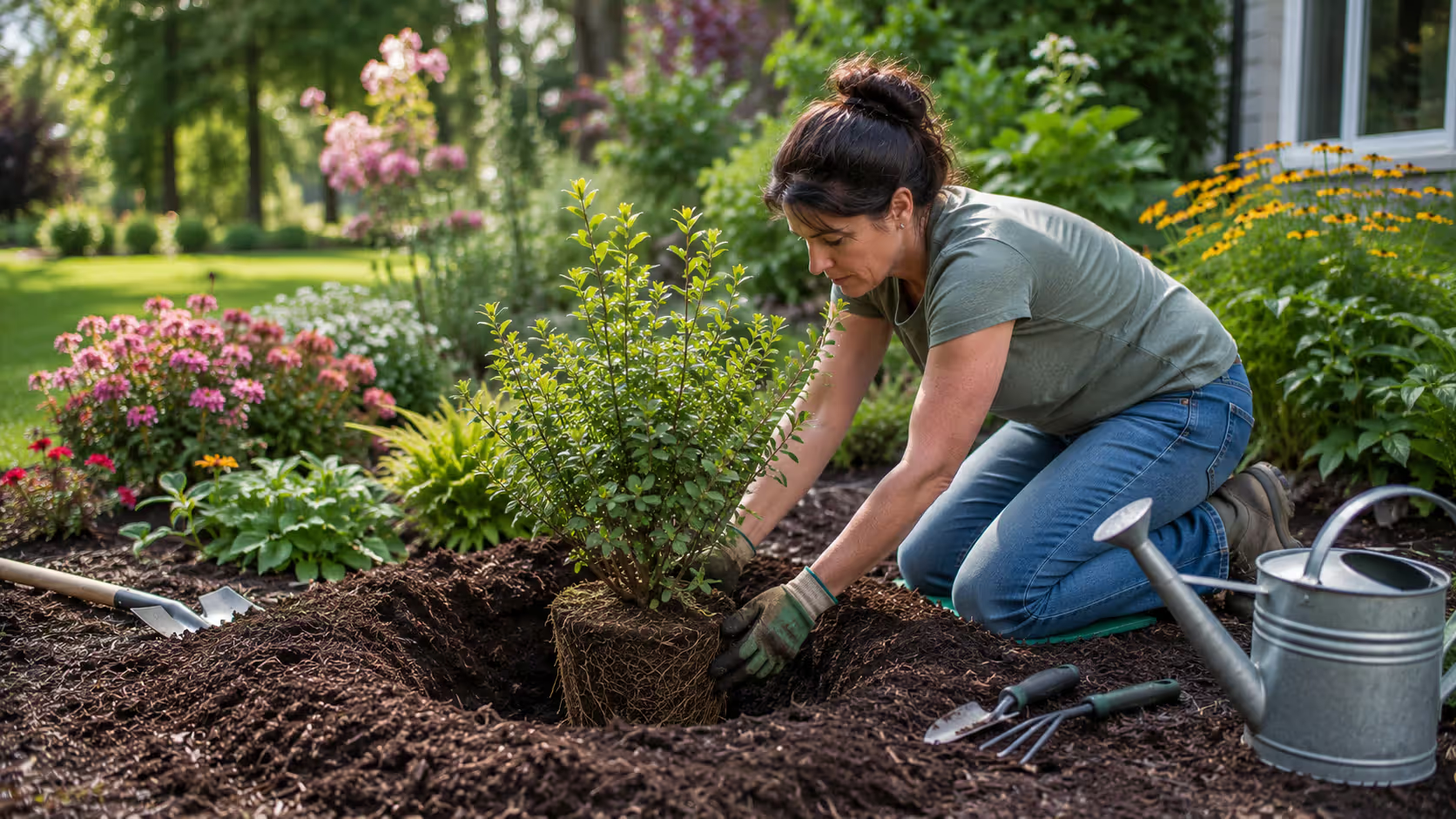
Container-grown plants go in the ground any time soil can be worked, though spring and fall plantings establish with less stress. Dig holes twice the root ball width but matching its depth—planting too deep invites crown rot. I see this mistake constantly. The top of the root ball should sit level with surrounding soil, not buried beneath it. Backfill with native soil rather than amended mixes, which can create drainage discontinuities.
Soak thoroughly at planting time, then keep soil consistently moist (not soggy) through the first growing season. Established plants handle moderate drought, though flowering and growth improve with occasional deep watering during extended dry periods.
Skip fertilizer in most cases. A 2-inch compost mulch layer applied each spring provides sufficient nutrition for healthy growth. Excessive fertilization—particularly high-nitrogen formulas—pushes leafy growth on climbers while reducing flower production.
Pruning requirements split between climbers and shrubs. Climbing honeysuckles produce flowers on current season's growth, so prune in late winter before buds break. Remove dead material and thin congested areas to improve airflow. You can cut overgrown vines back severely—they'll rebound vigorously.
Shrub forms like L. fragrantissima bloom on previous year's wood, requiring post-bloom pruning if you want to maintain flowers. Trim right after flowering finishes. L. nitida hedges tolerate multiple shearings throughout the growing season for maintaining formal shapes.
Author: Sienna Calder;
Source: cribbslandscaping.com
Lonicera Japonica Care
If you're managing existing Japanese honeysuckle in western states where it hasn't become invasive yet, or dealing with inherited plantings responsibly, basic care is simple. This species tolerates virtually any soil and grows in conditions ranging from full sun to deep shade. Spreading occurs through both rooting stems and bird-dispersed seeds, requiring regular removal of seedlings and trimming of horizontal runners.
The critical mistake is planting near natural areas or wildlands. Even where Japanese honeysuckle isn't officially listed as invasive, it can escape cultivation and displace native plants. Confine it strictly to urban settings with hard barriers like pavement or regularly mowed lawn surrounding it completely.
Aggressive spring pruning controls size. You can cut Japanese honeysuckle nearly to ground level and it will regenerate. This rejuvenation technique every 2-3 years prevents massive woody accumulation at the base.
Native vs. Non-Native Lonicera Species in the US
North America hosts approximately 20 native honeysuckle species, though commercial availability remains limited for most. Lonicera sempervirens (trumpet honeysuckle) appears most commonly in nurseries, native from Connecticut south to Florida and west through Texas. L. dioica (limber honeysuckle) ranges across northern states and southern Canada. L. ciliosa (orange honeysuckle) grows wild from California north to British Columbia.
These native species evolved alongside North American pollinators, providing superior ecological support compared to Asian imports. Ruby-throated hummingbirds show particular adaptation to L. sempervirens tubular flowers. Berries—while toxic to humans—feed hermit thrushes, cedar waxwings, American robins, and other songbirds.
Ecological benefits extend beyond direct food sources. Native honeysuckles host larvae of several moth and butterfly species. Spring azure butterflies use L. sempervirens as larval food in portions of their range. These insect populations support broader food webs, feeding insectivorous birds, spiders, and predatory insects.
Non-native species deliver reduced ecological value. Hummingbirds visit any tubular flowers opportunistically, but research demonstrates preference for native honeysuckles when both options exist. More concerning is the invasive potential of several Asian species.
Lonicera japonica leads the invasive species list. Introduced in 1806 as an ornamental, it now blankets millions of acres from Maine to Florida and west to Missouri, forming impenetrable mats that exclude native vegetation and prevent forest regeneration. Multiple states list it as noxious, with some jurisdictions prohibiting sales entirely.
Lonicera maackii (Amur honeysuckle) runs a close second for invasive damage. This shrub creates dense thickets in woodlands, outcompeting native understory species. Earlier leaf emergence and later leaf retention than natives provide competitive advantages. Birds distribute seeds widely, accelerating spread.
Lonicera tatarica (Tatarian honeysuckle) invades northern states less aggressively than the previous two but still causes problems. It hybridizes with other species, producing variable offspring that complicate identification.
Responsible planting practices are straightforward: select native species whenever possible, particularly in suburban or rural settings adjacent to natural areas. When non-natives offer specific advantages (like L. nitida for formal hedging), choose sterile cultivars if available and monitor for volunteer seedlings. Never plant Japanese or Amur honeysuckle regardless of location.
Author: Sienna Calder;
Source: cribbslandscaping.com
Using Lonicera to Support Pollinators and Wildlife
Hummingbirds provide the main attraction for most flowering honeysuckles. Lonicera sempervirens tubular flowers match ruby-throated hummingbird bill dimensions almost perfectly. A single mature vine can support multiple nesting pairs throughout breeding season. Peak bloom during May and June coincides precisely with peak hummingbird territorial activity across most regions.
Bees visit honeysuckle flowers as well, though they function as less important pollinators than hummingbirds for most species. Bumblebees access nectar in some varieties, while smaller bees gather pollen. Evening-fragrant types like L. periclymenum attract sphinx moths, which pollinate while feeding after dark.
Butterflies occasionally visit honeysuckle blooms, though they're not primary pollinators. Real butterfly value comes from larval host relationships. Spring azures utilize certain honeysuckle species as caterpillar food plants, as mentioned previously.
Berry production varies substantially by species. Lonicera sempervirens produces small red berries in late summer persisting through fall. These aren't palatable to humans—they're mildly toxic in quantity—but birds consume them eagerly. Hermit thrushes, cedar waxwings, and American robins all eat honeysuckle berries.
Lonicera tatarica and L. maackii produce abundant berries, which partially explains their invasive success—birds distribute seeds everywhere. The fruit contains lower nutritional value compared to native alternatives, creating additional ecological concerns. Birds fill up on honeysuckle berries instead of more nutritious native fruits, potentially affecting migration success and overwinter survival.
Bloom timing affects wildlife support. Lonicera fragrantissima flowers during late winter when few other nectar sources exist, supporting early-emerging bees and other insects. Summer-blooming climbers bridge the gap between spring ephemerals and fall asters. Planting multiple species extends bloom season and provides consistent resources.
Author: Sienna Calder;
Source: cribbslandscaping.com
Common Problems and How to Avoid Them
Aphids colonize honeysuckle enthusiastically. You'll typically find them clustered on tender new growth during spring, causing leaf curl and distortion. Damage usually remains cosmetic rather than life-threatening. Strong water spray from a hose dislodges most aphids, and beneficial insects like ladybugs typically establish control by early summer.
When aphids persist, check for ant activity. Ants protect aphid colonies to harvest honeydew, defending them against predators. Disrupting ant access—using sticky barriers on climbing vines, for instance—often solves aphid problems indirectly.
Powdery mildew manifests as white patches on foliage, particularly during humid weather with poor air circulation. Susceptible species like Lonicera japonica can look unsightly by midsummer if planted too densely. Improve airflow by thinning congested stems and avoid overhead watering late in the day. Fungicides are rarely necessary in home landscapes.
Leaf spot diseases occasionally appear during wet seasons, causing brown or black blotches on leaves. Most are cosmetic and don't threaten plant health. Rake and discard heavily infected foliage in fall to reduce overwintering spores.
Scale insects attach to stems and leaves, sucking sap and weakening plants over time. Heavy infestations cause yellowing leaves and sticky honeydew. Dormant oil applied in late winter provides effective control. Check stems closely—scale often looks like small bumps rather than obvious insects.
Spider mites become problematic during hot, dry weather, especially on Lonicera nitida hedges. Fine webbing and stippled leaves indicate their presence. Regular deep watering and occasional hosing of foliage help prevent outbreaks.
Poor flowering usually traces to one of three causes: insufficient sunlight, overfertilization, or improper pruning. If your honeysuckle produces abundant leaves but few blooms, first check whether it receives at least six hours of sun. Then review your fertilizer practices—too much nitrogen encourages foliage at the expense of flowers. Finally, confirm you're pruning at the correct time for your species.
Winter dieback affects borderline-hardy species in colder zones. Planting in sheltered locations and mulching root zones helps reduce damage. Even if top growth dies back, established plants often resprout from the base in spring.
The biggest long-term issue isn't pests or disease—it's planting the wrong species in the wrong place. Choose non-invasive varieties suited to your climate, and most problems become minor inconveniences rather than major headaches.
FAQ: Lonicera Questions Answered
Are honeysuckle berries edible?
Most ornamental honeysuckle berries are not edible and may cause stomach upset if consumed in quantity. The main exception is Lonicera caerulea, which produces tart blue fruits that are safe to eat and often used in jams and desserts.
How fast does honeysuckle grow?
Growth rates vary by species, but many climbing types grow 3 to 6 feet per year once established. Shrub forms like Lonicera nitida typically add 12 to 18 inches annually and respond well to pruning.
Does honeysuckle grow in shade?
Most lonicera species tolerate partial shade, but flowering is usually best with at least 4 to 6 hours of direct sunlight. Lonicera fragrantissima is one of the most shade-tolerant species and still blooms reliably even beneath deciduous trees.
What is the best honeysuckle for hummingbirds?
Lonicera sempervirens is widely considered the best honeysuckle for hummingbirds. Its bright coral-red tubular flowers are perfectly shaped for ruby-throated hummingbirds, and the plant blooms from late spring through early fall. Unlike some Asian honeysuckles, it is native to North America and non-invasive.
Lonicera offers an unusually broad range of possibilities for American gardens. Whether you want a fragrant winter shrub, a hummingbird-friendly native vine, or a crisp evergreen hedge, there's likely a species that fits your needs.
The key is choosing carefully. Native selections like Lonicera sempervirens combine beauty, wildlife value, and responsible gardening. Shrubs such as Lonicera fragrantissima provide extraordinary fragrance when little else is blooming. Formal options like Lonicera nitida create structure and year-round greenery.
At the same time, it's worth avoiding invasive species like Lonicera japonica and Lonicera maackii, which can escape cultivation and damage natural ecosystems.
Plant the right lonicera in the right place, and you'll be rewarded with fragrance, flowers, pollinators, and decades of reliable performance. Few garden plants offer so much with so little effort.
Star jasmine creates fragrant, evergreen coverage but grows vigorously. This guide explains whether it's truly invasive, how fast it spreads, control strategies, and complete care instructions for US gardeners in zones 8-11.
You've probably noticed entire hillsides glowing gold during autumn walks. Yellow fall foliage creates stunning displays, but not every tree joins the show. Learn which species reliably turn brilliant yellow year after year, the science behind the color change, and how to choose the perfect yellow fall tree for your landscape.
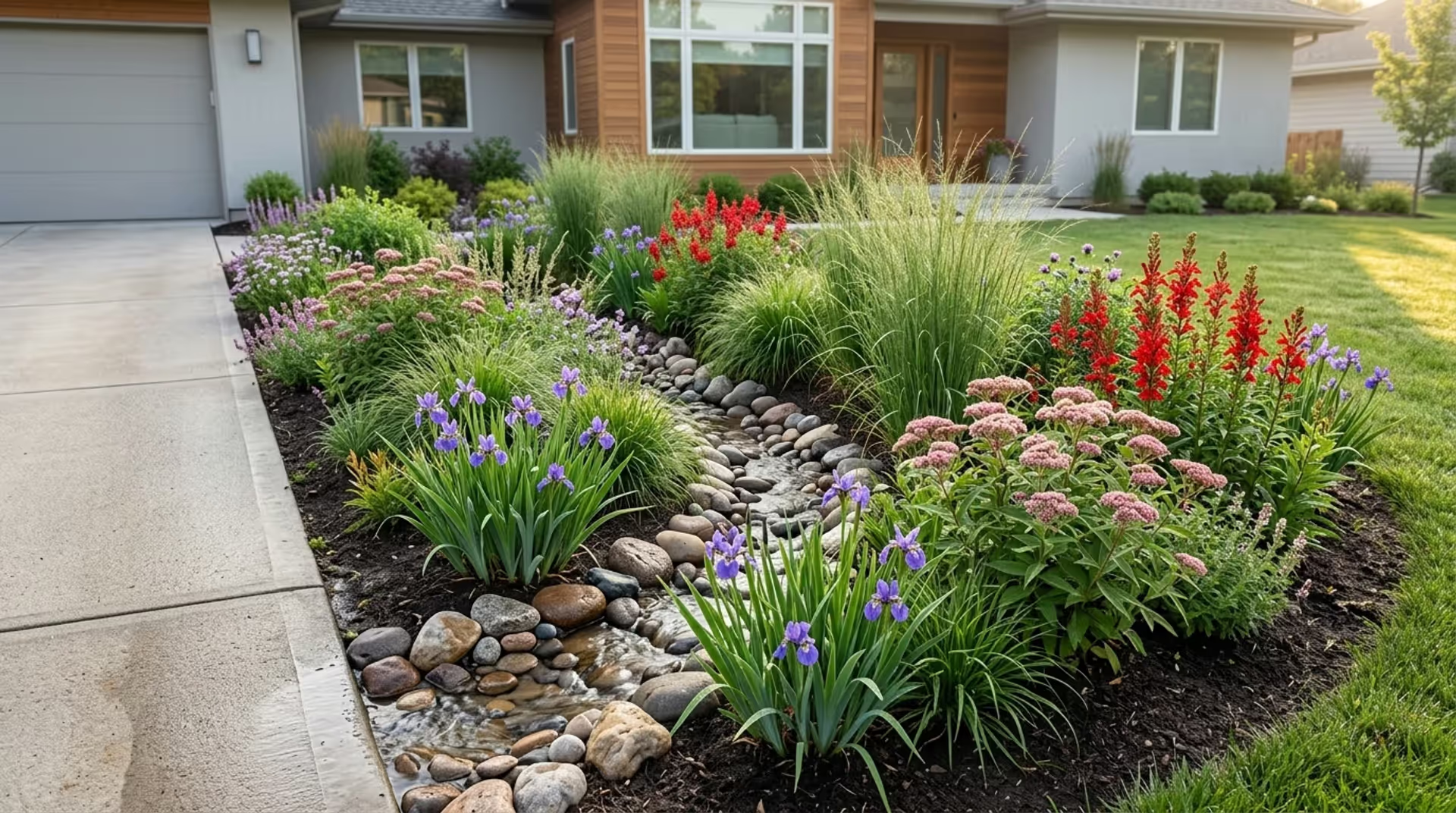
Learn which plants thrive in bioswales and drainage areas. This comprehensive guide covers native species by region, moisture-tolerant options, planting zones, design principles, and common mistakes to avoid when creating functional rain gardens and bioswales.
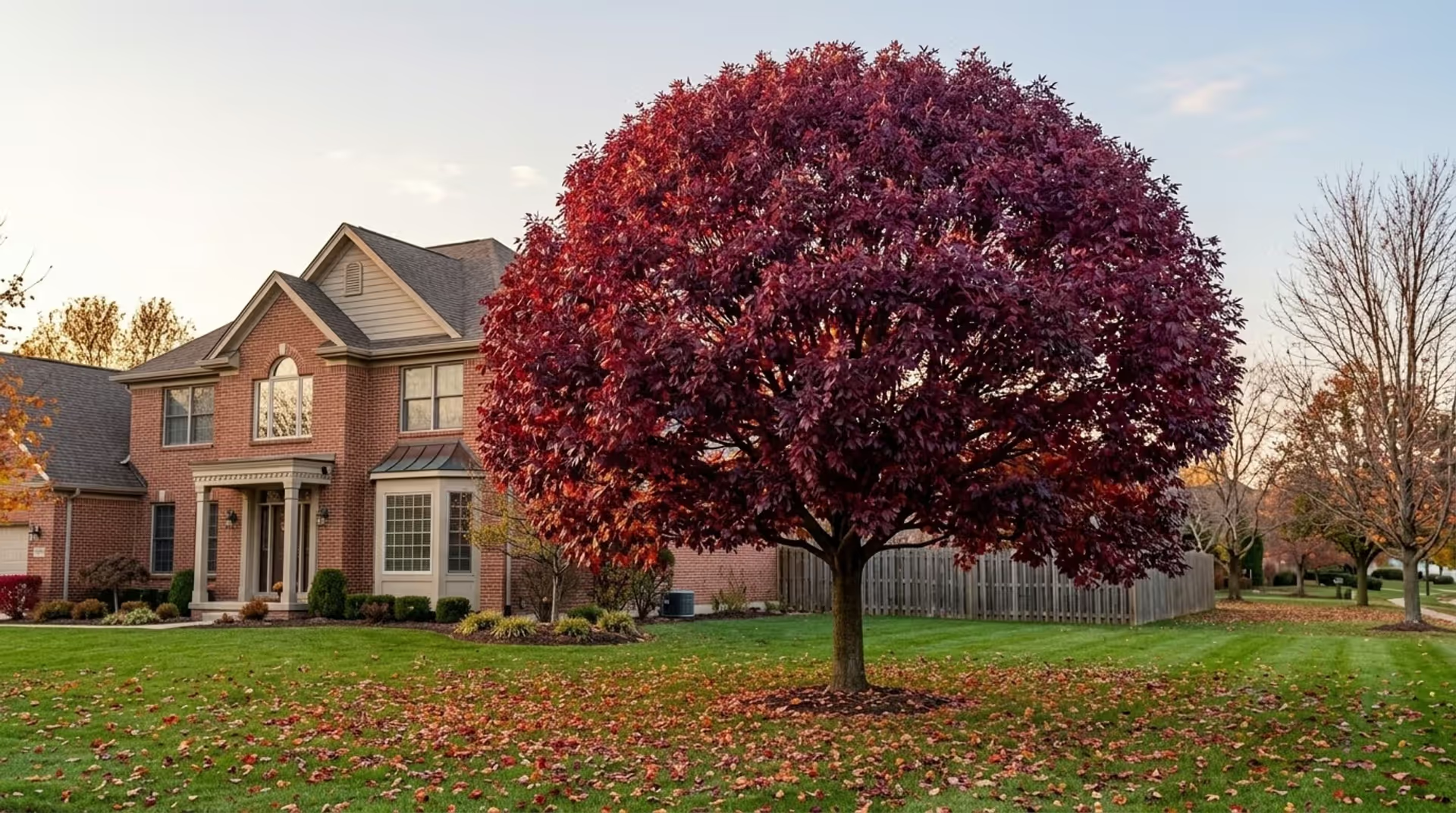
The raywood ash stands out among ornamental shade trees for one spectacular reason: its fall display rivals any maple. This deciduous tree transforms from deep green to burgundy-plum in autumn, creating a focal point that stops traffic.
The content on this website is provided for general informational and educational purposes only. It is intended to explain concepts related to landscape design, outdoor spaces, plants, irrigation, hardscape and softscape, and sustainable landscaping.
All information on this website, including articles, guides, and examples, is presented for general educational purposes. Outcomes may vary depending on local climate, soil, plant selection, and project implementation.
This website does not provide professional design, construction, or horticultural advice, and the information presented should not be used as a substitute for consultation with qualified landscape architects, contractors, or horticulturists.
The website and its authors are not responsible for any errors or omissions, or for any outcomes resulting from decisions made based on the information provided on this website.