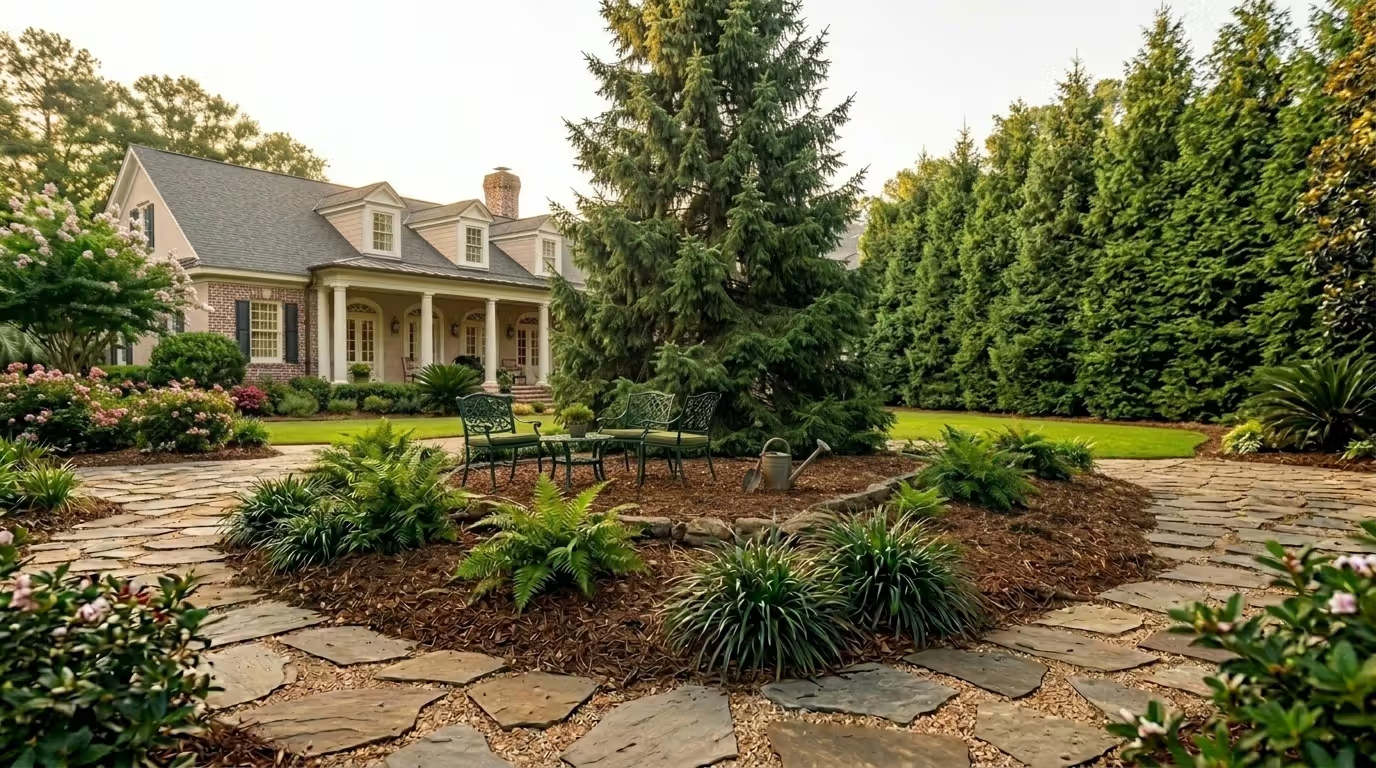
Norway spruce trees command attention. These towering evergreens can transform a flat suburban lot into a private woodland retreat. But you need to know what you're getting into before planting one. The mature size of these conifers catches many homeowners off guard — in a good way if you've got space, less so if you haven't planned ahead.
These European natives have become landscape staples across the northern United States. They grow fast, stay green year-round, and provide shelter for wildlife. The question isn't whether they're useful trees. It's whether their eventual dimensions fit your property.
Understanding Norway Spruce Mature Size
Norway spruce (Picea abies) typically reaches 40 to 60 feet tall in residential landscapes. Some specimens push past 80 feet in ideal conditions. The spread at maturity ranges from 25 to 30 feet at the base.
That's a big tree. Really big.
The pyramidal shape stays fairly consistent throughout the tree's life. Lower branches sweep downward and can touch the ground if left unpruned. Upper branches angle slightly upward before the tips droop — that characteristic weeping habit that makes Norway spruce recognizable from a distance.
Climate zone makes a difference. Trees in USDA zones 3 and 4 often grow taller and narrower than those in zones 6 and 7. Southern specimens tend to be shorter and wider. Heat stress limits vertical growth in warmer regions.
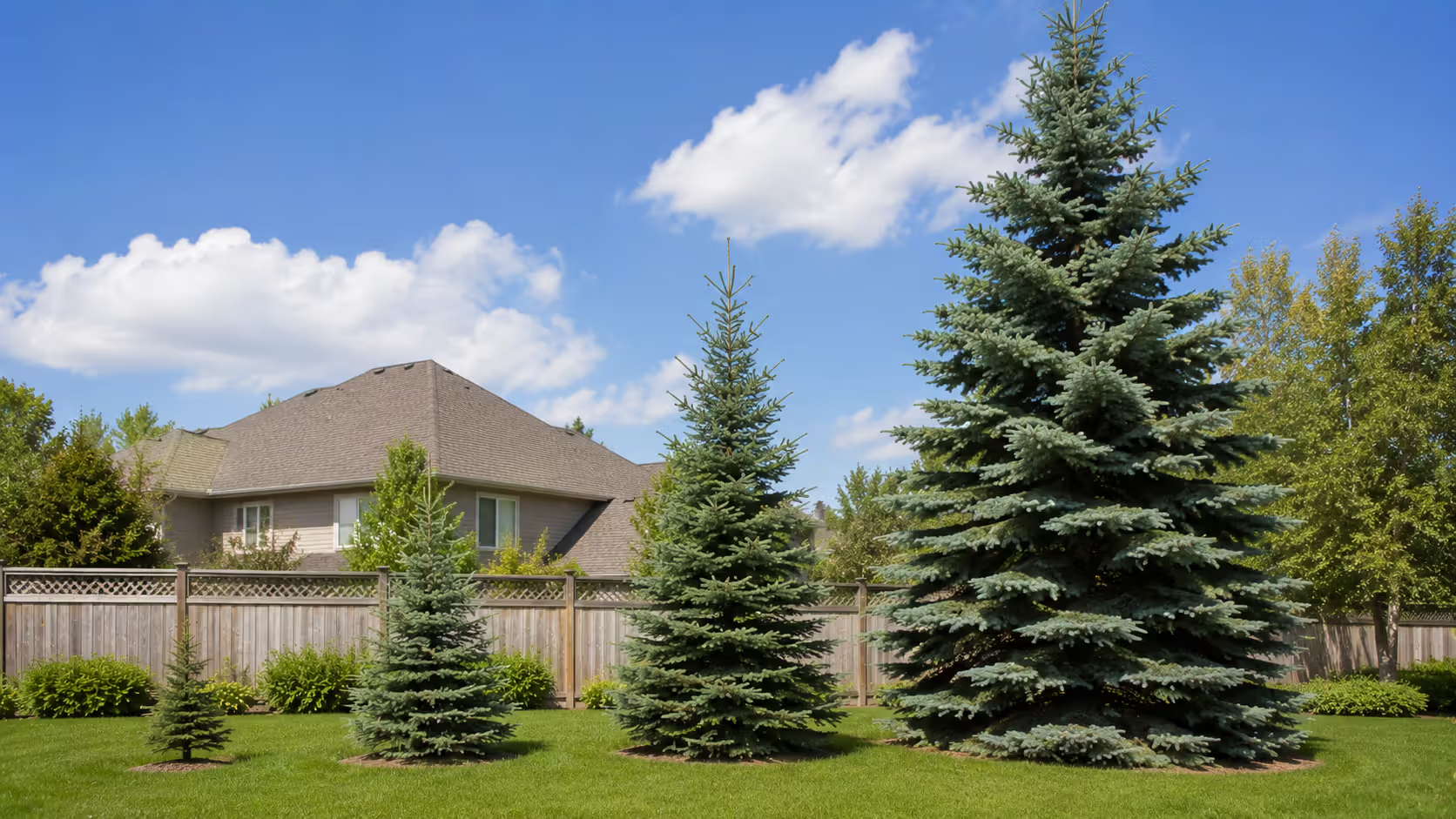
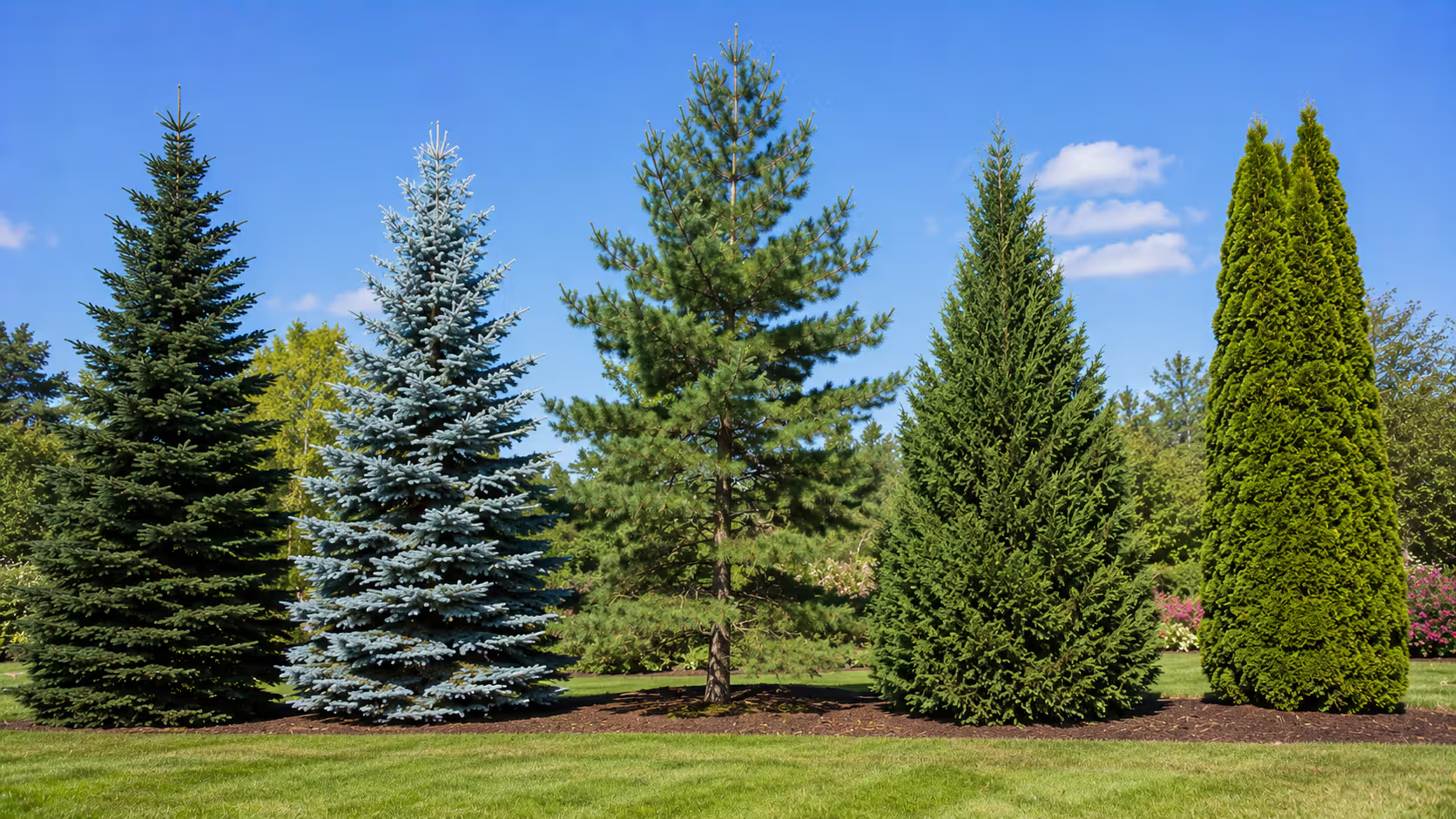
Compare Norway spruce to other popular evergreens and the size difference becomes clear. White pines grow taller (50–80 feet) but with similar spread. Blue spruce stays more compact at 30–60 feet tall and 10–20 feet wide. Leyland cypress reaches 60–70 feet but grows much faster, sometimes too fast for its own structural integrity.
The pattern I see most often is homeowners underestimating the width. That 25-foot spread means the tree needs 12–15 feet of clearance from structures, driveways, and property lines. Plant too close and you'll be fighting branches for years.
Author: Olivia Maren;
Source: cribbslandscaping.com
How Fast Does Norway Spruce Grow
Young Norway spruce trees put on 12 to 24 inches of vertical growth per year during their first 25 years. That's genuinely fast for an evergreen of this size. After age 30, growth slows to 6–12 inches annually.
The first decade matters most. A well-established sapling in good soil with adequate water can easily add 18 inches per year. By year 10, you're looking at a tree 15–20 feet tall.
Water availability — Consistent moisture during the growing season keeps growth on track. Drought stress in years 1–5 can permanently stunt the tree.
Sunlight — Full sun produces the fastest growth. Partial shade (4–6 hours of direct sun) still works but expect 20–30% slower development.
Climate zone — Trees in zones 3–5 grow most vigorously. Zone 7 specimens struggle with heat and grow more slowly.
Here's a realistic timeline from planting to maturity:
Years 1–3: Establishment phase, 6–12 inches annually
Years 4–15: Peak growth, 18–24 inches annually
Years 16–30: Strong growth continues, 12–18 inches annually
Years 31–50: Moderate growth, 6–12 inches annually
Years 50+: Slow growth, 3–6 inches annually
Author: Olivia Maren;
Source: cribbslandscaping.com
Regional differences matter more than most guides acknowledge. A Norway spruce in northern Minnesota grows differently than one in southern Ohio. Cold-climate trees develop tighter branch spacing and denser foliage. Warmer-zone specimens have looser branching and may show heat stress during summer months.
Planting and Spacing Requirements
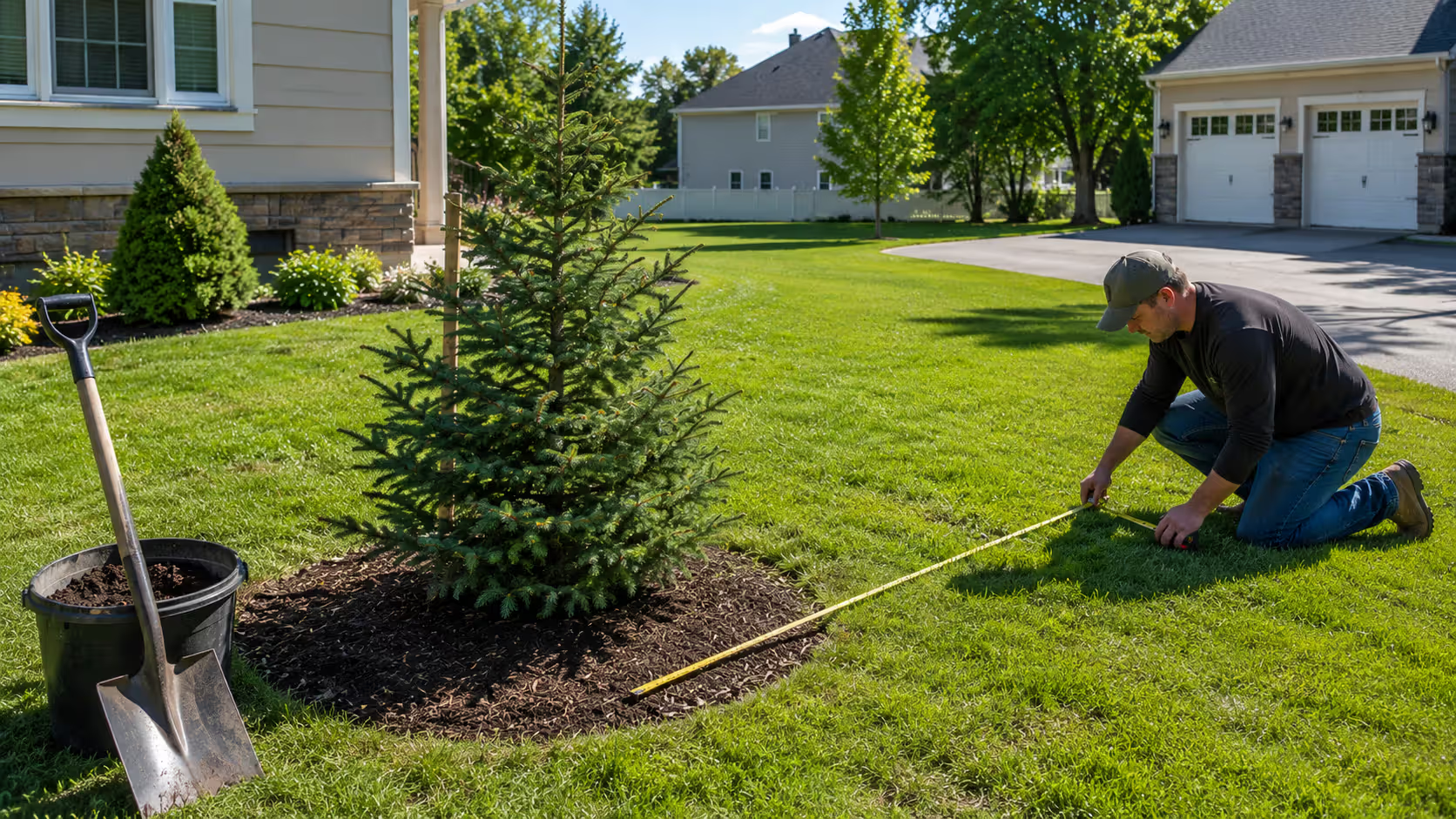
Proper spacing prevents future headaches. For a single specimen tree, allow at least 15 feet from buildings, 20 feet from driveways, and 25 feet from property lines. That 25-foot mature width isn't a suggestion.
Site selection determines long-term success. Norway spruce needs:
Full sun — Minimum 6 hours of direct sunlight daily. More is better.
Well-drained soil — Standing water kills these trees. They tolerate various soil types but demand good drainage.
Protection from salt — Road salt and ocean spray cause needle damage. Plant at least 50 feet from salted roads.
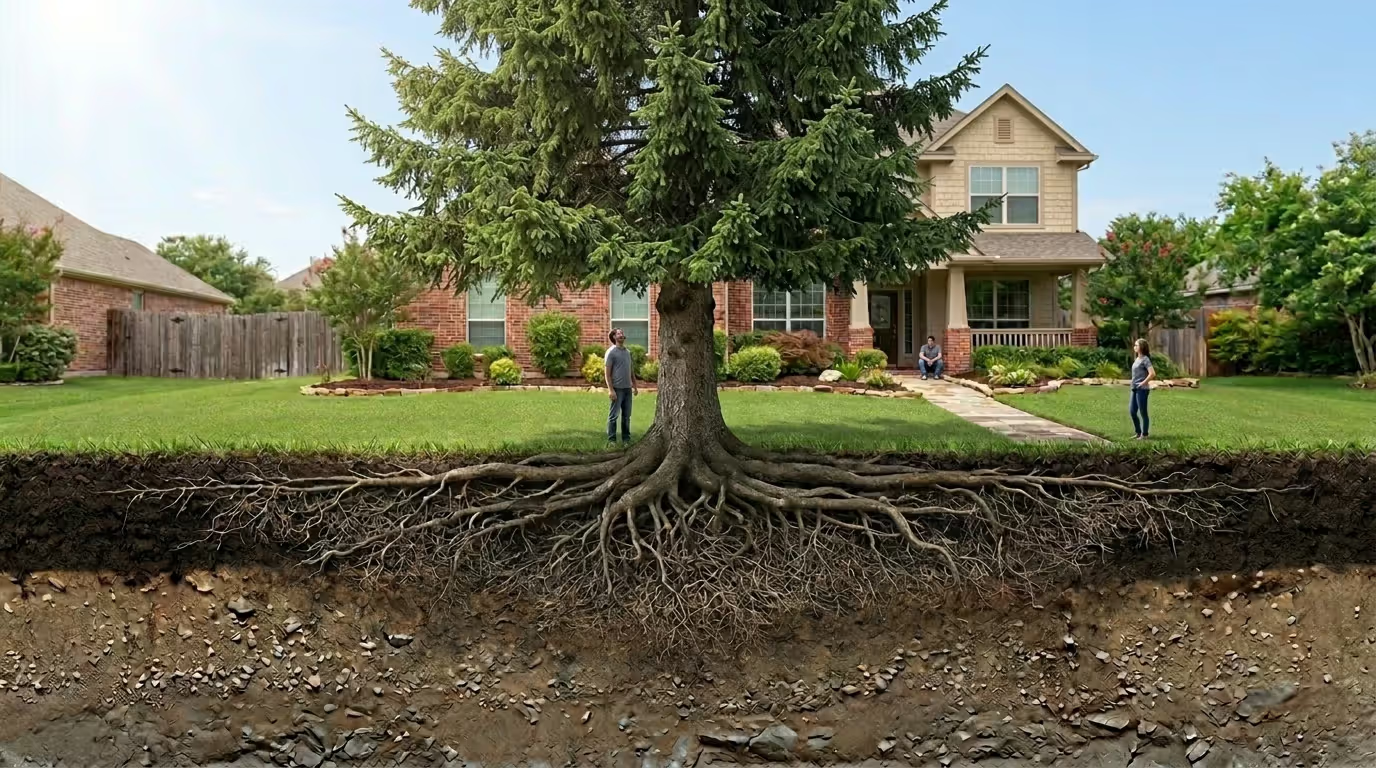
Space for roots — The root system spreads 1.5 times wider than the canopy. Plan accordingly.
Soil preparation makes a difference. Dig a hole twice as wide as the root ball but no deeper. Norway spruce roots grow horizontally near the surface. Deep planting causes collar rot and eventual death.
Amend heavy clay with compost to improve drainage. Sandy soil benefits from organic matter to retain moisture. Avoid fertilizer at planting time — it can burn young roots.
For hedge or privacy screen planting, space trees 10–12 feet apart on center. This creates overlap at maturity without crowding. Closer spacing (8 feet) produces faster screening but requires more aggressive pruning later.
Some homeowners plant 6 feet apart for immediate privacy. Don't. The trees will compete for light, develop weak branch structure, and decline prematurely. Patience pays off with proper spacing.
Mulch after planting with 3–4 inches of wood chips or shredded bark. Keep mulch 6 inches away from the trunk to prevent rot. The mulch ring should extend at least 3 feet from the trunk in all directions.
Author: Olivia Maren;
Source: cribbslandscaping.com
Caring for Norway Spruce Through Its Lifespan
Norway spruce trees can live 100 to 200 years with proper care. The first five years determine whether you'll have a healthy specimen or a struggling survivor.
Watering and Fertilizing
Newly planted trees need consistent moisture. Water deeply once or twice weekly during the first growing season. Shallow, frequent watering encourages shallow roots — exactly what you don't want.
Established trees (3+ years) tolerate moderate drought but grow best with supplemental water during dry periods. Provide 1–2 inches of water weekly during summer months if rainfall falls short.
Signs of water stress include:
Needle tips turning brown
Drooping branch tips that don't recover overnight
Premature needle drop
Reduced annual growth
Fertilizing isn't always necessary. Trees in decent soil rarely need supplemental nutrients. If growth seems slow or needles look pale, soil testing reveals deficiencies.
When fertilizing, use a balanced evergreen formula (10-10-10 or similar) in early spring before new growth begins. Apply according to package directions based on tree size. Over-fertilizing causes excessive soft growth that's prone to winter damage.
Mature trees rarely need fertilizer. Their extensive root systems find adequate nutrients in most soils.
Pruning and Maintenance
Norway spruce needs minimal pruning. That's part of the appeal.
Prune only to:
Remove dead, damaged, or diseased branches
Control size in limited spaces
Shape young trees for specific purposes
Remove lower branches for clearance
Timing matters. Prune in late winter or early spring before new growth starts. Summer pruning removes energy-producing foliage and stresses the tree.
Shaping young trees (years 3–10) establishes good structure. Remove competing leaders if the tree develops multiple tops. Trim back overly aggressive lateral branches to maintain the pyramidal shape.
You can't keep a Norway spruce small with regular pruning. Not really. Light annual trimming might slow growth by 20–30%, but you're fighting the tree's genetics. If you need a small evergreen, plant a dwarf cultivar instead.
Common care mistakes include:
Topping — Cutting the central leader ruins the tree's shape permanently. Don't do it.
Removing lower branches prematurely — Those ground-sweeping branches are characteristic of the species. Removing them exposes the trunk and destroys the tree's natural form.
Planting in shade — Norway spruce declines in shaded conditions. Sparse foliage and weak growth follow.
Ignoring needle cast diseases — Fungal diseases cause premature needle drop. Proper spacing for air circulation prevents most problems.
Expect your Norway spruce to look its best from years 15 to 80. Young trees lack the impressive stature. Very old specimens may show thinning foliage and dead lower branches.
Norway spruce delivers maximum impact in zones 3 through 5, where the climate matches its native range. Homeowners in warmer zones often battle heat stress and pest problems that northern specimens never encounter. Match the tree to your climate, not your wishlist.
— Mitchell Robert
Using Norway Spruce for Privacy Screening
Norway spruce excels as a privacy screen and windbreak. The dense foliage blocks sight lines and reduces wind effectively. Lower branches that touch the ground create a visual barrier from ground to crown.
For privacy screening, plant trees 10–12 feet apart. This spacing allows individual trees to develop properly while creating overlap at maturity. You'll have complete screening by year 12–15.
Closer spacing produces faster results but creates problems. Trees planted 6–8 feet apart screen effectively by year 8–10 but begin competing for light soon after. Lower branches die from shading. The screen develops gaps at ground level — exactly where you need coverage most.
Wind reduction is substantial. A properly spaced Norway spruce windbreak reduces wind speed by 50–75% for a distance of 10 times the tree's height on the leeward side. That's serious protection for gardens, patios, and buildings.
The density varies by season. Norway spruce maintains full foliage year-round, unlike deciduous trees. Winter screening is just as effective as summer.
Wildlife benefits are considerable. Dense branches provide nesting sites for songbirds. Squirrels and small mammals use the trees for shelter and travel corridors. Seeds feed crossbills, siskins, and other finch species.
Deer browse young trees but usually leave established specimens alone. Protect trees under 6 feet tall with fencing or repellents if deer pressure is high in your area.
One counterintuitive point: Norway spruce makes a poor choice for narrow side yards. The mature width overwhelms tight spaces. You'll end up with branches scraping buildings and blocking walkways. Save these trees for properties with room to spare.
Author: Olivia Maren;
Source: cribbslandscaping.com
Comparing Norway Spruce to Other Fast-Growing Conifers
Choosing the right evergreen depends on your specific needs. Here's how Norway spruce compares to other popular options:
Tree Name
Mature Height
Mature Width
Annual Growth Rate
USDA Hardiness Zones
Best Use
Norway Spruce
40–60 ft
25–30 ft
12–24 in (young trees)
3–7
Windbreaks, large property screening, specimen tree
White Pine
50–80 ft
20–40 ft
12–36 in
3–8
Tall screens, naturalized areas, timber
Blue Spruce
30–60 ft
10–20 ft
6–12 in
2–7
Specimen tree, formal landscapes, smaller screens
Leyland Cypress
60–70 ft
15–25 ft
24–36 in
6–10
Fast privacy screens (warmer zones only)
Green Giant Arborvitae
40–60 ft
12–18 ft
24–36 in
5–8
Narrow screens, tight spaces, formal hedges
Norway spruce sits in the middle for growth rate. It's faster than blue spruce but slower than Leyland cypress or Green Giant arborvitae. The tradeoff is longevity — Norway spruce outlives both fast-growing alternatives by decades.
White pine grows taller but has a more open branching habit. It doesn't screen as effectively at ground level. Norway spruce provides denser coverage from top to bottom.
Blue spruce stays more compact and shows better drought tolerance once established. But it grows much slower. If you need screening within 10 years, Norway spruce is the better choice.
Leyland cypress grows impressively fast in zones 6–10. But it's prone to disease problems and often declines after 20–30 years. Norway spruce grows steadily and remains healthy for a century or more.
Author: Olivia Maren;
Source: cribbslandscaping.com
Green Giant arborvitae fits narrow spaces better than Norway spruce. The narrow columnar form works where width is limited. But it lacks the dramatic presence of a mature Norway spruce.
The simpler option usually wins here. For northern properties with adequate space, Norway spruce delivers reliable performance without the disease susceptibility of faster alternatives.
FAQ: Norway Spruce Size and Growth Questions Answered
How tall will a Norway spruce get in 10 years?
A healthy Norway spruce typically reaches 15–20 feet tall after 10 years when planted as a young sapling. Growth rate depends on growing conditions, with trees in ideal conditions (full sun, good soil, adequate water) reaching the upper end of that range. Trees planted in marginal conditions may only reach 10–12 feet in the same timeframe. The fastest growth occurs during years 4–10 after planting.
Can you keep a Norway spruce small with pruning?
You can't truly keep a Norway spruce small through pruning alone. Light annual trimming might reduce size by 20–30%, but you're working against the tree's natural growth habit. Heavy pruning damages the tree's structure and appearance. If you need a smaller evergreen, plant a dwarf cultivar like 'Nidiformis' (stays under 3 feet) or 'Pumila' (reaches 10–12 feet) instead of trying to force a standard Norway spruce to stay small.
How wide do Norway spruce roots spread?
Norway spruce roots typically spread 1.5 to 2 times wider than the tree's canopy width. For a mature tree with a 30-foot spread, expect roots to extend 45–60 feet from the trunk. The root system is relatively shallow, with most roots in the top 12–18 inches of soil. This shallow root system makes the trees vulnerable to windthrow in storms, especially when planted in wet soil or as isolated specimens.
Is Norway spruce a good tree for small yards?
Norway spruce is generally too large for small yards. The 25–30 foot mature width requires substantial space. A tree this size overwhelms lots smaller than half an acre. For small yards (under 0.25 acres), consider more compact alternatives like dwarf Alberta spruce, smaller arborvitae cultivars, or columnar junipers. If you love Norway spruce, look for dwarf cultivars bred specifically for limited spaces.
Do Norway spruce trees stop growing at a certain age?
Norway spruce never completely stops growing, but growth slows dramatically with age. Trees grow fastest during years 5–30, then slow considerably after age 50. Very old specimens (100+ years) may add only 2–3 inches of height annually. Width continues expanding slowly throughout the tree's life as lower branches extend outward. The practical growth limit in landscape settings is usually 50–60 feet tall, though forest specimens occasionally reach 80–100 feet.
What's the difference between Norway spruce and Blue spruce size?
Norway spruce grows significantly larger than blue spruce in most landscapes. Norway spruce typically reaches 40–60 feet tall with a 25–30 foot spread, while blue spruce usually tops out at 30–50 feet tall with a 10–20 foot spread. Norway spruce also grows faster, adding 12–24 inches annually when young compared to 6–12 inches for blue spruce. The narrower width of blue spruce makes it better suited for smaller properties, while Norway spruce needs substantial space to develop properly.
Norway spruce delivers impressive results when given adequate space and proper growing conditions. The combination of fast growth, dense foliage, and long lifespan makes it a solid investment for privacy screening and windbreaks on larger properties.
But size matters. These trees need room — more room than most suburban lots provide. Planting too close to structures, property lines, or other trees creates problems that only get worse over time.
Consider your long-term plans. Will you still want a 50-foot tree in that location 20 years from now? Can you accommodate the 30-foot width at maturity? Do you have adequate space for proper root development?
If the answer to any of these questions is uncertain, explore more compact alternatives. Plenty of excellent evergreens fit smaller spaces without requiring constant pruning battles.
For properties with space to spare, Norway spruce remains one of the most reliable fast-growing evergreens for northern climates. Plant it right, give it room, and you'll have a magnificent specimen that serves multiple purposes for generations.
The key is matching the tree to your site, not forcing your site to accommodate the tree. Get that right and Norway spruce will exceed expectations.
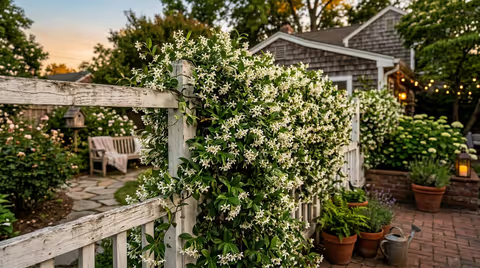
Star jasmine creates fragrant, evergreen coverage but grows vigorously. This guide explains whether it's truly invasive, how fast it spreads, control strategies, and complete care instructions for US gardeners in zones 8-11.
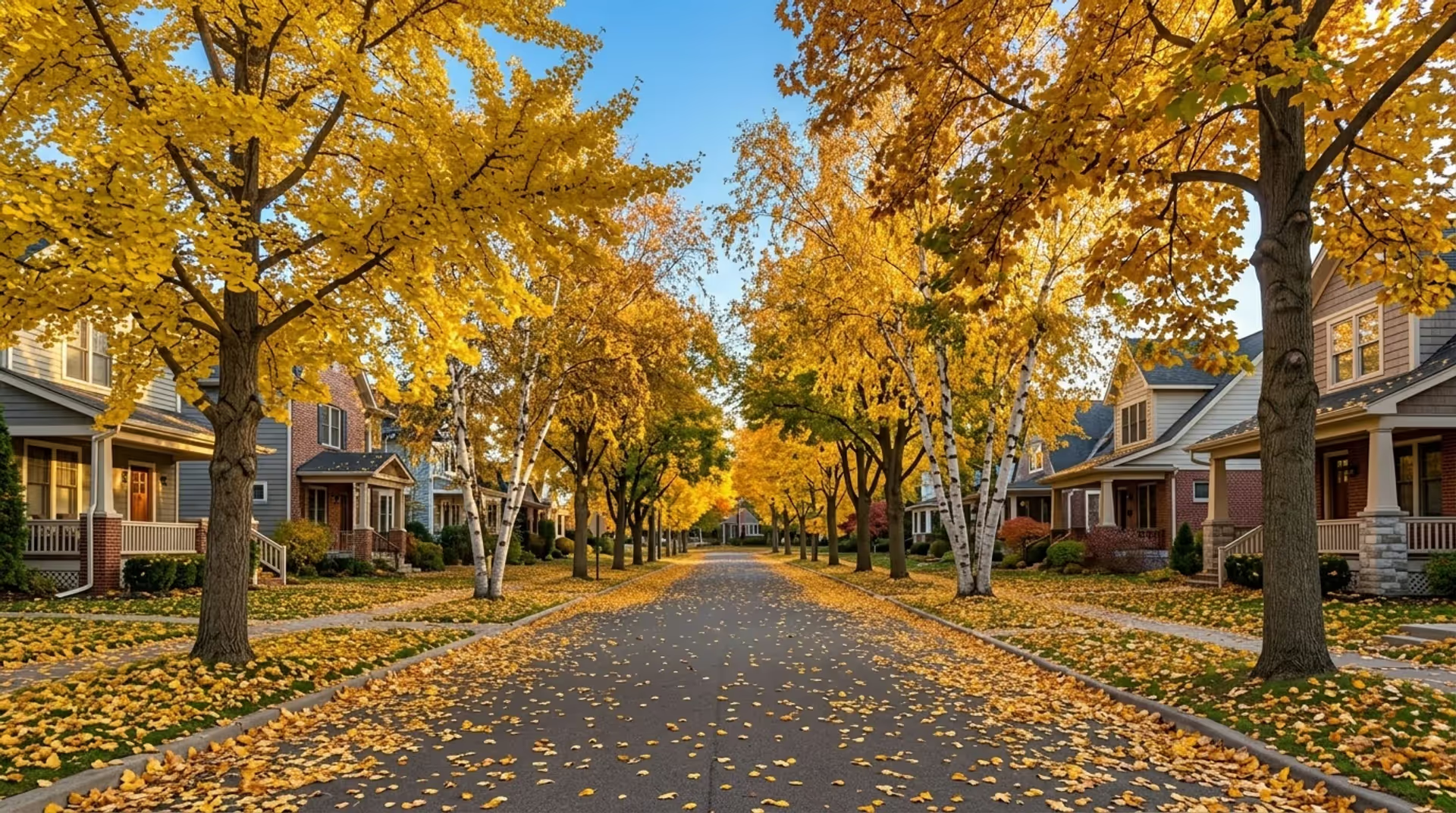
You've probably noticed entire hillsides glowing gold during autumn walks. Yellow fall foliage creates stunning displays, but not every tree joins the show. Learn which species reliably turn brilliant yellow year after year, the science behind the color change, and how to choose the perfect yellow fall tree for your landscape.
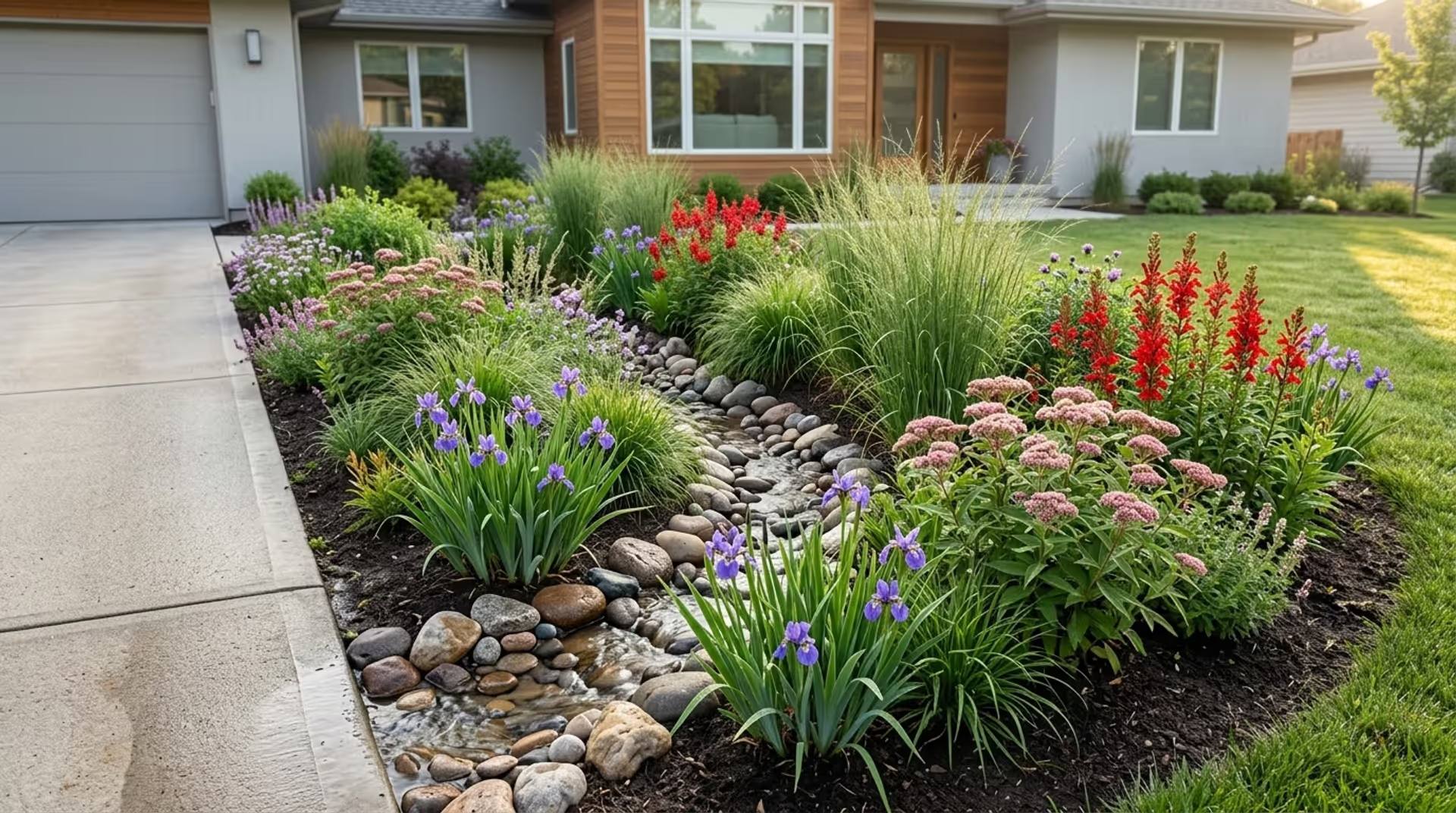
Learn which plants thrive in bioswales and drainage areas. This comprehensive guide covers native species by region, moisture-tolerant options, planting zones, design principles, and common mistakes to avoid when creating functional rain gardens and bioswales.
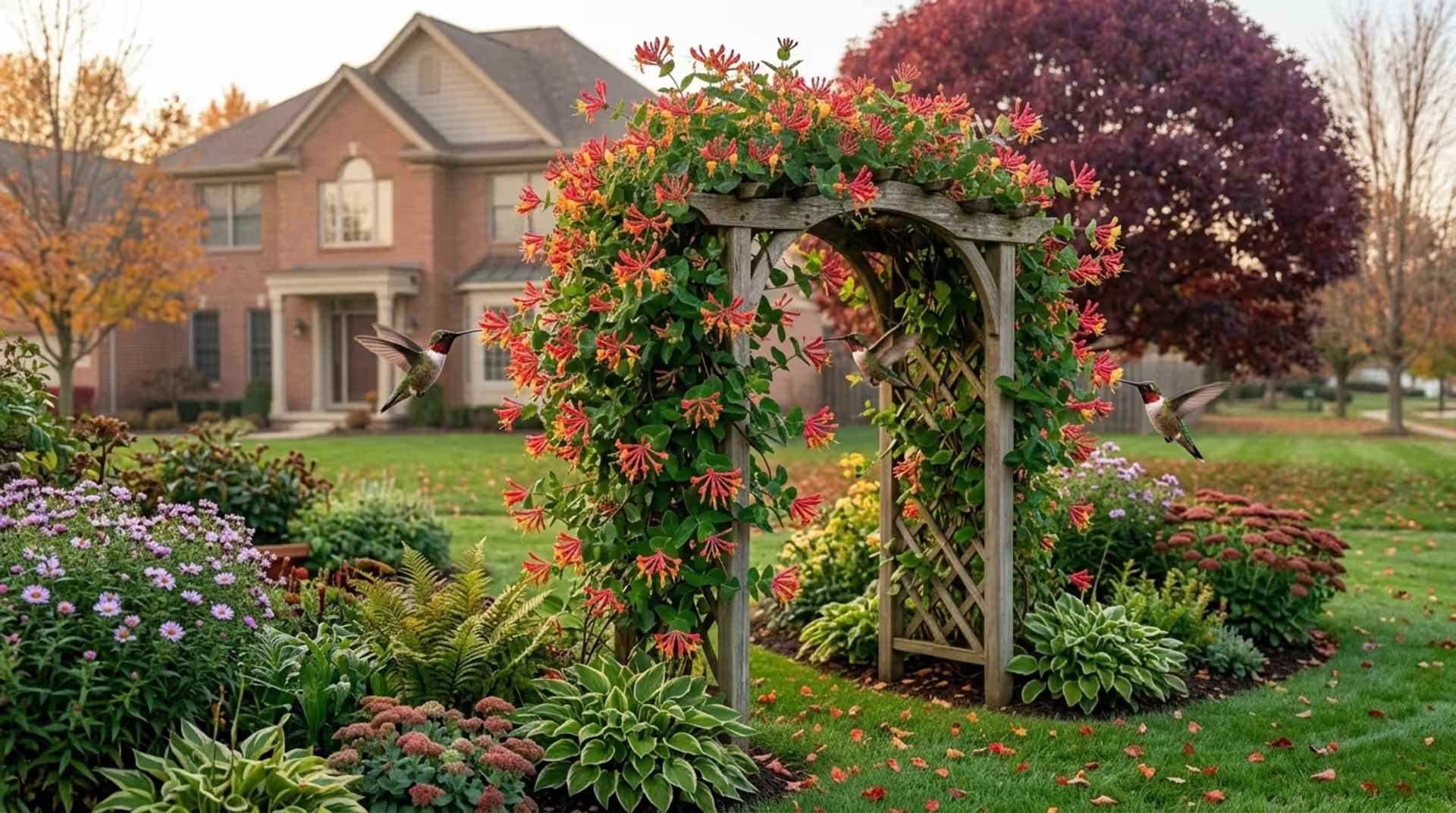
Lonicera plants offer more than sweet-smelling vines. This guide covers climbing, shrub, and ground cover varieties, plus care tips for hedges, wildlife gardens, and responsible planting. Learn which honeysuckles attract hummingbirds and which to avoid for ecological reasons.
The content on this website is provided for general informational and educational purposes only. It is intended to explain concepts related to landscape design, outdoor spaces, plants, irrigation, hardscape and softscape, and sustainable landscaping.
All information on this website, including articles, guides, and examples, is presented for general educational purposes. Outcomes may vary depending on local climate, soil, plant selection, and project implementation.
This website does not provide professional design, construction, or horticultural advice, and the information presented should not be used as a substitute for consultation with qualified landscape architects, contractors, or horticulturists.
The website and its authors are not responsible for any errors or omissions, or for any outcomes resulting from decisions made based on the information provided on this website.