Creating a driveway doesn't have to mean sacrificing your yard to a sea of concrete or asphalt. More homeowners are discovering that blending hardscape with artificial grass creates a functional, attractive entrance that manages stormwater better than traditional designs. The concept isn't new—grass pavers have been around for decades—but modern synthetic turf has transformed what's possible. You get the green look without the maintenance headaches of real grass, and your driveway can actually help with drainage instead of creating runoff problems.
Why Add Artificial Grass to Your Driveway
The environmental angle matters here. Traditional solid driveways send rainwater straight into storm drains, carrying oil residue and other pollutants with it. A permeable driveway turf system lets water soak into the ground naturally, reducing runoff by 50-70% compared to concrete. That's significant if you live in an area with drainage fees or stormwater regulations.
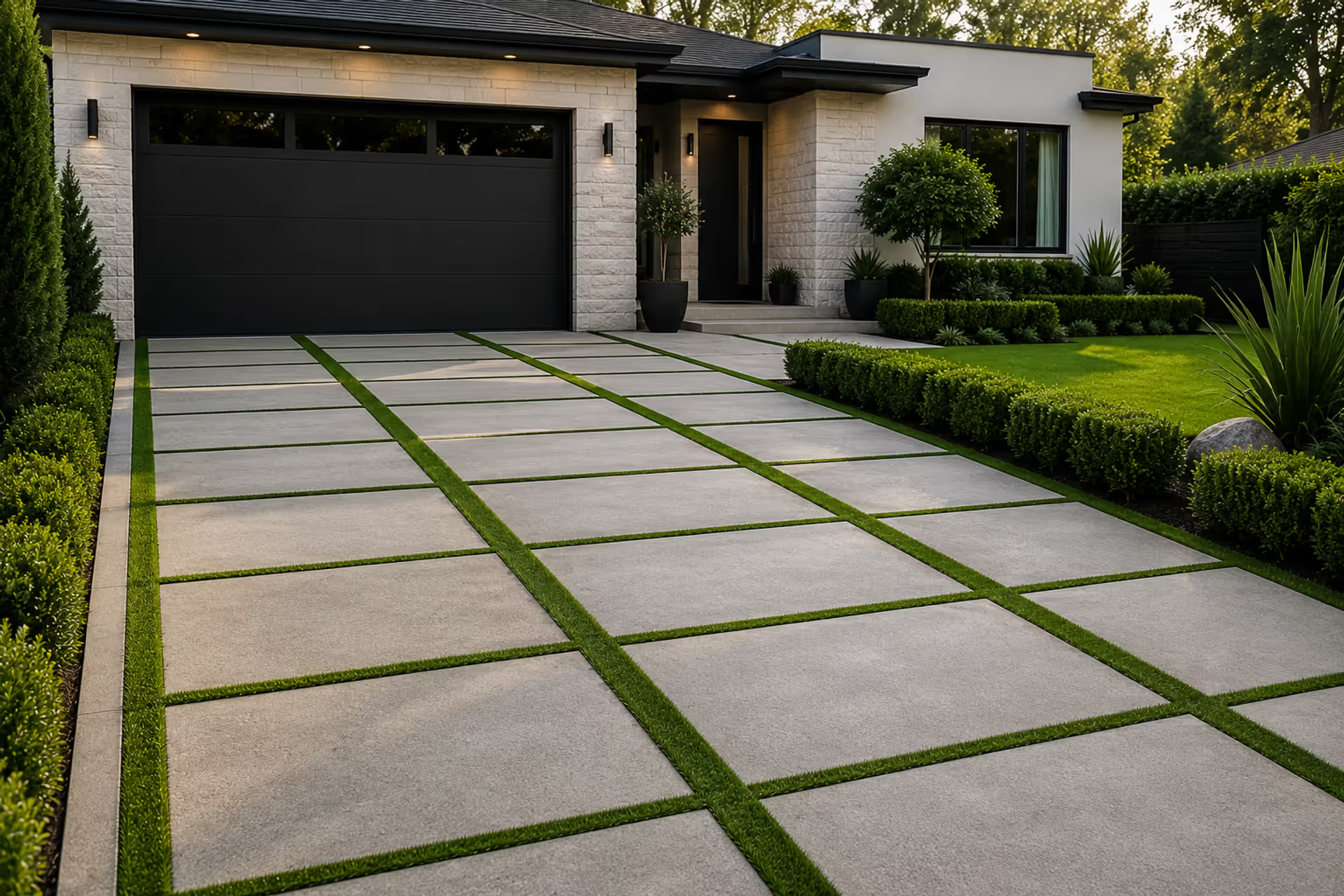
But let's be honest—most people choose this for how it looks. An eco driveway grass design breaks up the monotony of gray pavement. It softens the approach to your home and adds visual interest that plain concrete never will. The green driveway design ideas you'll see range from subtle strips between tire tracks to bold geometric patterns that make the driveway a landscape feature.
There's a practical side too. Artificial grass stays cooler than asphalt in summer heat. It won't crack like concrete does after freeze-thaw cycles. And if you've got kids who use the driveway as a play space, turf is simply more forgiving than pavement.
The pattern I see most often is homeowners starting with a small grass strip project, then wishing they'd gone bolder with the design from the start.
Types of Grass Driveway Designs
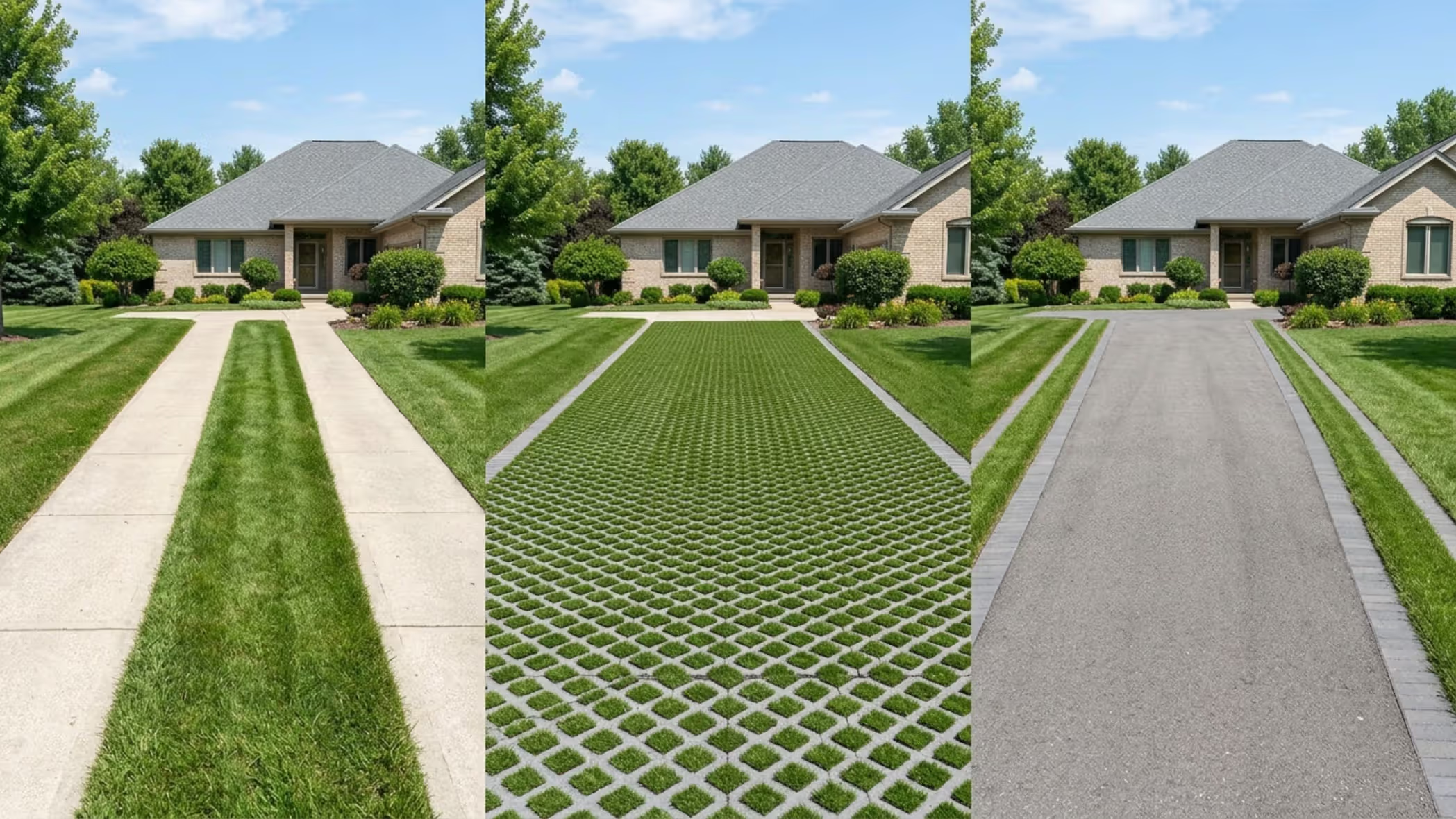
Your layout choice depends on traffic patterns, budget, and how much green you want to see. Three main approaches dominate the market.
Author: Sienna Calder;
Source: cribbslandscaping.com
Grass Strip Layouts
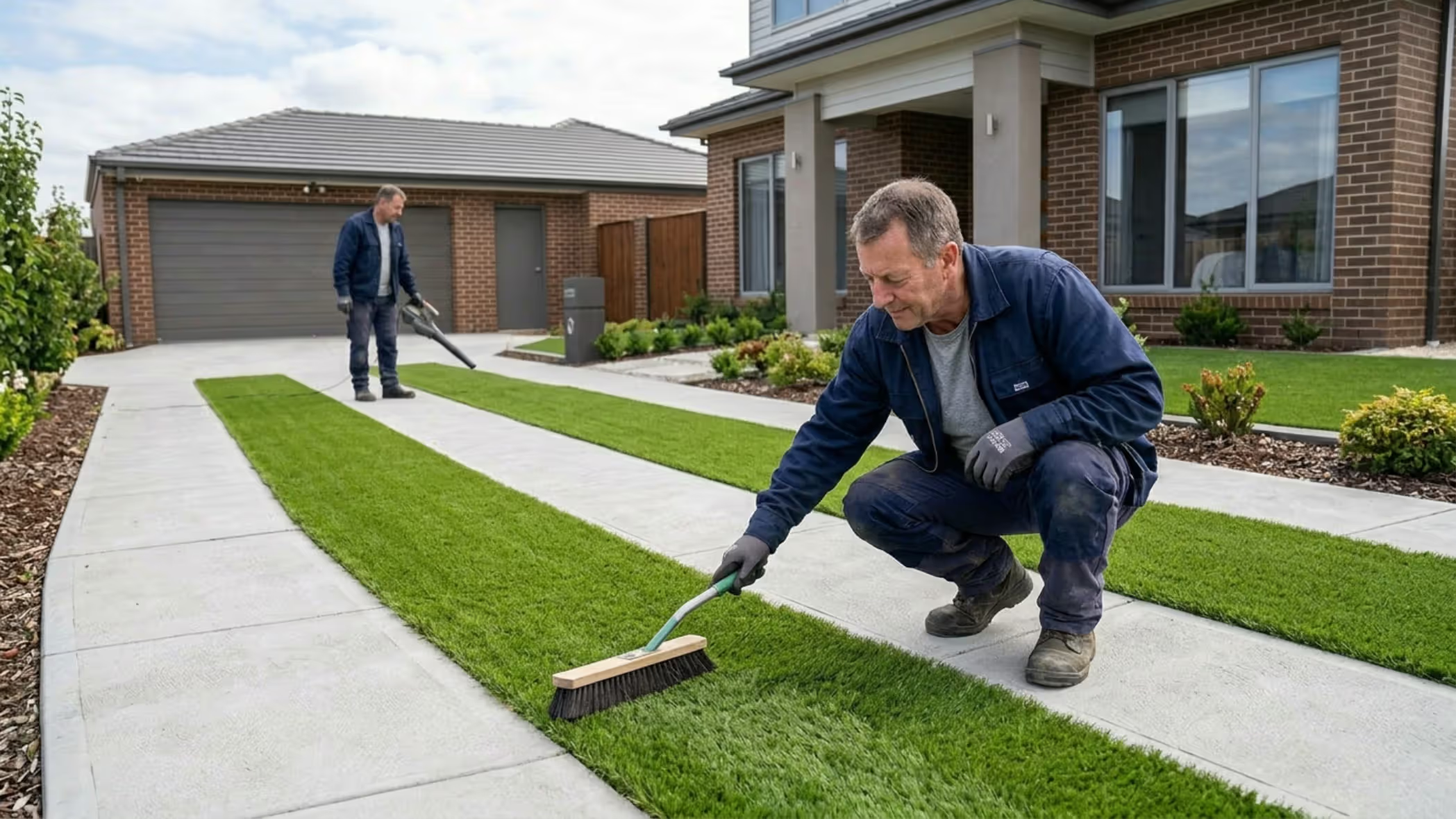
The fake grass driveway strips approach puts turf between two parallel paved tracks where your tires roll. It's the most common grass strip driveway design because it's straightforward and cost-effective. You're only paving about 40-50% of the driveway width, with grass filling the center strip.
This works well for single-car driveways or homes with predictable parking patterns. The strips typically run 18-24 inches wide to match standard tire spacing. You can also run strips lengthwise down the driveway for a different look, though this requires more precise driving.
One common mistake: making the grass strip too narrow. Anything less than 12 inches wide looks stingy and collects debris. Go wider if your space allows it.
Grid Systems with Turf Infill
A grass driveway grid uses plastic or concrete grid pavers with open cells that you fill with turf. The grid provides structural support while the grass covers 60-80% of the surface. This creates a mostly-green appearance while still handling vehicle weight.
The grid approach works for larger driveways, RV parking, or areas with heavier traffic. The structure distributes weight across a broader area than strip designs. You'll find grids made from recycled plastic (more common now) or traditional concrete pavers with large openings.
Installation takes longer because you're covering the full driveway area, but the visual payoff is substantial. It looks like a lawn that happens to be drivable.
Grass Inlay Borders and Accents
The driveway with grass inlay option uses turf as decorative elements rather than the main surface. Think grass borders along the edges, a grass center medallion at the entrance, or geometric grass panels breaking up a paved surface.
This grass driveway layout gives you creative freedom without committing to a fully permeable system. It's popular for curved driveways where strips wouldn't follow the contours well. You can also use it to soften the transition between driveway and lawn.
The downside? You're not getting much permeability benefit since most of the surface remains solid pavement. But for pure aesthetics, it's hard to beat.
Materials and Systems for Permeable Turf Driveways
Getting the right foundation matters more than the turf itself. A grass driveway grid system has several layers working together.
Start with the base. You'll need 6-12 inches of compacted gravel, depending on soil conditions and expected traffic. This layer provides stability and serves as a water reservoir. The gravel should be angular crushed stone, not rounded pea gravel, for proper compaction.
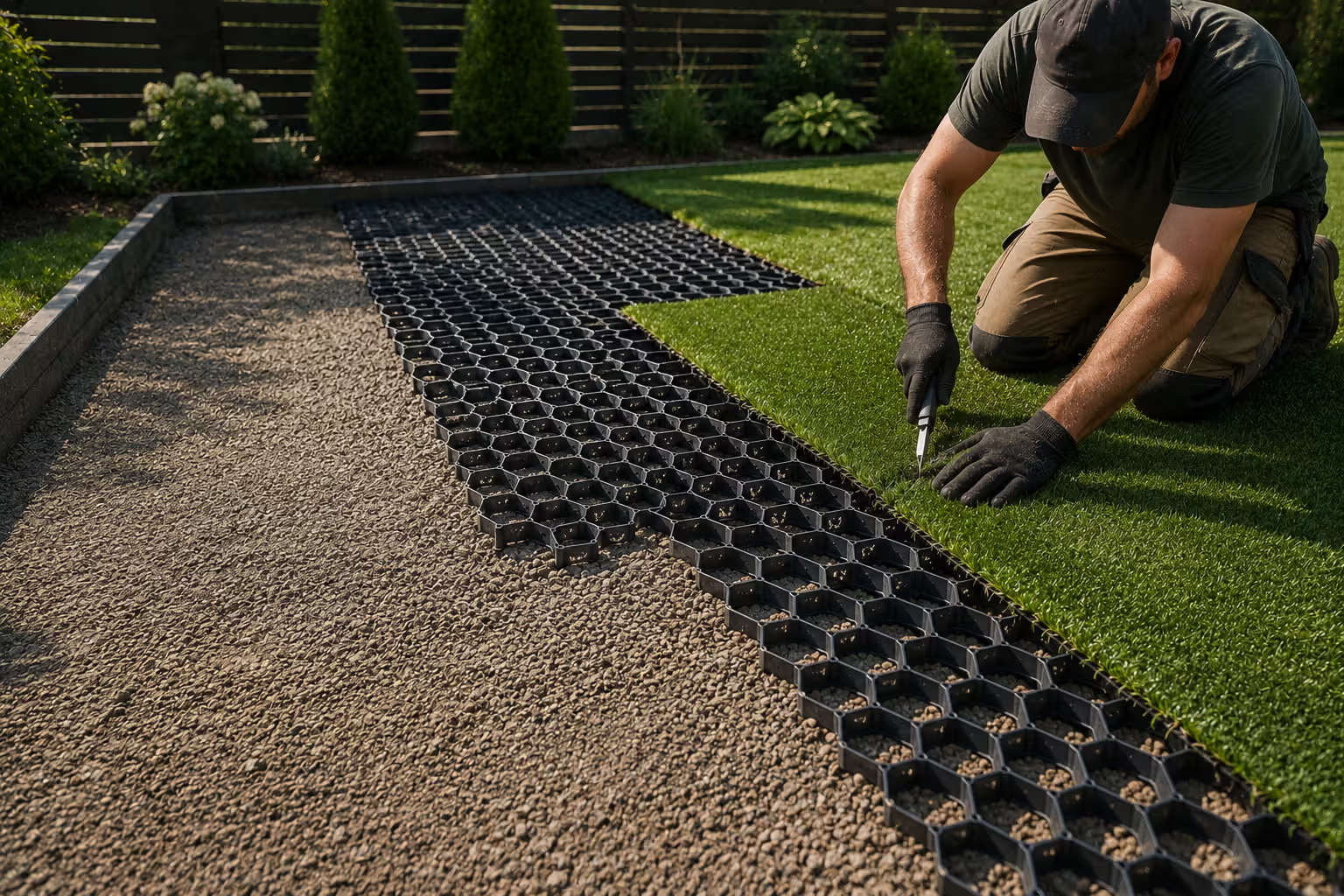
Next comes the grid or paver system. Plastic grids typically interlock and get staked to the base. They're lighter and easier to work with than concrete pavers. Look for grids rated for vehicular traffic—some landscape grids won't handle the weight. Concrete pavers with large openings (50% or more) work well but cost more and require more labor.
The artificial turf drive strips or infill needs to be specifically designed for this application. Standard landscape turf won't hold up to tire traffic. You want a product with:
Short pile height (1-1.5 inches maximum)
High stitch count for density
Strong backing material
UV stabilization rated for your climate
Some systems use a combination of turf and permeable pavement with turf only in the grid openings. Others cover the entire grid surface with turf, letting the backing material provide additional permeability.
Drainage fabric goes under everything to prevent soil migration while allowing water through. Skip this and you'll eventually get settling and unevenness.
Planning Your Grass Driveway Layout
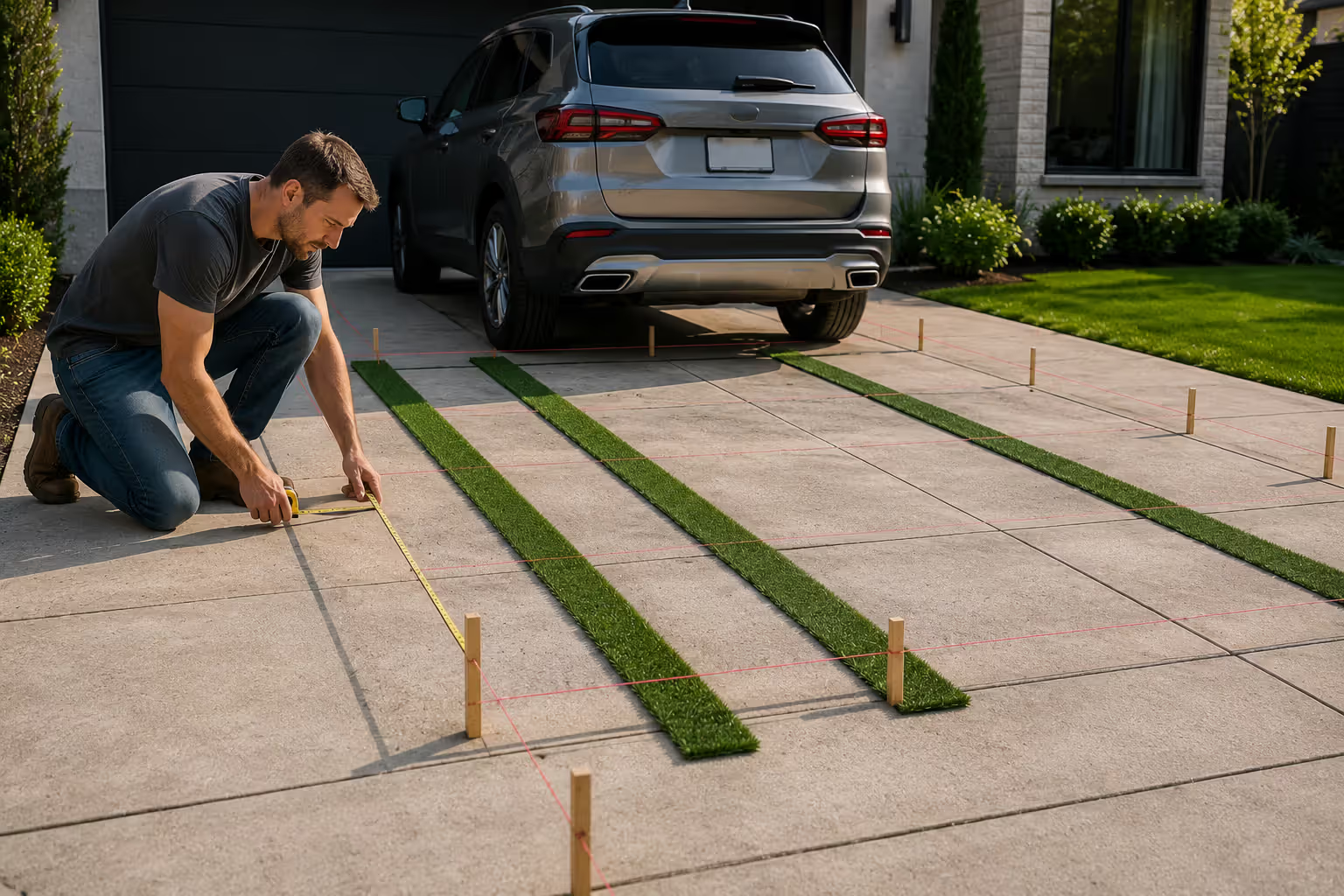
Measure twice, install once. Start by mapping your actual tire tracks if you're doing a strip design. Park where you normally would, then measure from a fixed point like your garage door. Most vehicles track 5-6 feet apart (center to center), but verify with your specific cars.
Your grass driveway layout needs to account for turning radiuses too. Strips work fine for straight approaches but get complicated where the driveway curves or where you need to turn into the garage. Grid systems handle curves better since the support is continuous.
Check local regulations before you dig. Some municipalities have specific requirements for driveway permeability, especially in newer developments or areas with stormwater management rules. You might need a permit, or you might find that your permeable design actually helps you meet requirements that would be harder to satisfy with solid pavement.
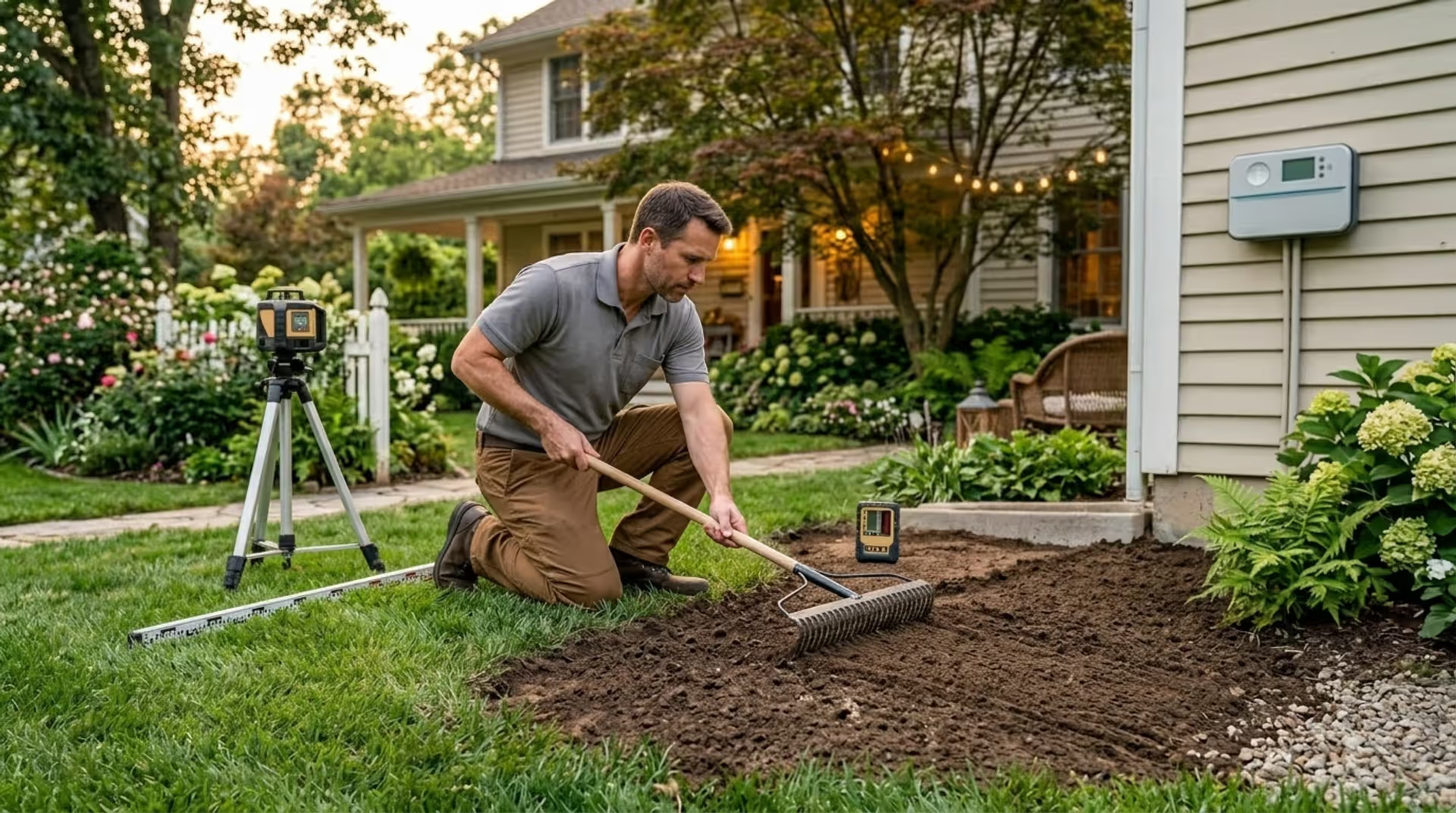
Slope matters for drainage. You want a 1-2% grade away from structures for proper water movement. Too flat and water pools. Too steep and you might get erosion in the turf areas. If your property has challenging drainage, consider adding French drains along the driveway edges.
Author: Sienna Calder;
Source: cribbslandscaping.com
Think about snow removal if you're in a cold climate. Plows and snow blowers can damage turf, especially in grid systems. Some homeowners install heated mats under the paved strips or plan to shovel by hand in grass areas.
The simpler option usually wins here. Elaborate patterns look great in renderings but can be fussy to maintain and navigate.
Installation Process and Best Practices
Professional installation typically takes 3-5 days for an average driveway. DIY is possible if you're comfortable with excavation and grading work.
The process starts with demolition if you're replacing existing pavement. Then comes excavation to the required depth—usually 8-14 inches total, depending on your base requirements and the thickness of your paver system.
Compact the subgrade soil thoroughly. Rent a plate compactor for this; hand tamping won't cut it. Add and compact your gravel base in 2-3 inch lifts. Each layer gets compacted before adding the next. This step determines how well your driveway holds up long-term.
Install edge restraints to keep everything in place. These can be plastic edging, concrete curbs, or existing landscape borders. Without edges, the system will creep outward over time.
Lay your grid or paver system according to manufacturer specs. Most grids have specific orientation requirements for maximum strength. Add a thin layer of coarse sand to level the surface and provide a bed for the turf.
Cut and install the artificial turf. Use a sharp utility knife and cut from the backing side for clean edges. Seams should run parallel to traffic direction when possible. Secure the turf with landscape staples or the fastening system recommended for your specific grid.
Author: Sienna Calder;
Source: cribbslandscaping.com
Brush the turf fibers upright and add infill if your system requires it. Some permeable driveway turf products use sand or rubber infill for ballast and blade support.
One mistake to avoid: compacting the turf areas after installation. The grid provides the structural support. Compacting the turf just crushes the fibers and reduces permeability.
Cost Factors for Artificial Grass Driveways
Budget for $15-35 per square foot installed, depending on design complexity and materials. That's significantly more than plain concrete at $6-12 per square foot, but less than high-end pavers at $25-50 per square foot.
Material costs break down roughly as:
Base materials (gravel, fabric): $2-4 per square foot
Grid or paver system: $3-8 per square foot
Artificial turf: $5-12 per square foot
Edge restraints and fasteners: $1-2 per square foot
Labor typically doubles the material cost for professional installation. DIY can save you 40-50% if you have the equipment and skills.
Strip designs cost less than full grid systems since you're covering less area with turf. A 20-foot by 20-foot driveway with center grass strips might run $4,000-6,000 installed, while the same area with full grid coverage could hit $8,000-10,000.
Factor in long-term savings too. You're not watering, mowing, or fertilizing like you would with real grass. And properly installed systems last 15-20 years with minimal maintenance, while concrete might need sealing and crack repair.
The most successful driveway designs I've seen treat the grass not as an afterthought but as an integral landscape element that connects the street to the home. When done well, permeable turf systems reduce site runoff by up to 70% while creating a welcoming arrival sequence that traditional pavement simply can't match.
— Mitchell Sarah
Maintenance and Longevity
Artificial grass driveways need less maintenance than natural turf, but they're not maintenance-free. Plan on spending 15-30 minutes monthly to keep things looking good.
Regular tasks include:
Brushing or raking to keep fibers upright (monthly)
Hosing off dust and debris (as needed)
Removing leaves and organic material (weekly in fall)
Checking for settling or unevenness (seasonally)
The turf itself typically lasts 15-20 years before showing significant wear. High-traffic areas where tires turn might need patching or replacement sooner. Quality matters here—cheap turf will mat down and fade within 5-7 years.
Weeds can sprout in the joints and edges if you don't maintain proper infill levels and use quality landscape fabric. A pre-emergent herbicide applied to the base layer during installation helps. Spot-treat any weeds that do appear rather than letting them establish.
Winter presents challenges in snow country. Salt and de-icing chemicals can damage some turf fibers. Use sand for traction instead, or choose turf products rated for freeze-thaw cycles and chemical exposure.
The grid or paver system should last 20-30 years with no issues. Plastic grids can become brittle in extreme climates but usually outlast the turf. Concrete pavers essentially last forever.
One issue you might encounter: the turf settling below the paver surface over time. This happens if the base wasn't properly compacted or if the infill material washes out. The fix involves adding more infill or, in severe cases, lifting and releveling sections.
Most homeowners report that maintenance is easier than they expected. It's certainly less work than keeping real grass alive in a driveway situation.
Author: Sienna Calder;
Source: cribbslandscaping.com
Comparison of Driveway Design Types
Design Type
Cost per Sq Ft
Permeability
Aesthetic Impact
Installation Difficulty
Maintenance Needs
Grass Strips
$15-22
Moderate (30-40% permeable)
Subtle, clean lines
Moderate
Low - monthly brushing
Grid Systems
$22-35
High (60-80% permeable)
Bold, mostly green
High
Moderate - infill maintenance
Grass Inlay Accents
$18-28
Low (10-20% permeable)
Decorative, custom
Moderate to High
Low - spot cleaning
FAQ: Driveway with Artificial Grass Questions Answered
How long does artificial grass last in a driveway?
Quality artificial turf in a properly installed driveway system lasts 15-20 years under normal use. High-traffic areas where tires frequently turn may show wear sooner, typically around 10-12 years. The lifespan depends heavily on the turf quality, installation method, and maintenance. Products specifically rated for vehicular use outlast standard landscape turf by 5-7 years. The underlying grid or paver system typically lasts 20-30 years, so you'll likely replace the turf once while keeping the structural components.
Do I need a permit to install a grass driveway?
Permit requirements vary by municipality. Many jurisdictions don't require permits for driveway resurfacing that doesn't change the footprint or drainage pattern. However, some areas with strict stormwater regulations may want to inspect permeable installations to verify they meet percolation standards. New driveway construction almost always requires a permit regardless of materials. Check with your local building department before starting work. Some homeowners associations also have approval processes for driveway changes, even if the city doesn't require permits.
Can artificial turf handle vehicle weight?
Yes, when properly supported by a grid or paver system. The turf itself doesn't carry the load—the structural grid or pavers beneath it do. Quality grid systems are engineered to support vehicles up to 5,000 pounds per square foot, which handles everything from compact cars to full-size trucks. The key is proper base preparation and using products rated for vehicular traffic. Standard landscape turf without structural support will compress and fail under vehicle weight within weeks.
Is a grass driveway more expensive than concrete?
Initially, yes. A grass driveway costs $15-35 per square foot installed compared to $6-12 for basic concrete. However, the cost gap narrows over time. Concrete requires periodic sealing ($1-2 per square foot every 3-5 years) and eventual crack repair. Permeable grass systems need minimal maintenance and can reduce stormwater fees in some municipalities. The aesthetic value and environmental benefits also factor into the cost equation. For pure economy, concrete wins. For long-term value and appearance, grass systems compete well.
How do I prevent weeds in my grass driveway?
Start with quality landscape fabric under the entire installation to block weed growth from below. Maintain proper infill levels in grid systems—bare spots invite weed seeds. Apply a pre-emergent herbicide to the base layer during installation for long-term protection. For ongoing maintenance, spot-treat any weeds that appear with a targeted herbicide or pull them by hand while they're small. Keeping the turf clean and free of organic debris also helps since decomposing leaves and dirt create spots where weed seeds can germinate. Most homeowners report minimal weed issues if the initial installation includes proper fabric and infill.
Does artificial grass drain water properly in driveways?
Yes, when installed as part of a permeable system with proper base preparation. The turf backing is perforated to allow water through, and the grid or paver structure creates channels for drainage. A properly installed system can handle 20-30 inches of rain per hour, far exceeding typical storm intensity. The gravel base acts as a reservoir, temporarily storing water before it percolates into the soil. This actually improves drainage compared to solid concrete or asphalt, which shed water immediately. The system works best in soil with decent natural drainage—clay soils may require additional drainage features like French drains or deeper gravel bases.
A driveway with artificial grass offers a practical middle ground between traditional pavement and natural landscaping. You get durability and function without the environmental impact and visual monotony of solid concrete. The investment is higher upfront, but the long-term benefits—better drainage, lower maintenance, and improved curb appeal—make it worthwhile for many homeowners.
Start by choosing a design that matches your traffic patterns and aesthetic goals. Strips work well for straightforward layouts, while grid systems give you more green coverage. Don't skimp on base preparation or material quality—these determine how well your driveway performs over its 15-20 year lifespan.
Consider professional installation unless you're experienced with excavation and grading work. The structural components need precise installation for proper drainage and longevity. Once it's in, maintenance is minimal compared to natural grass or even traditional pavement.
Your driveway doesn't have to be just a place to park cars. With the right design and materials, it becomes a landscape feature that welcomes you home while managing stormwater responsibly.
Proper drainage starts with the ground itself. When water pools around your foundation or turns your backyard into a swamp after every rain, you're looking at a grading problem. Learn how to shape your landscape to move water away from structures and create a yard that actually works.
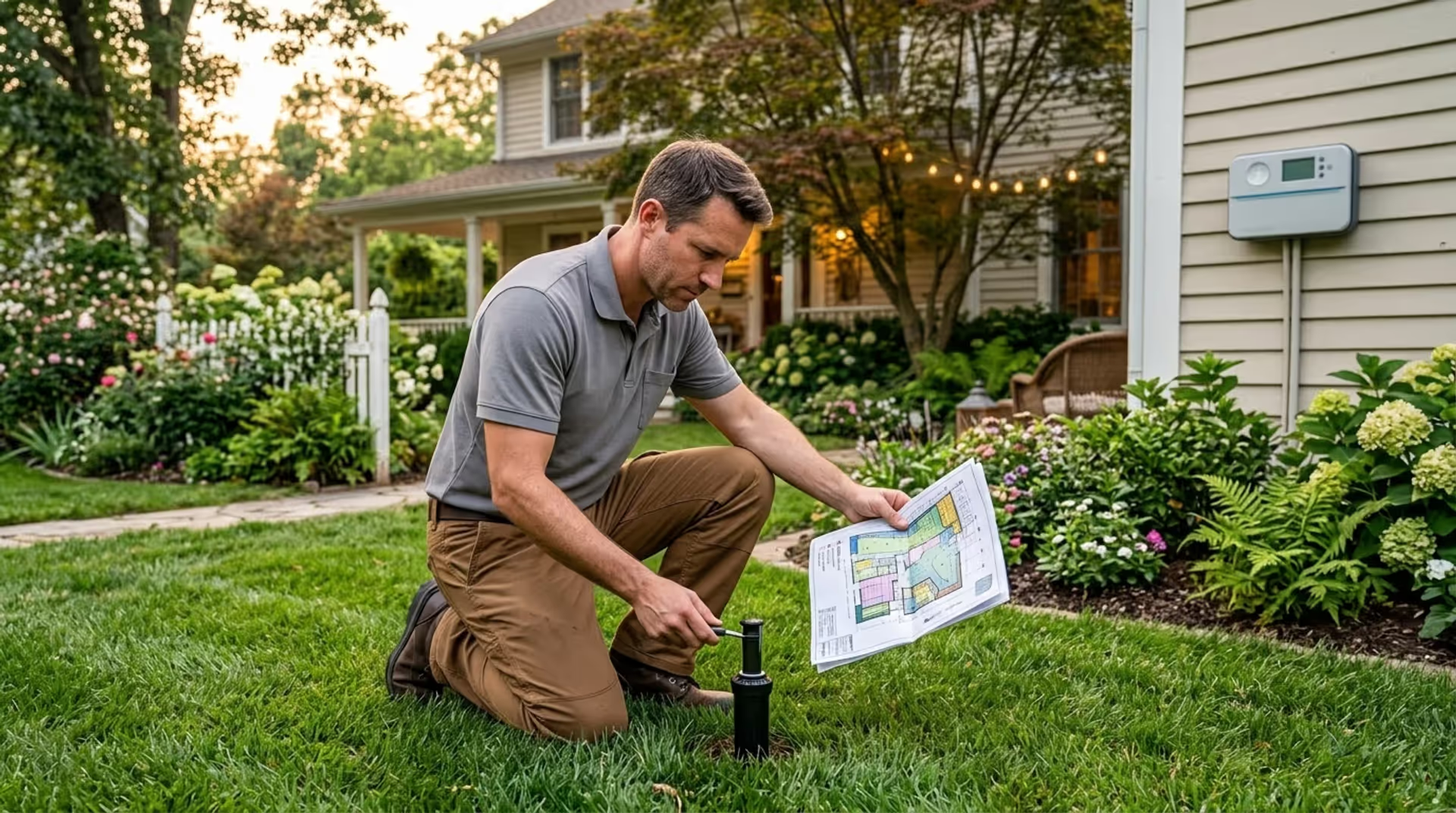
Discover how irrigation specialists design efficient watering systems, when professional help makes sense, and what to expect from installation. Includes system comparison, cost factors, and expert hiring tips for homeowners.
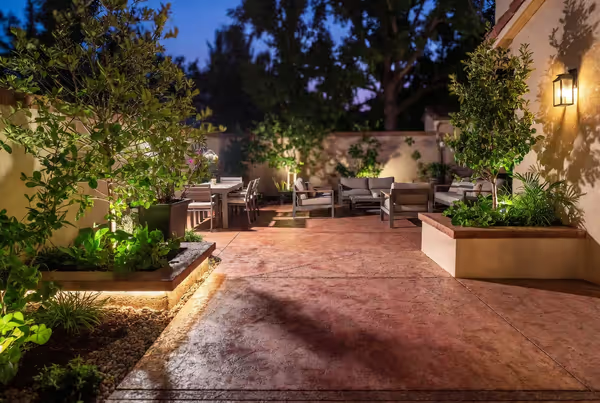
Discover creative concrete patio designs from stamped and textured finishes to polished surfaces and geometric layouts. Learn which concrete finish works best for your climate, budget, and style with detailed comparisons of durability, maintenance, and costs.
Discover how to select the best artificial grass for backyard spaces with our comprehensive guide. Learn what makes turf high-quality, compare leading products, and find the perfect match for your climate, pets, and usage. Expert insights on durability, drainage, realistic appearance, and common mistakes to avoid.
The content on this website is provided for general informational and educational purposes only. It is intended to explain concepts related to landscape design, outdoor spaces, plants, irrigation, hardscape and softscape, and sustainable landscaping.
All information on this website, including articles, guides, and examples, is presented for general educational purposes. Outcomes may vary depending on local climate, soil, plant selection, and project implementation.
This website does not provide professional design, construction, or horticultural advice, and the information presented should not be used as a substitute for consultation with qualified landscape architects, contractors, or horticulturists.
The website and its authors are not responsible for any errors or omissions, or for any outcomes resulting from decisions made based on the information provided on this website.