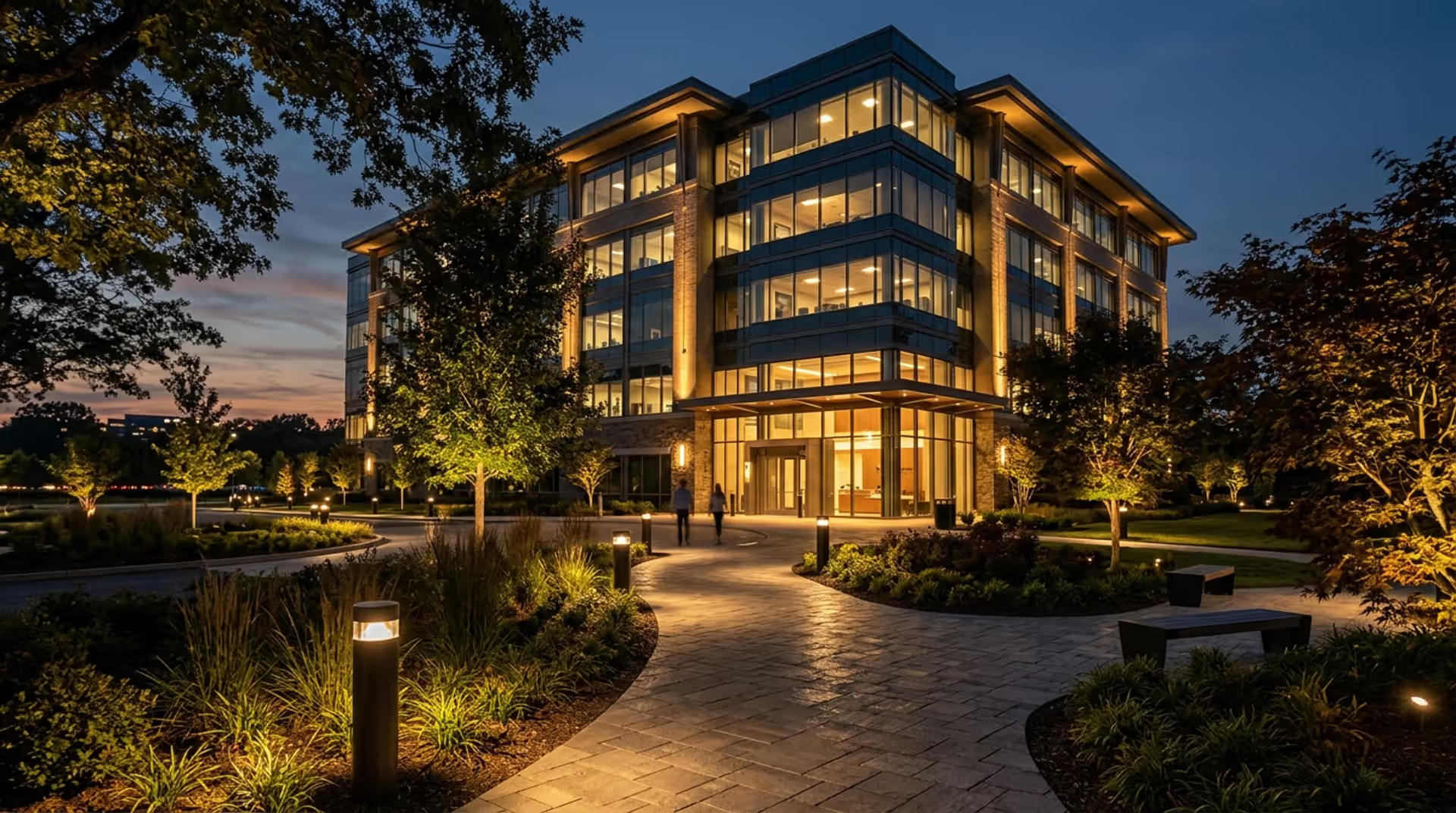
When you pull into a commercial property after dark, the lighting tells you everything. Is this place safe? Professional? Worth your time? Most business owners underestimate how much their outdoor lighting shapes that first impression. But the truth is, a well-designed landscape lighting system does more than illuminate—it guides visitors, highlights architecture, and turns ordinary buildings into memorable landmarks.
Commercial landscape lighting design isn't just about throwing floodlights at a building and calling it done. It's a strategic blend of art and engineering that considers safety codes, energy efficiency, brand identity, and long-term maintenance. Done right, it transforms your property into a 24-hour asset. Done poorly, it creates glare, wastes energy, and leaves dark spots where you need visibility most.
The pattern I see most often is property managers treating outdoor lighting as an afterthought, then wondering why their curb appeal disappears at sunset. This guide walks you through the professional approach—the techniques, fixture types, and design principles that separate mediocre installations from systems that actually deliver results.
Why Commercial Properties Need Professional Landscape Lighting
Outdoor lighting for commercial property serves multiple functions simultaneously. You're not just preventing slip-and-fall lawsuits, though that's certainly part of it. You're extending business hours, deterring unwanted activity, and creating an environment where customers feel comfortable approaching your building after dark.
The safety angle is straightforward. Properly lit walkways, parking areas, and building entrances reduce liability exposure. Insurance companies notice this. Some offer premium reductions for properties with documented lighting systems that meet industry standards.
But the return on investment goes beyond risk mitigation. Retail properties with well-designed landscape lighting report extended shopping hours and increased foot traffic. Office buildings attract higher-quality tenants. Restaurants can expand outdoor seating areas into revenue-generating spaces.
Brand visibility matters more than most realize. Your building might be invisible from the highway at night without facade lighting. Competitors with illuminated signage and architectural accents capture attention you're losing. That's market share walking away simply because potential customers don't see you.
Security teams consistently rank lighting as their top environmental design priority. Criminals avoid well-lit areas—it's that simple. Motion sensors and timed systems add another layer, but the baseline illumination makes the biggest difference. Dark corners and shadowed entry points create opportunities you don't want to offer.
Property values reflect lighting quality too. Appraisers consider outdoor lighting systems when evaluating commercial real estate. A modern, energy-efficient installation signals professional management and reduces the buyer's immediate capital expenditure list.
Core Landscape Lighting Techniques for Commercial Spaces
Professional landscape lighting techniques rely on understanding how light interacts with surfaces and how the human eye processes outdoor scenes after dark. You're not flooding everything with uniform brightness—you're creating contrast, depth, and focal points.
Author: Sienna Calder;
Source: cribbslandscaping.com
Uplighting and Downlighting Applications
Uplighting places fixtures at ground level, directing light upward to illuminate vertical surfaces. It's the go-to technique for tree uplighting design, where you're showcasing canopy structure and creating dramatic shadows. Position fixtures 12 to 24 inches from the trunk, aiming at a 30 to 45-degree angle.
Trees aren't the only uplighting candidates. Building columns, textured walls, and architectural features gain dimension when lit from below. The key is avoiding direct view of the light source—you want the effect, not the glare.
Downlighting reverses the approach. Fixtures mount high—in trees, on building overhangs, or on dedicated poles—casting light downward. This mimics natural moonlight and works well for pathways, seating areas, and parking zones. The challenge is mounting height: too low and you get harsh shadows, too high and you lose intensity.
Combining both techniques in the same space creates the layered effect that separates amateur installations from professional work. A courtyard might use downlighting for walkways while uplighting accent trees and building facades.
Grazing and Shadowing Effects
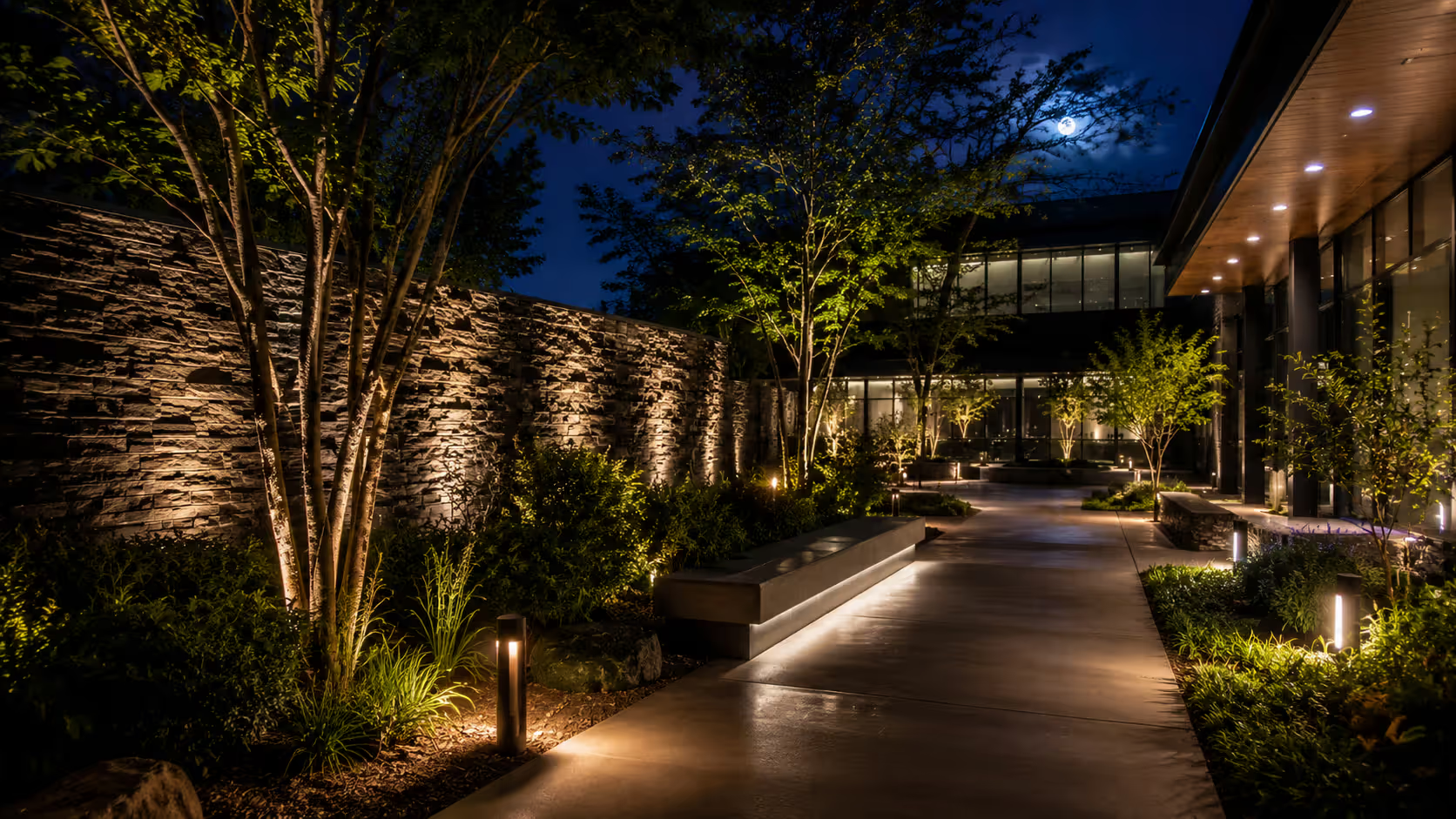
Grazing involves placing fixtures close to textured surfaces—stone walls, brick facades, stucco finishes—so light skims across at a shallow angle. This emphasizes texture and creates visual interest from flat surfaces. Position fixtures 6 to 12 inches from the wall for maximum effect.
Shadowing (sometimes called silhouetting) backlights objects to create dramatic outlines. Place the light source behind a sculpture, plant, or architectural element, aiming toward a wall or surface. The object appears as a dark silhouette against illuminated background. It's theatrical but effective for focal points.
Both techniques require careful fixture placement. Move the light source a few inches and the effect changes completely. This is where mock-ups during installation pay off—you need to see the actual result before finalizing positions.
Moonlighting for Natural Ambiance
Moonlighting recreates the soft, dappled light of a full moon filtering through tree branches. Fixtures mount high in trees (20 to 40 feet typically) with diffused lenses, casting gentle light downward through foliage. The effect feels organic rather than engineered.
This technique works exceptionally well for outdoor dining areas, courtyards, and pedestrian zones where you want illumination without obvious light sources. Guests see the effect but can't immediately identify where it's coming from.
The installation challenge is access. You need professional tree climbers or lift equipment, and fixture maintenance becomes more complex. But for properties emphasizing natural aesthetics, it's often worth the extra effort.
The Layered Lighting Approach for Commercial Properties
Landscape lighting layers follow the same principle as interior design: you need ambient, task, and accent lighting working together. Single-purpose systems fall flat. Literally.
Ambient lighting establishes your base illumination level. This is your overall visibility layer—the light that lets people navigate safely and perceive the general environment. Path lights, low-level area fixtures, and soft downlighting typically provide this foundation. You're aiming for consistency without creating bright spots or dark voids.
Task lighting serves specific functional needs. Parking area illumination, building entry lighting, stairway fixtures—anywhere people need clear visibility to complete an action safely. This layer operates at higher intensity than ambient lighting but remains focused on defined zones.
Accent lighting adds the visual interest. This is where you highlight architectural features, showcase landscape elements, and create the "wow" moments that make properties memorable. Facade lighting, tree uplighting, and water feature illumination fall into this category.
The magic happens when all three layers work together without competing. Your ambient layer shouldn't wash out accent lighting. Task lighting shouldn't create glare that diminishes the overall experience. Balancing intensity, color temperature, and placement across layers separates functional systems from genuinely effective designs.
Most commercial properties underinvest in the accent layer, treating it as optional decoration. But that's the layer that creates emotional response and brand differentiation. Two office buildings might have identical safety lighting, but the one with thoughtful accent lighting commands higher rents.
Effective commercial landscape lighting should guide, highlight, and inspire—not overwhelm. Layering is the secret to creating depth and visual interest after dark.
— Chen Patricia
Key Lighting Elements in Commercial Landscape Design
Different fixture types serve different purposes. Understanding when to deploy each one determines whether your system actually solves problems or just consumes electricity.
Path and Walkway Lighting Solutions
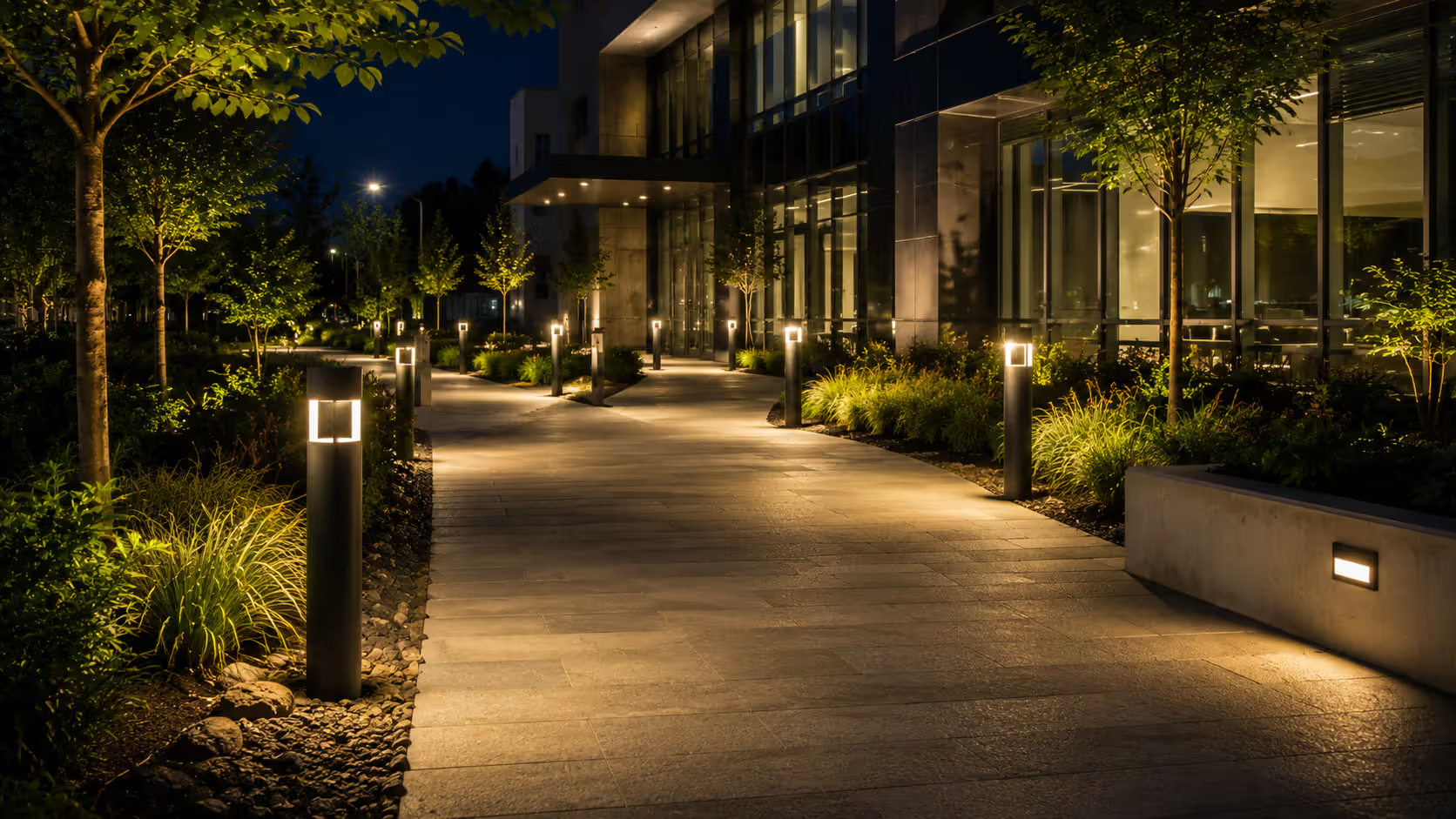
Path lighting commercial applications prioritize safety and wayfinding. You're preventing trips and falls while guiding visitors along intended routes. Fixtures typically stand 18 to 36 inches tall, spacing varies from 10 to 20 feet depending on light output and path width.
The mistake most installers make is treating path lights as decorative elements first and functional tools second. Visibility matters more than aesthetics here. You need consistent illumination at ground level without creating glare at eye level.
LED path lights have largely replaced halogen options in commercial settings. The energy savings justify higher upfront costs within 18 to 24 months in most cases. Color temperature matters—2700K to 3000K provides warm, inviting light that doesn't feel institutional.
Consider beam spread carefully. Narrow spots create pools of light with dark gaps between fixtures. Wide floods provide better coverage but may spill light into adjacent landscape beds or create upward glare. A 60 to 90-degree spread typically offers the best balance.
Author: Sienna Calder;
Source: cribbslandscaping.com
Bollard Fixtures for Perimeter and Wayfinding
Bollard lighting design serves dual purposes: illumination and physical guidance. These sturdy, post-style fixtures mark boundaries, define pedestrian zones, and provide ambient light at a comfortable height (typically 36 to 48 inches).
Bollards work well for parking lot perimeters, plaza edges, and anywhere you need to subtly direct foot traffic without barriers. The fixture itself becomes a visual cue during daylight hours, with lighting functionality activating after dark.
Durability matters more with bollards than almost any other fixture type. They're exposed, accessible, and occasionally subject to vehicle impacts. Cast aluminum or stainless steel construction with impact-resistant lenses prevents the maintenance headaches that come with cheaper options.
Light distribution varies significantly between bollard models. Some cast light primarily downward, others provide 360-degree illumination. Match the distribution pattern to your specific application—perimeter bollards might use directional light to avoid spilling onto adjacent properties, while plaza bollards benefit from omnidirectional output.
Facade and Architectural Accent Lighting
Facade lighting landscape applications transform buildings from dark masses into nighttime landmarks. You're highlighting architectural details, creating visual depth, and establishing brand presence from a distance.
Wall washers provide even illumination across large vertical surfaces. They mount at ground level or on building faces, using wide beam angles to cover broad areas uniformly. This works well for modern buildings with clean lines and minimal detail.
Accent lighting outdoor fixtures with narrower beams pick out specific features—columns, cornices, entryways, textured panels. You're creating contrast rather than uniform brightness. The interplay between lit and unlit surfaces adds dimension that flat lighting can't achieve.
Architectural lighting outdoor projects often combine multiple techniques on a single building. Uplighting might emphasize vertical elements while grazing highlights textured sections and spot lighting draws attention to signage or entry features. The complexity requires careful planning to avoid competing effects.
Color temperature consistency matters tremendously with facade lighting. Mixing 3000K and 4000K sources on the same building creates a disjointed appearance. Stick with a single temperature across architectural lighting unless you're intentionally using color for branding purposes.
Tree and Landscape Feature Uplighting
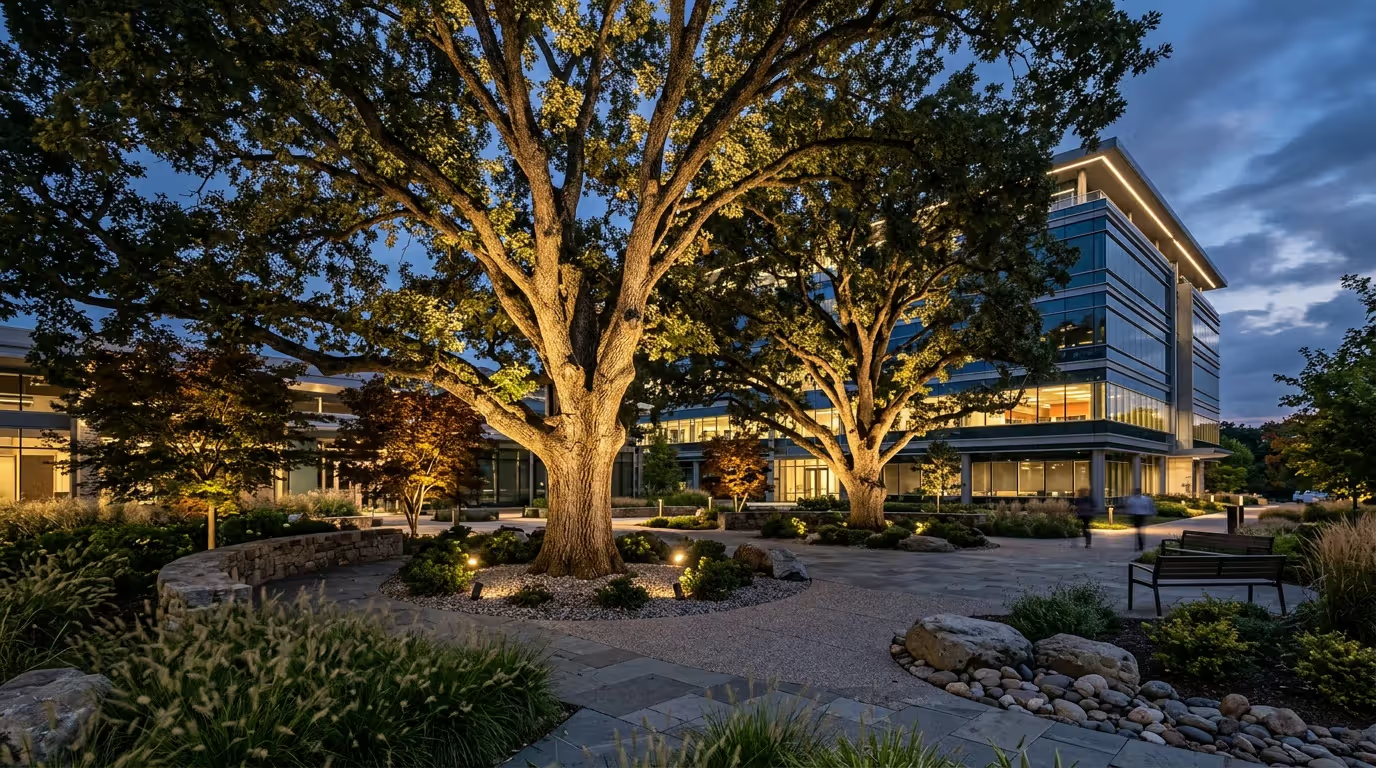
Tree uplighting design showcases natural elements while adding vertical interest to outdoor spaces. Single large trees become focal points. Groups of trees create canopy layers that add depth to the nighttime landscape.
Fixture placement determines everything. Too close and you get a spotlight effect with harsh shadows. Too far and you lose intensity before reaching the canopy. Start with fixtures 18 to 24 inches from the trunk for trees with 15 to 30-foot canopies, adjusting based on the specific tree structure.
Deciduous trees change dramatically with seasons. Your winter lighting reveals branch structure, while summer lighting filters through dense foliage. Design for both conditions or accept that the effect will shift seasonally.
Evergreens maintain consistency year-round but require different approaches based on density. Dense conifers might need multiple fixtures to penetrate the canopy. Open-structured evergreens work well with single, well-placed uplights.
Landscape features beyond trees—boulders, specimen plants, water features, sculptures—follow similar principles. You're creating focal points that draw the eye and add visual interest to spaces that would otherwise disappear after dark.
Author: Sienna Calder;
Source: cribbslandscaping.com
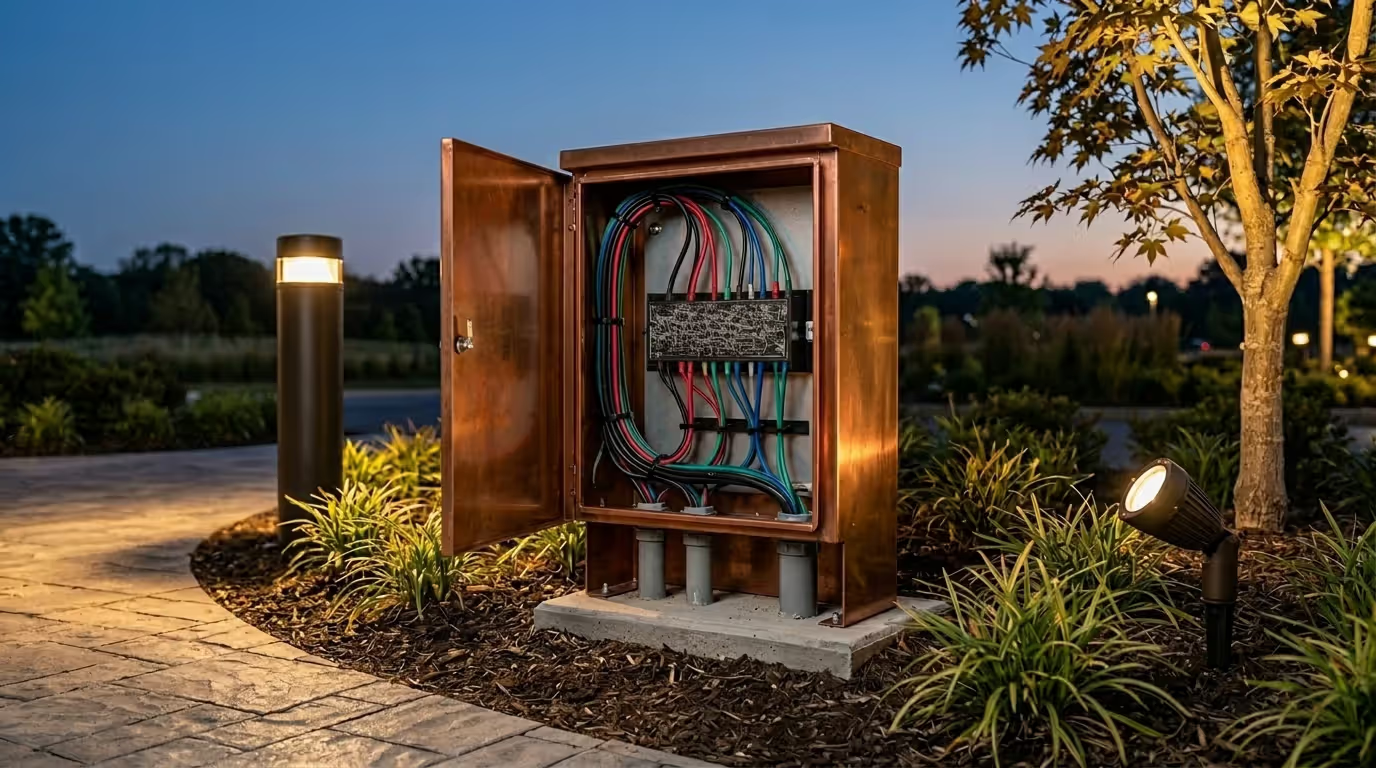
Low Voltage vs. Line Voltage Systems for Commercial Landscapes
The voltage decision affects safety, installation costs, maintenance requirements, and long-term flexibility. Both systems have legitimate commercial applications, but the right choice depends on your specific property needs.
Feature
Low Voltage (12V-24V)
Line Voltage (120V-277V)
Voltage Level
12V or 24V DC
120V or 277V AC
Installation Complexity
Moderate; requires transformers but simpler wiring
Low voltage commercial lighting dominates landscape applications for good reason. The safety profile alone justifies it for areas with public access. You can install fixtures in planting beds, along walkways, and near water features without the code restrictions that govern line voltage systems.
Transformers step down standard 120V power to 12V or 24V, typically serving multiple fixtures from a single unit. Modern transformers include timers, photocells, and smart controls that make system management straightforward. The trade-off is voltage drop—run wire too far from the transformer and light output diminishes noticeably.
Line voltage systems deliver consistent power across longer distances, making them practical for parking lot lighting, large facade installations, and perimeter security lighting. But installation costs run significantly higher. You need buried conduit, junction boxes that meet electrical codes, and licensed electricians for all work.
The simpler option usually wins here for landscape-focused projects. Low voltage systems offer easier expansion, simpler troubleshooting, and lower risk if something goes wrong. Reserve line voltage for applications where the power requirements or distance demands it.
Energy consumption tips heavily toward low voltage LED systems. A typical commercial property might reduce outdoor lighting costs by 60 to 75 percent switching from line voltage halogen to low voltage LED. That's real money over a 10 to 15-year fixture lifespan.
Author: Sienna Calder;
Source: cribbslandscaping.com
Common Commercial Landscape Lighting Design Mistakes
Even professional installations fall into predictable traps. Knowing what to avoid saves money and prevents the need for expensive redesigns.
Overlighting ranks as the most frequent error. More fixtures don't equal better results. They equal glare, light pollution, wasted energy, and visual chaos. You're creating contrast and guiding attention, not simulating daylight. A dozen well-placed fixtures outperform fifty randomly scattered ones every time.
Poor fixture placement shows up immediately but often gets locked in during installation. Fixtures positioned for construction convenience rather than lighting effect create problems you'll see nightly for years. Take time during installation to test positions before final mounting. Move things around. The extra hour during installation prevents permanent mediocrity.
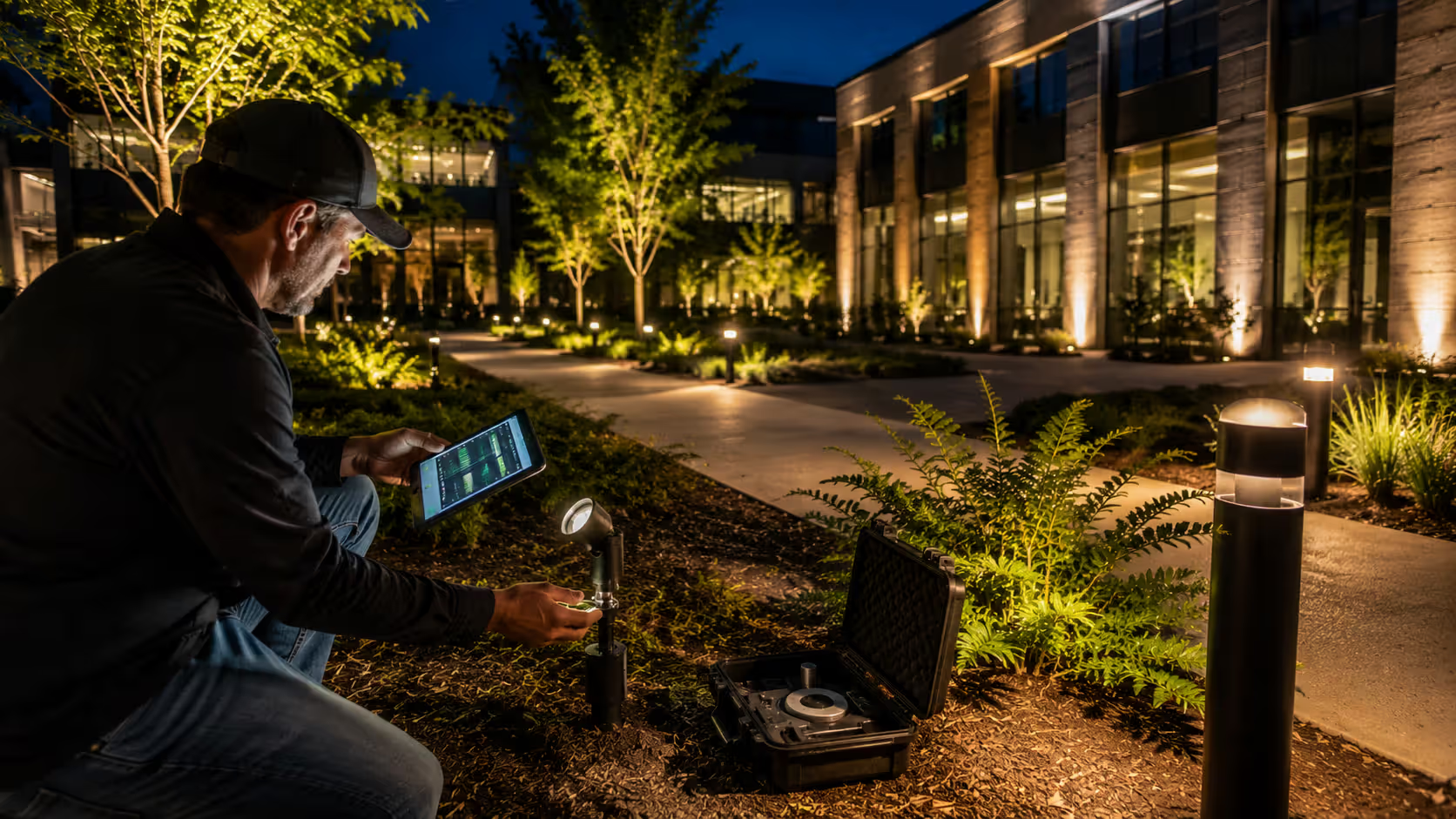
Ignoring maintenance access creates ongoing headaches. Fixtures buried in dense plantings, mounted 30 feet up without lift access, or located behind locked gates that maintenance crews can't access will fail eventually. And when they do, they'll stay dark because servicing them is too difficult. Plan for the reality of lamp replacement and fixture cleaning from day one.
Mismatched color temperatures destroy visual cohesion. Mixing 2700K warm white with 5000K cool white across the same property looks amateurish and disjointed. Pick a color temperature strategy and stick with it. Most commercial properties work best in the 2700K to 3000K range for landscape lighting, with 3000K to 4000K for architectural and safety applications.
Author: Sienna Calder;
Source: cribbslandscaping.com
Dark sky compliance isn't optional in many jurisdictions anymore. Fixtures that allow significant upward light spill violate ordinances and contribute to light pollution. Use shielded fixtures, specify full cutoff optics where appropriate, and aim lights carefully. You can achieve excellent results while keeping light where it belongs.
Neglecting control systems means lights run when they shouldn't or don't run when they should. Basic timers work, but astronomical timers that adjust for seasonal sunrise and sunset changes work better. Smart systems that integrate with building management platforms offer the most flexibility but require upfront planning.
Frequently Asked Questions About Commercial Landscape Lighting Design
What is the average cost of commercial landscape lighting design?
Commercial landscape lighting costs vary widely based on property size, fixture quality, and system complexity. Small installations (10 to 20 fixtures) typically run $3,000 to $8,000 including design, fixtures, and installation. Mid-size properties (30 to 60 fixtures) range from $12,000 to $30,000. Large commercial campuses can exceed $100,000 for comprehensive systems. LED fixtures cost more upfront but deliver energy savings that typically offset the premium within two to three years. Professional design fees add 10 to 15 percent to project costs but prevent expensive mistakes.
How long do commercial landscape lighting systems last?
Quality LED fixtures in commercial landscape applications typically last 50,000 to 100,000 hours—roughly 15 to 25 years at 12 hours per night. Transformers and control systems last 10 to 15 years with proper maintenance. The actual lifespan depends heavily on fixture quality, installation practices, and environmental conditions. Coastal properties face accelerated corrosion. Areas with extreme temperature swings stress components more than moderate climates. Budget for fixture replacement in phases starting around year 12 to 15 for proactive system updates.
Do I need a licensed electrician for commercial landscape lighting?
Requirements vary by jurisdiction and voltage. Low voltage landscape lighting (12V or 24V) often doesn't require licensed electricians in many areas, though the transformer connection to line voltage does. Line voltage systems (120V or 277V) universally require licensed electricians and permit compliance. Even where not legally required, hiring qualified professionals prevents safety issues and code violations. Insurance companies may deny claims for work performed by unlicensed contractors. Check local regulations before starting any commercial electrical project.
What color temperature is best for commercial outdoor lighting?
Most commercial landscape lighting works best in the 2700K to 3000K range, providing warm white light that complements architecture and landscaping without the harsh, institutional feel of cooler temperatures. Architectural facade lighting can extend to 3000K to 3500K for a crisper appearance. Security and parking area lighting sometimes uses 4000K to 5000K for better color rendering and visibility, though this can feel cold in pedestrian areas. Consistency matters more than the specific temperature—avoid mixing dramatically different temperatures on the same property.
How do you prevent light pollution in commercial landscape design?
Preventing light pollution requires fixture selection and placement discipline. Use fully shielded fixtures that direct light downward rather than allowing upward spill. Specify full cutoff optics for area lighting applications. Aim accent lights carefully to keep illumination on intended targets rather than the sky. Use the minimum intensity needed for each application—overlighting wastes energy and creates pollution. Install timers or controls to reduce or shut off decorative lighting during late-night hours when it serves no purpose. Many jurisdictions now mandate dark sky compliance for new commercial installations.
What maintenance does commercial landscape lighting require?
Regular maintenance extends system life and ensures consistent performance. Clean lenses and fixtures quarterly to remove dirt, pollen, and debris that reduce light output. Check and tighten connections annually—corrosion at wire junctions causes most low voltage failures. Inspect transformers twice yearly for proper operation and ventilation. Replace failed lamps promptly—dark fixtures signal neglect. Trim vegetation that grows to block fixtures or create unwanted shadows. Test control systems and timers seasonally to verify proper operation. Budget approximately 3 to 5 percent of installation cost annually for ongoing maintenance.
Commercial landscape lighting design transforms properties from functional spaces into strategic assets that work around the clock. The investment pays dividends through improved safety, extended usability, enhanced security, and the kind of curb appeal that attracts customers and tenants.
Success comes from understanding that you're not just installing fixtures—you're crafting an after-dark experience that reinforces your brand and serves specific business objectives. The layered approach, combining ambient, task, and accent lighting, creates depth and visual interest that single-purpose systems can't match.
Start with clear goals. What do you want your lighting to accomplish? Better parking lot safety? Dramatic architectural presence? Extended patio dining hours? Your objectives drive fixture selection, placement strategies, and budget allocation.
Work with professionals who understand both the technical requirements and the design principles. A qualified lighting designer or landscape architect with lighting expertise prevents the costly mistakes that plague DIY and bargain-basement installations. The upfront design investment typically saves multiples of its cost by avoiding rework.
Don't skimp on fixture quality. Commercial environments demand durability that residential-grade products can't deliver. The price difference between adequate and excellent fixtures is modest compared to the total project cost, but the performance gap is substantial.
Plan for the long term. Your lighting system should accommodate future expansion, incorporate maintainable components, and use technology that won't be obsolete in three years. LED fixtures with replaceable drivers extend useful life. Modular control systems adapt as needs change.
The properties that get commercial landscape lighting right don't just look better at night—they perform better. They're safer, more inviting, and more profitable. That's not decoration. That's smart business.
Transform your backyard into a lush island paradise with this complete guide to Polynesian garden design. Discover essential tropical plants, hardscape elements, water features, and climate adaptations that create an authentic Pacific island aesthetic right at home.
Japanese gardens aren't just pretty landscapes—they're philosophical statements in stone, water, and green. Each type serves a distinct purpose, from meditation to ceremony. Learn about karesansui zen gardens, stroll gardens, tea gardens, and specialized styles to find the right fit for your space.
Artificial turf transforms backyards with low-maintenance green space year-round. Discover design ideas combining turf with pavers and concrete, layout strategies for any yard size, putting green installation tips, and cost comparisons to create your ideal outdoor space.
Transform your outdoor space with versatile concrete solutions. From stamped patterns to polished finishes, learn which concrete backyard design works best for your climate, budget, and style. Includes cost comparisons, maintenance schedules, and expert installation tips.
The content on this website is provided for general informational and educational purposes only. It is intended to explain concepts related to landscape design, outdoor spaces, plants, irrigation, hardscape and softscape, and sustainable landscaping.
All information on this website, including articles, guides, and examples, is presented for general educational purposes. Outcomes may vary depending on local climate, soil, plant selection, and project implementation.
This website does not provide professional design, construction, or horticultural advice, and the information presented should not be used as a substitute for consultation with qualified landscape architects, contractors, or horticulturists.
The website and its authors are not responsible for any errors or omissions, or for any outcomes resulting from decisions made based on the information provided on this website.