Walk through any home improvement store's turf section and you'll notice one number plastered across every sample: pile height. Some products boast 2-inch blades. Others sit at 1.25 inches. The salesperson might tell you taller equals better, but here's what actually happens—choose the wrong height and you're stuck with matted pathways by next summer, or a surface that never quite looks right no matter how much you paid.
I've watched countless homeowners make this mistake. They fall for the tallest, plushest option in the showroom, then call six months later asking why their lawn looks like a worn carpet. The problem? Nobody explained that pile height isn't a quality indicator—it's a performance characteristic that needs to match your actual usage.
What Is Pile Height in Artificial Grass?
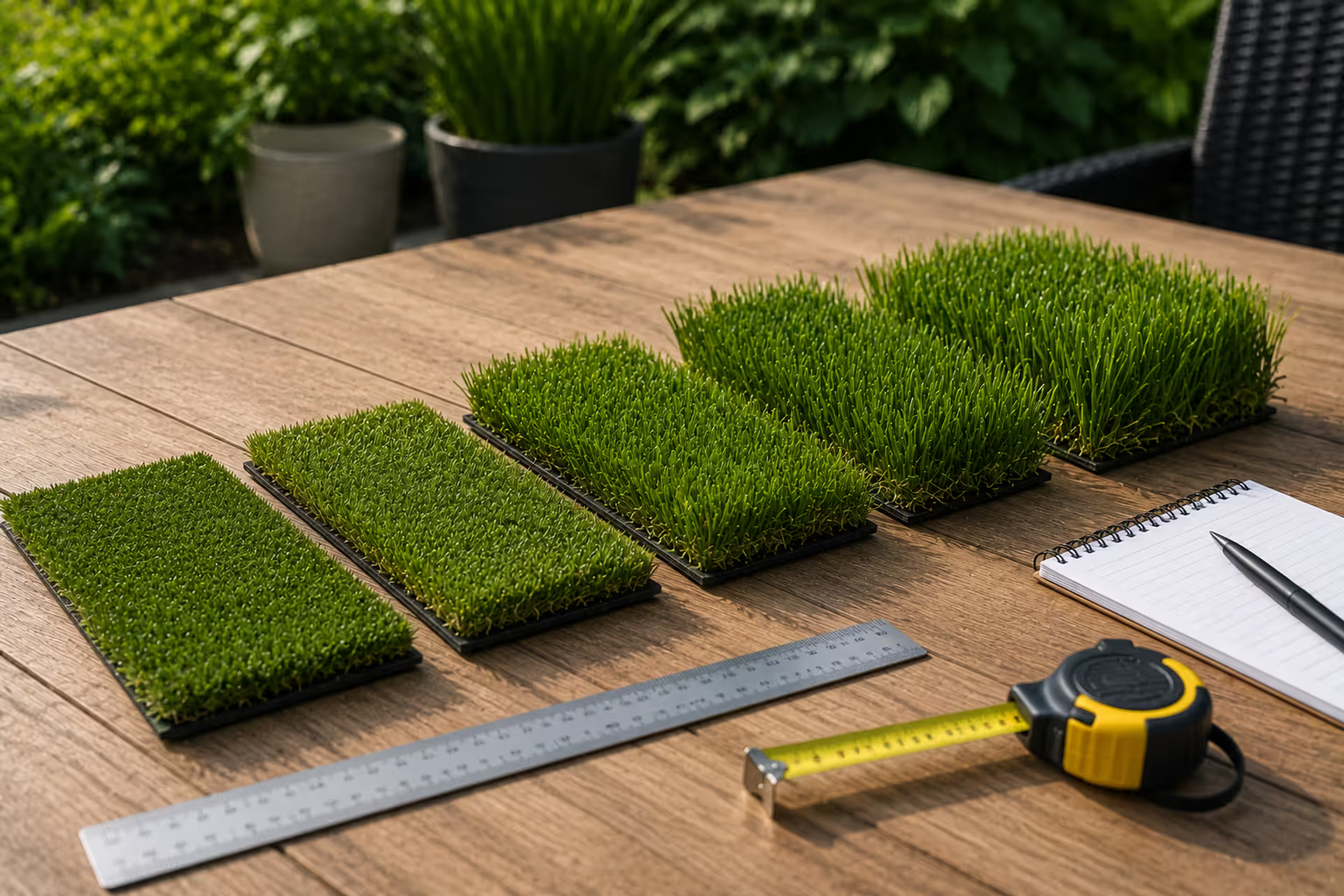
Take a ruler and measure from the backing material straight up to where the blade tip naturally rests. That's your pile height—the vertical distance of exposed fiber once the turf's installed and ready to use.
Now here's the part that trips people up constantly: total blade length versus pile height. When manufacturers create turf, they stitch blades through the backing material. Part of each blade gets locked into that backing. The measurement you care about—pile height—only counts the portion standing above the surface where feet, paws, and furniture make contact.
Industry standards require specific measuring techniques. Manufacturers place the backing on a flat surface, let the blades settle naturally (no pulling or manipulating), then measure perpendicular to the backing. A turf advertised as 40mm pile height should hit that mark consistently across the roll, not just in one spot.
You'll find residential products typically ranging from 25mm to 50mm (roughly 1 to 2 inches). Specialty putting greens might drop to 13mm. Some decorative installations stretch to 60mm or beyond, though I rarely recommend going that tall for functional spaces.
Why does this measurement matter so much? Because pile height controls infill distribution, blade recovery after someone walks across it, viewing angles that determine whether the turf looks natural or obviously fake, and how quickly water moves through the system during rainstorms.
How Pile Height Affects Turf Performance
Four factors shift dramatically based on pile height selection. Understanding these relationships prevents expensive mistakes.
Author: Liam Ashcroft;
Source: cribbslandscaping.com
Visual presentation: Taller blades cast shadows between themselves, creating depth that mimics natural lawn dimensionality. A 35mm pile photographed from five feet away shows layered texture. A 20mm pile from the same distance reads flatter—less visual complexity. But here's the catch: pile height alone won't save poorly designed turf. You need blade variety and proper density backing it up.
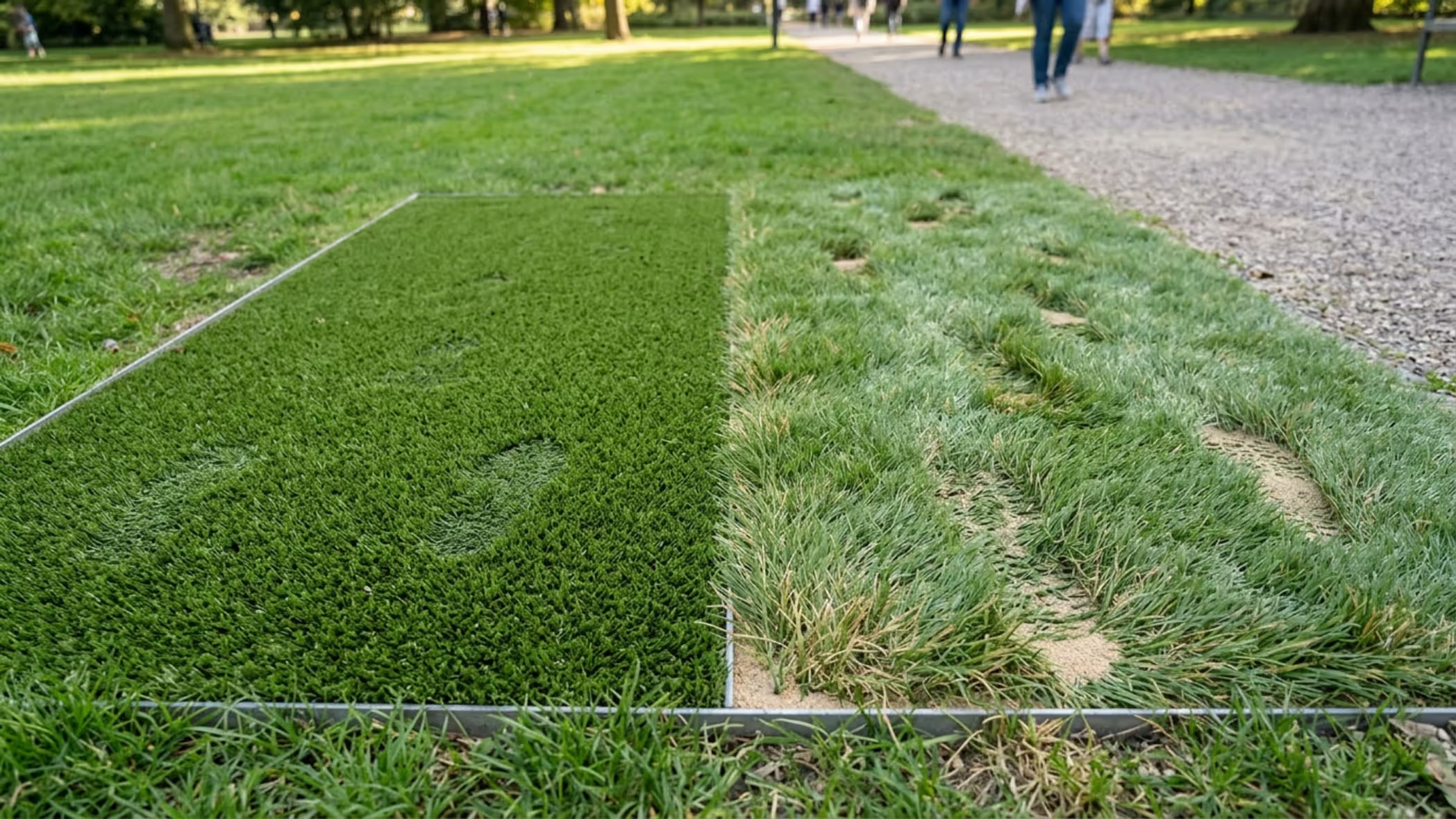
Longevity under pressure: Physics works against tall blades. When someone steps on 50mm turf, those blades bend significantly and take longer to spring back. Do that 10,000 times (which happens faster than you'd think near doorways), and you've got permanent lean. Meanwhile, 30mm blades bend less per footstep, recover faster, and maintain their upright position through years of use.
Upkeep demands: Here's something showrooms don't mention—long blades trap debris like a net. Leaves, grass clippings from neighbors' yards, pet hair, pollen—it all settles between tall blades and requires leaf blowing or power brushing to extract. Shorter installations shed this debris naturally or need just a quick rake.
How it responds to traffic: Step on 25mm turf and it feels firm, almost athletic. Step on 50mm turf and it's soft initially, then compresses noticeably. That soft feel attracts buyers, but compression becomes visible wear after moderate use. The pattern repeats everywhere: families choose long pile for comfort, then watch high-use zones deteriorate while low-traffic areas still look new.
Short Pile vs. Long Pile Comparison
Products measuring 13mm to 38mm handle abuse remarkably well. This category dominates pet installations, children's play zones, and sports applications. Blades maintain position with minimal infill support. Water moves through quickly because there's less material creating resistance. The downside? Visual impact suffers—it reads more utilitarian than luxurious, and barefoot comfort decreases.
Products from 44mm to 63mm deliver that magazine-worthy appearance. They're forgiving when kids fall, pleasant for bare feet, and create impressive visual depth from your back windows. But they demand more infill to prop up those long blades, require regular grooming to prevent matting, and collapse under sustained traffic patterns. Consider it similar to choosing between hardwood floors and plush carpet—different applications, different priorities.
When clients can't decide, I push them toward shorter options. You can compensate for less dramatic turf with better landscaping around it. You cannot fix flattened 50mm turf without tearing it out and starting over.
Choosing the Right Pile Height for Different Uses
No universal answer exists. Your specific situation dictates the right choice.
Home lawns: The majority of residential installations land between 38mm and 44mm. This range delivers acceptable visual appeal without creating maintenance nightmares or traffic-wear problems.
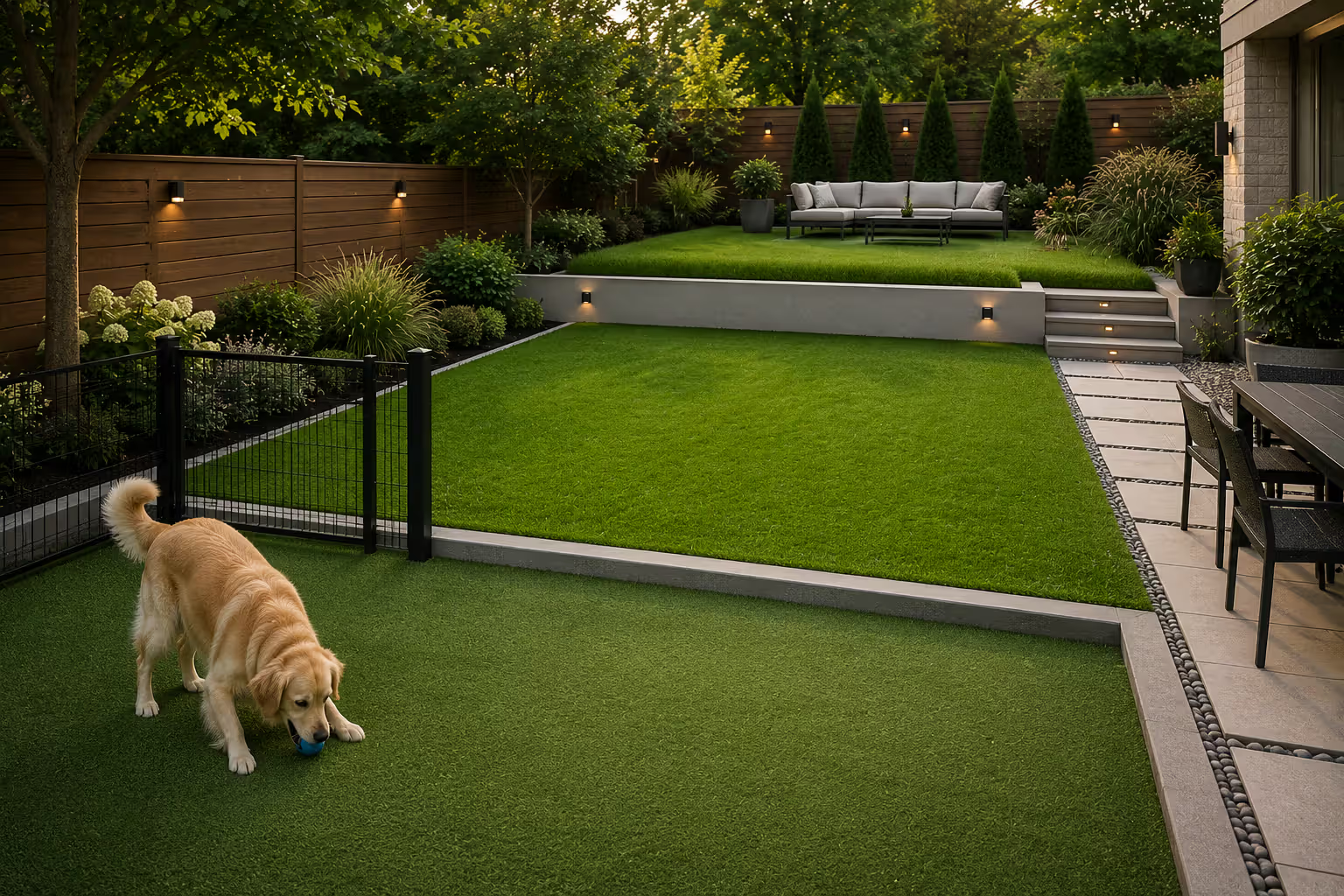
Dog runs and pet areas: Shorter wins every time. 25mm to 38mm simplifies waste removal and resists the matting that develops when dogs sprint the same route daily to bark at the mailman.
Play structures and swing sets: Safety surfacing specifications often require 38mm to 50mm combined with impact-absorbing infill. The extra height provides cushioning when kids inevitably fall off the monkey bars.
Athletic facilities: Football and soccer fields typically spec 38mm to 63mm depending on the sport's requirements and league regulations. Baseball infields go much shorter—around 13mm—because ball behavior and cleat traction demand it.
Author: Liam Ashcroft;
Source: cribbslandscaping.com
Best Pile Height for Backyard Installations
Your typical suburban backyard sees mixed use—kids playing tag, adults walking to the grill, occasional parties with 20 people standing around. For this scenario, 38mm hits the target. It photographs well from your deck, feels reasonable barefoot, and won't develop ugly traffic patterns after one season.
Heavy-use zones near pool entries, sliding doors, or play equipment benefit from dropping to 32mm in those specific areas. Professional installers can transition between pile heights across your yard, though it requires careful seaming work during installation.
Resist going above 44mm unless your backyard functions purely as visual space you rarely walk on. That extra height might impress you during the sales presentation, but it'll cost you in grooming time and premature aging.
Pile Height Recommendations for Pet Owners
Dogs completely change the calculation. Their weight concentrates on small paw pads rather than distributing across human feet. They sprint, dig at spots that smell interesting, and create focused wear patterns you'd never see with human traffic alone.
A 25mm to 32mm pile works for most dog owners I work with. The shorter blades resist matting from paw traffic and make hosing off urine spots more effective. Solid waste stays on the surface rather than sinking into the fiber structure, which means easier cleanup with a scooper.
Small dogs under 20 pounds with large roaming areas can push to 38mm. But medium to large dogs, or any situation with designated bathroom zones, should stay at or under 32mm.
Here's something counterintuitive: extremely short pile under 25mm can actually trap odors more effectively because urine reaches the backing faster. The ideal range keeps waste suspended in the infill layer where antimicrobial treatments can function and drainage can do its job properly.
Understanding Artificial Grass Specifications
Pile height represents just one line on the specification sheet. It interacts with other factors to determine whether you're buying quality or garbage.
Face weight quantifies total fiber ounces per square yard. Higher numbers generally indicate more material and better coverage, but context matters enormously. A 60-ounce face weight on 25mm pile creates dense, upright turf. That identical 60-ounce rating on 50mm pile might look sparse because the same amount of material is stretched across twice the height.
Stitch density counts how many tufts exist per square inch. More stitches mean blades standing closer together. A dense installation with shorter height often outperforms sparse installation with longer height in both appearance and durability. You'll see this expressed as stitches per square meter—residential turf typically ranges from 14,000 to 18,000.
Dtex measures individual fiber thickness by weighing 10,000 meters of a single strand. Higher dtex means thicker, more robust blades that resist splitting and tearing. Residential products usually fall between 6,000 and 12,000 dtex. Thicker blades paired with appropriate pile height create surfaces that bounce back from compression.
Backing construction affects how pile height performs long-term. Polyurethane backings provide superior dimensional stability compared to latex alternatives, preventing the turf from stretching and causing pile height variations across your installation.
These specifications interact in complex ways. A 38mm pile with 16,000 stitches per square meter and 9,000 dtex will outlast a 50mm pile with 12,000 stitches and 6,000 dtex—despite the second option being taller and possibly more expensive.
The biggest mistake I see is homeowners choosing pile height in isolation. A 1.75-inch product with poor density and thin blades will mat faster than a well-engineered 1.25-inch turf. You need to evaluate the complete specification package, not just chase the tallest pile you can afford.
— Martinez Carlos
What Makes Artificial Grass Look Realistic
Convincing turf requires more than selecting the right pile height. It demands variation built into the product itself.
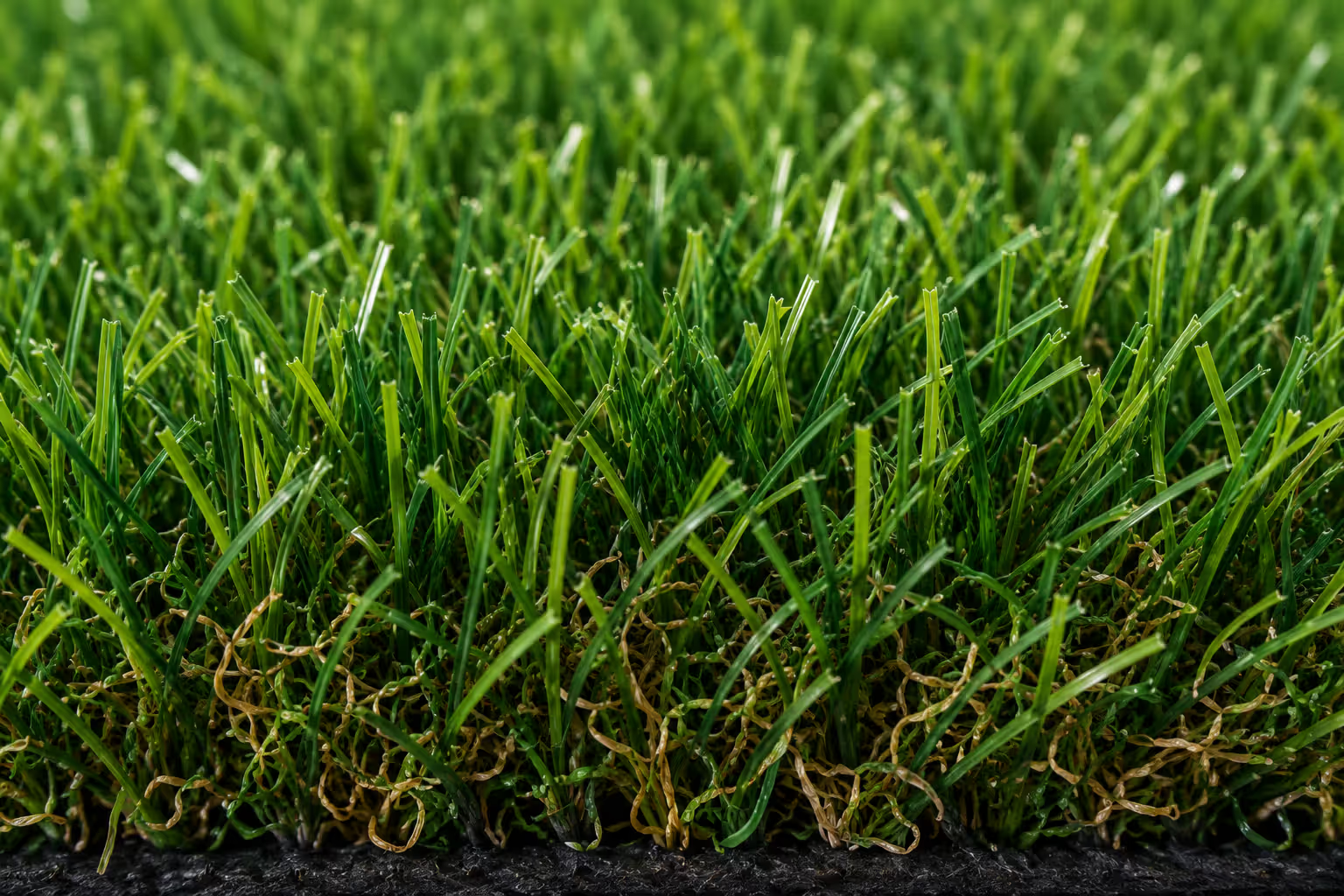
Real grass doesn't grow uniformly. Within any square foot, you'll find different blade heights, varying widths, and multiple shades of green. Quality artificial grass mimics this through multi-height blade technology—combining different pile heights in a single product.
Better products incorporate three or four distinct blade types: tall field blades around 44mm, medium blades at 38mm, and short curled fibers mimicking dead grass and thatch. This variation creates depth and eliminates that "too perfect" artificial appearance that screams fake.
Thatch layers sit at the pile base, usually in brown or tan colors. They fill space between green blades and hide the backing when you view turf from an angle. Without adequate thatch, you'll see gaps down to the black backing—an immediate giveaway that ruins the illusion.
The relationship between pile height and stitch density determines how well these layers integrate. A 38mm pile with strong density (15,000+ stitches) will blend thatch and multiple blade heights seamlessly. The same multi-height design on a sparse 50mm pile might look stringy and disconnected.
Author: Liam Ashcroft;
Source: cribbslandscaping.com
Blade shape adds another dimension. Flat, wide blades reflect light differently than narrow, ridged ones. The most convincing realistic turf combines shapes and heights to scatter light naturally, just like real grass does throughout the day as the sun moves.
Color variation within individual blade height adds yet another realism layer. A single blade might shift from dark green at the base to lighter green at the tip, with subtle brown tones mixed throughout. Combine that with appropriate pile height for your application, and the result looks convincing from both standing height and close inspection.
Common Mistakes When Selecting Pile Height
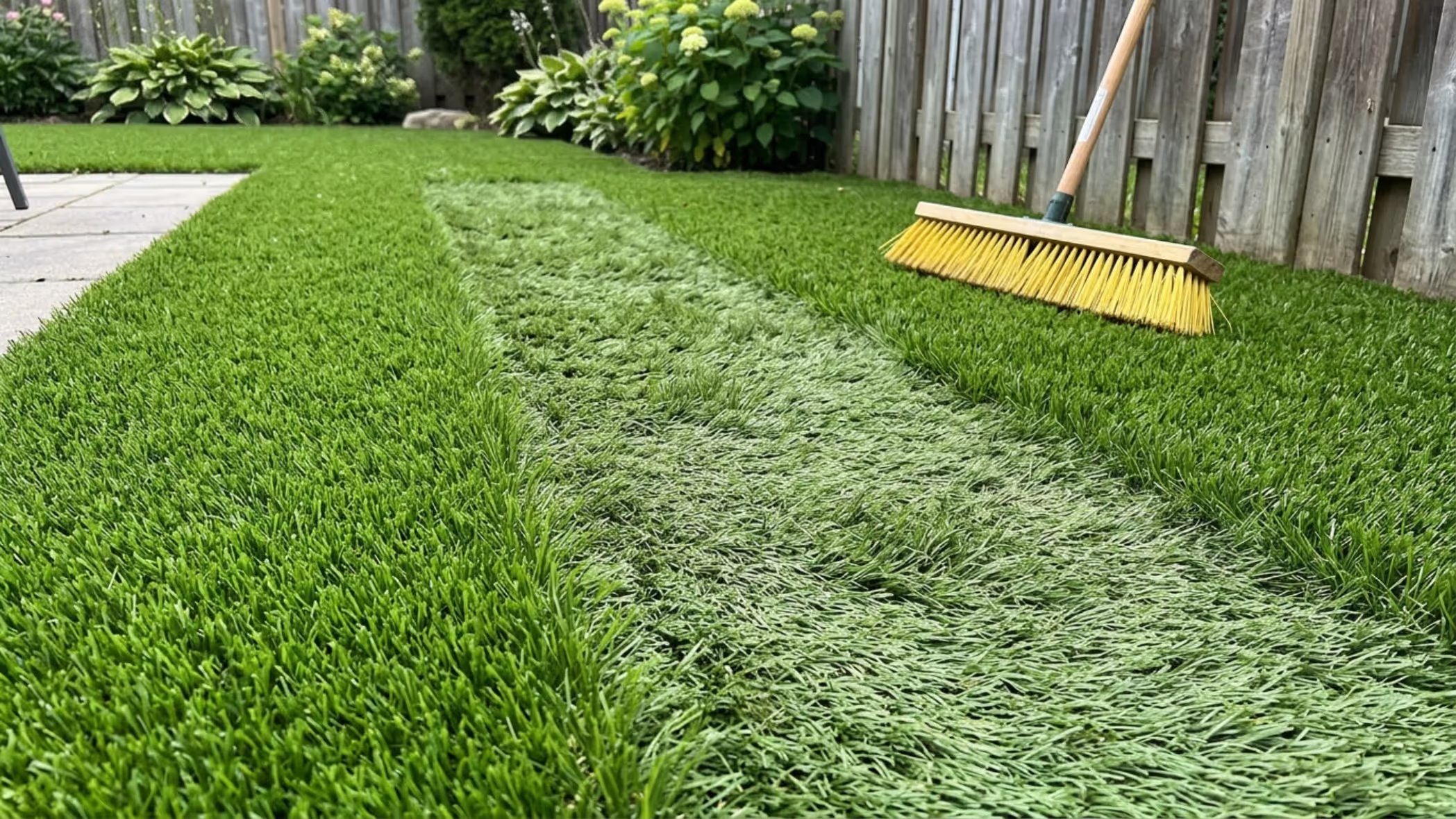
Selecting excessive height for heavy-use areas: This represents the costliest error. That gorgeous 50mm pile looks perfect at installation day. Six months later, you've got flattened pathways everywhere people walk regularly. No amount of power brushing will restore it permanently once the blades have developed memory in the compressed position.
Skipping or skimping on infill: Longer pile heights need substantial infill to support the blades vertically. Some homeowners skip infill entirely or use too little trying to save money. The blades fold over and mat within weeks. If you select taller pile, budget appropriately for proper infill—usually silica sand, crumb rubber, or newer organic options like cork or coconut fiber.
Making decisions based solely on price: The cheapest option in your desired pile height carries that price tag for specific reasons. Low stitch density, thin blades, inferior backing construction. You'll replace it years earlier than a quality product, eliminating any initial savings and adding disposal costs and labor for reinstallation.
Ignoring climate considerations: Hot regions present special challenges. Longer pile can trap heat near the surface like insulation. Shorter pile allows better air circulation and typically stays cooler during peak summer. If you're installing in Phoenix or Houston, a 32mm pile will feel more comfortable than 50mm during July afternoons.
Author: Liam Ashcroft;
Source: cribbslandscaping.com
Failing to anticipate future changes: Your backyard might be quiet now, but what happens when you adopt a dog next year? Or when your toddler becomes a teenager with friends over constantly? Going slightly shorter than your current needs might seem overly conservative, but it prevents regret later when usage patterns shift.
Assuming height equals realism: Only to a point. Beyond approximately 44mm in residential settings, you start hitting diminishing returns. The turf doesn't look noticeably better to visitors, but performance suffers measurably. There's a reason most experienced landscapers stick to the 32mm to 44mm range for homes—it's the proven sweet spot.
Height Range
Primary Applications
Traffic Durability
Grooming Requirements
Price Category
13mm–25mm
Putting greens, pet zones, commercial heavy-use areas
Which pile height do most homeowners choose for residential lawns?
The 38mm pile height dominates home installations across the country. It strikes a balance between natural appearance and practical durability. You get sufficient blade length to achieve that lush look without the maintenance headaches or traffic wear associated with taller options. Most manufacturers offer their widest product selection in this range because it's proven to satisfy the majority of residential customers over time.
Does taller pile height indicate superior quality?
Absolutely not. Quality depends on the complete specification package—stitch density, face weight, blade thickness, and backing construction all matter equally or more. A poorly manufactured 50mm product will underperform a well-engineered 32mm turf every single time. Longer pile can actually become a liability if it's not supported by adequate density and proper installation with sufficient infill material.
How does pile height influence drainage performance?
Shorter pile generally drains faster because water has less material to navigate through before reaching the perforated backing. Longer pile can slow drainage slightly, especially if the turf features very high stitch density. That said, proper base preparation matters far more than pile height for overall drainage performance. A correctly installed 50mm pile will drain better than a poorly installed 25mm pile with inadequate base work.
Which pile height works best for dog owners?
Stick to 25mm through 32mm for most dog situations. This range simplifies waste cleanup, resists matting from paw traffic patterns, and allows better airflow to reduce odor accumulation. If you have very small dogs and a large yard with distributed use patterns, you can push to 38mm. But for designated potty areas or yards with medium to large dogs, shorter is definitely smarter for long-term satisfaction.
Will pile height flatten over time with use?
Yes, especially with longer pile heights in high-traffic areas. All artificial grass experiences some compression over time, but proper infill and regular brushing can minimize it substantially. Shorter pile (under 38mm) recovers better from compression. If you notice significant flattening, increase brushing frequency and check whether you need to add more infill to support the blades vertically.
Is 38mm pile height too short for a backyard?
No, 38mm works perfectly for most backyard applications. It's tall enough to look natural and feel comfortable underfoot while being short enough to handle regular family use patterns. You'll see this height in countless successful residential installations nationwide. Don't let marketing pressure push you toward longer pile unless your yard truly has minimal traffic and you're committed to extra maintenance work.
Pile height shapes every aspect of how your artificial grass performs and appears over its lifetime. But success isn't about finding the "best" height in absolute terms—it's about matching the right height to your specific situation and usage patterns.
For most homeowners, that optimal range sits between 32mm and 44mm. Go shorter if you have pets or anticipate heavy traffic. Go longer only if your space genuinely sees minimal use and you're prepared for extra grooming requirements.
Never shop on pile height alone. Examine the complete specification package. Well-designed turf with appropriate stitch density and quality construction will outperform poorly made products regardless of pile height numbers.
And remember this: you cannot easily change pile height after installation without complete replacement. Invest time now to evaluate your needs honestly—consider who uses the space, how they use it, and how much maintenance you're realistically willing to perform. Making the right decision now prevents costly replacement projects down the road when you discover your initial choice doesn't match your actual lifestyle.
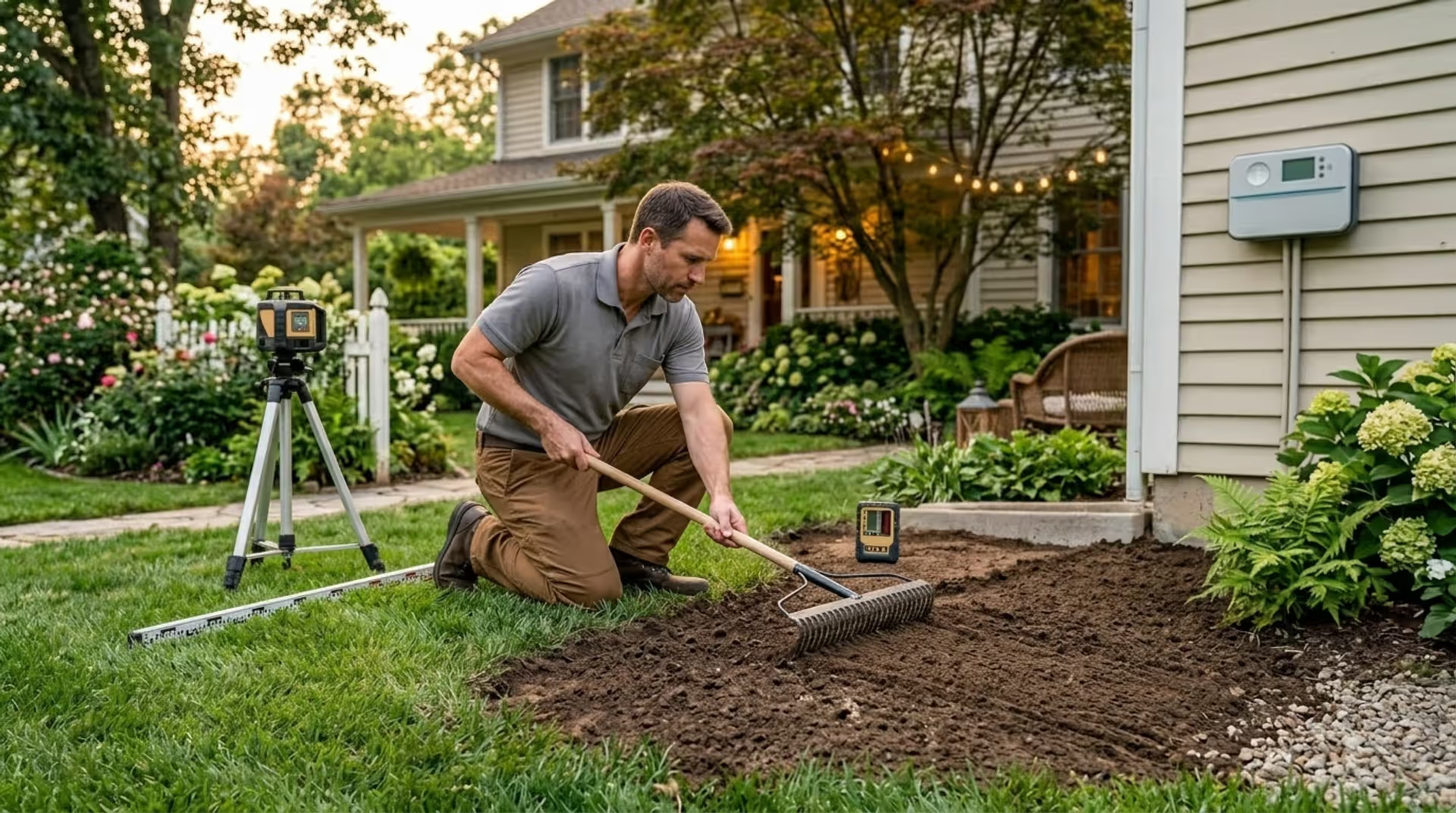
Proper drainage starts with the ground itself. When water pools around your foundation or turns your backyard into a swamp after every rain, you're looking at a grading problem. Learn how to shape your landscape to move water away from structures and create a yard that actually works.
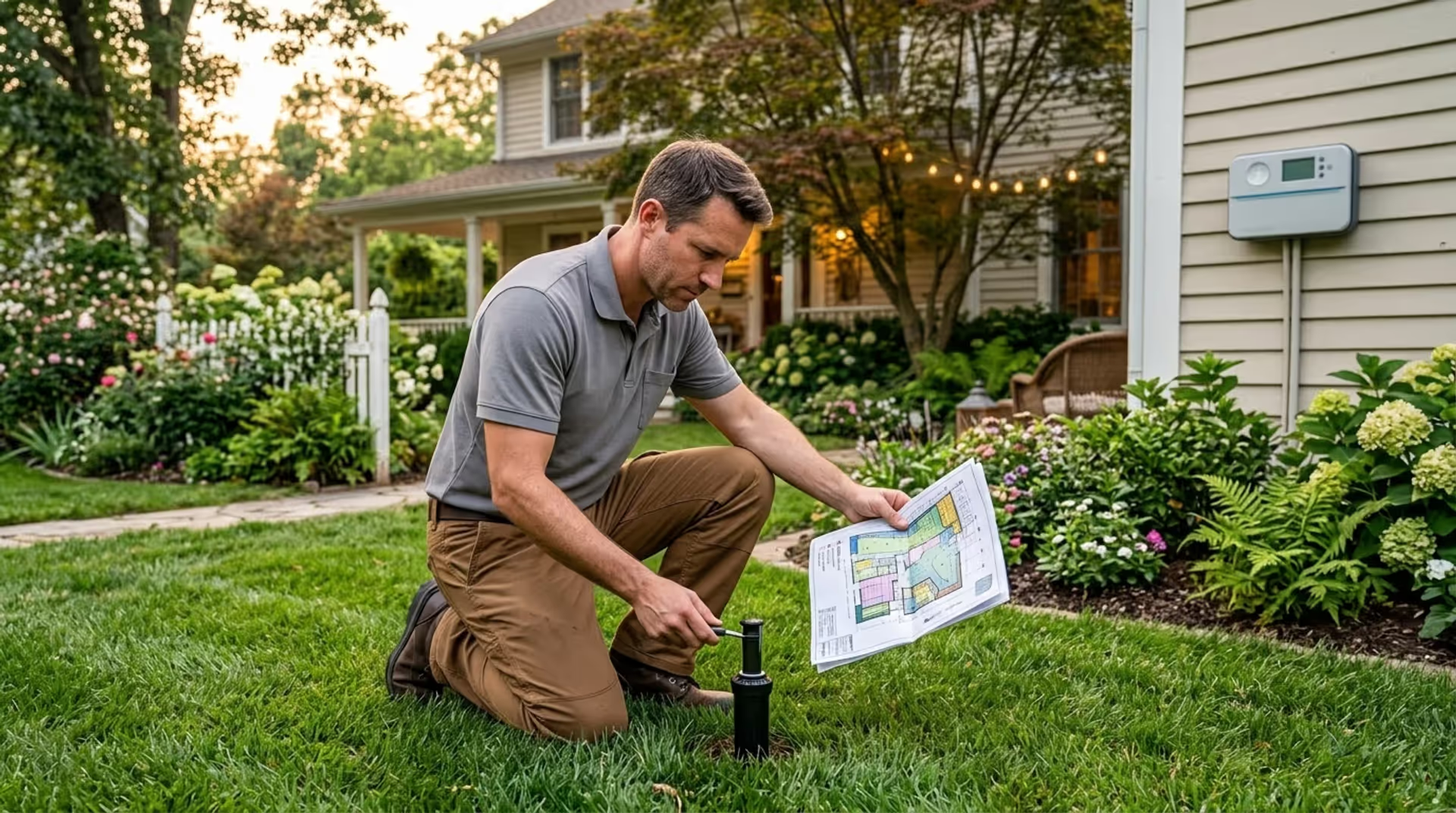
Discover how irrigation specialists design efficient watering systems, when professional help makes sense, and what to expect from installation. Includes system comparison, cost factors, and expert hiring tips for homeowners.
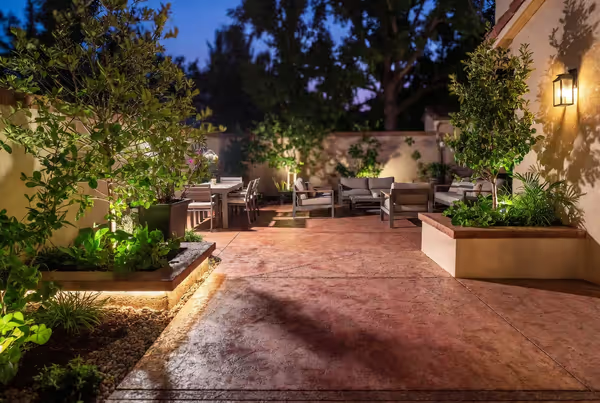
Discover creative concrete patio designs from stamped and textured finishes to polished surfaces and geometric layouts. Learn which concrete finish works best for your climate, budget, and style with detailed comparisons of durability, maintenance, and costs.
Discover how to select the best artificial grass for backyard spaces with our comprehensive guide. Learn what makes turf high-quality, compare leading products, and find the perfect match for your climate, pets, and usage. Expert insights on durability, drainage, realistic appearance, and common mistakes to avoid.
The content on this website is provided for general informational and educational purposes only. It is intended to explain concepts related to landscape design, outdoor spaces, plants, irrigation, hardscape and softscape, and sustainable landscaping.
All information on this website, including articles, guides, and examples, is presented for general educational purposes. Outcomes may vary depending on local climate, soil, plant selection, and project implementation.
This website does not provide professional design, construction, or horticultural advice, and the information presented should not be used as a substitute for consultation with qualified landscape architects, contractors, or horticulturists.
The website and its authors are not responsible for any errors or omissions, or for any outcomes resulting from decisions made based on the information provided on this website.