The weeping peppermint tree isn't native to North America, but you'd never guess it by how well it adapts to US gardens. This Australian native has quietly become one of the most versatile landscape trees for warmer regions, offering year-round interest without the fuss many exotic species demand. If you're looking for a graceful shade tree that won't dominate your yard or require constant attention, Agonis flexuosa deserves your consideration.
What Is Agonis Flexuosa?
Agonis flexuosa goes by several common names — peppermint willow tree, weeping peppermint tree, or simply the Agonis tree. It's an evergreen species native to the southwestern corner of Western Australia, where it grows naturally in coastal and near-coastal areas. The tree earned its "peppermint" moniker from the distinctive minty scent released when you crush its narrow leaves.
Despite the "willow" reference, this isn't a true willow at all. It belongs to the Myrtaceae family, making it a relative of eucalyptus and tea tree. The willow comparison comes from its gracefully drooping branches and long, slender foliage that sway in the breeze.
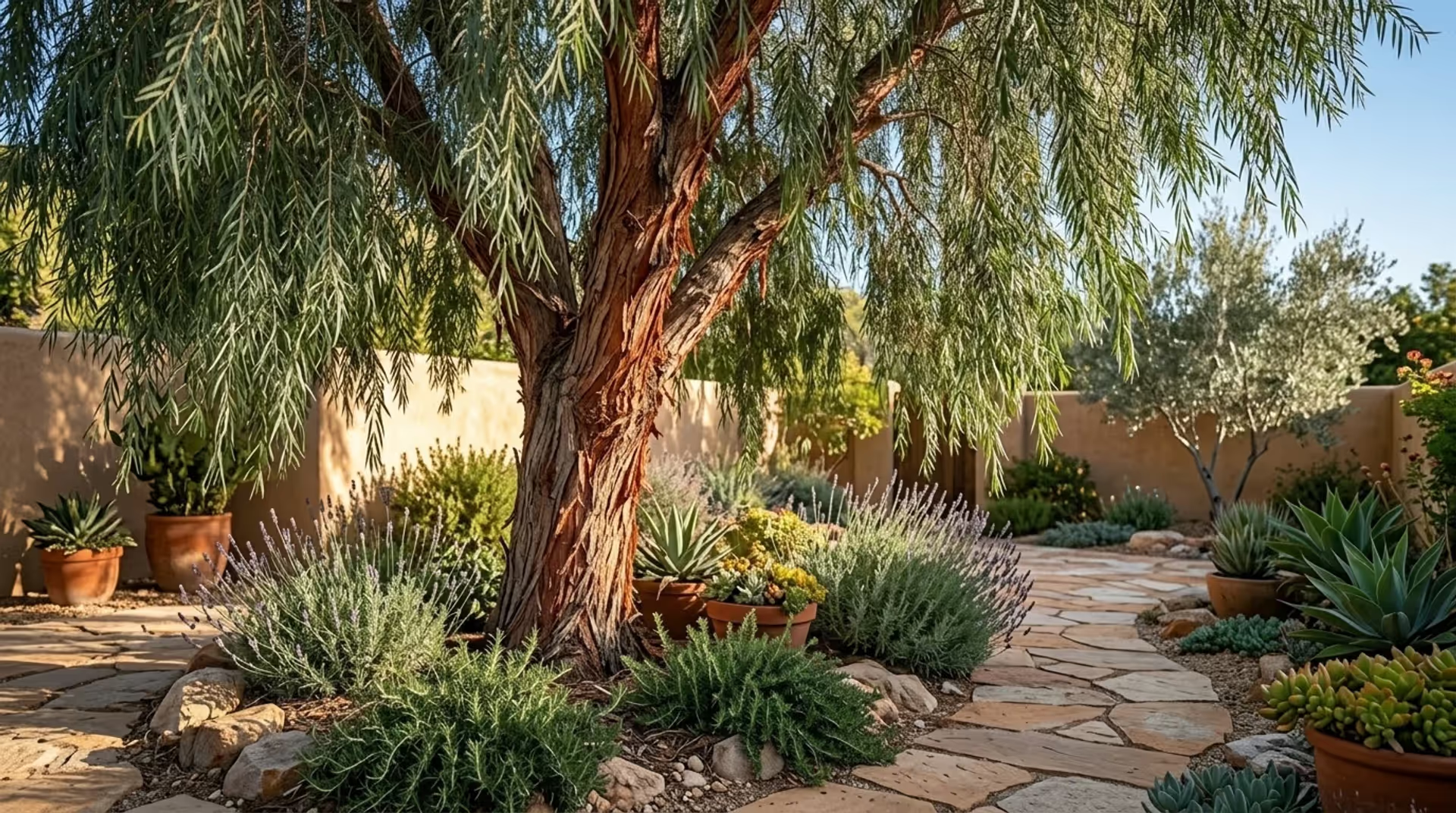
In its native habitat, Agonis flexuosa can reach impressive heights. But cultivated specimens in US landscapes typically stay more modest. The tree features reddish-brown bark that peels in strips, revealing lighter layers beneath — a subtle textural detail that adds winter interest.
For US growers, this Australian native tree performs best in USDA zones 9 through 11. Some protected microclimates in zone 8b can support it, but expect occasional frost damage. California, southern Arizona, parts of Texas, and coastal regions of the Gulf states provide ideal conditions. The tree tolerates coastal exposure remarkably well, handling salt spray better than many alternatives.
The tree produces small white flowers in spring and early summer. They're not showy from a distance, but up close they create a delicate display that attracts pollinators. The flowers eventually give way to small woody capsules that persist on the tree.
One characteristic that surprises new growers: the juvenile foliage differs noticeably from mature leaves. Young plants produce broader, slightly fuzzy leaves that gradually transition to the narrow, smooth foliage characteristic of adult trees. Don't panic if your young specimen doesn't look exactly like the mature trees you've admired.
Agonis Flexuosa Varieties and Cultivars
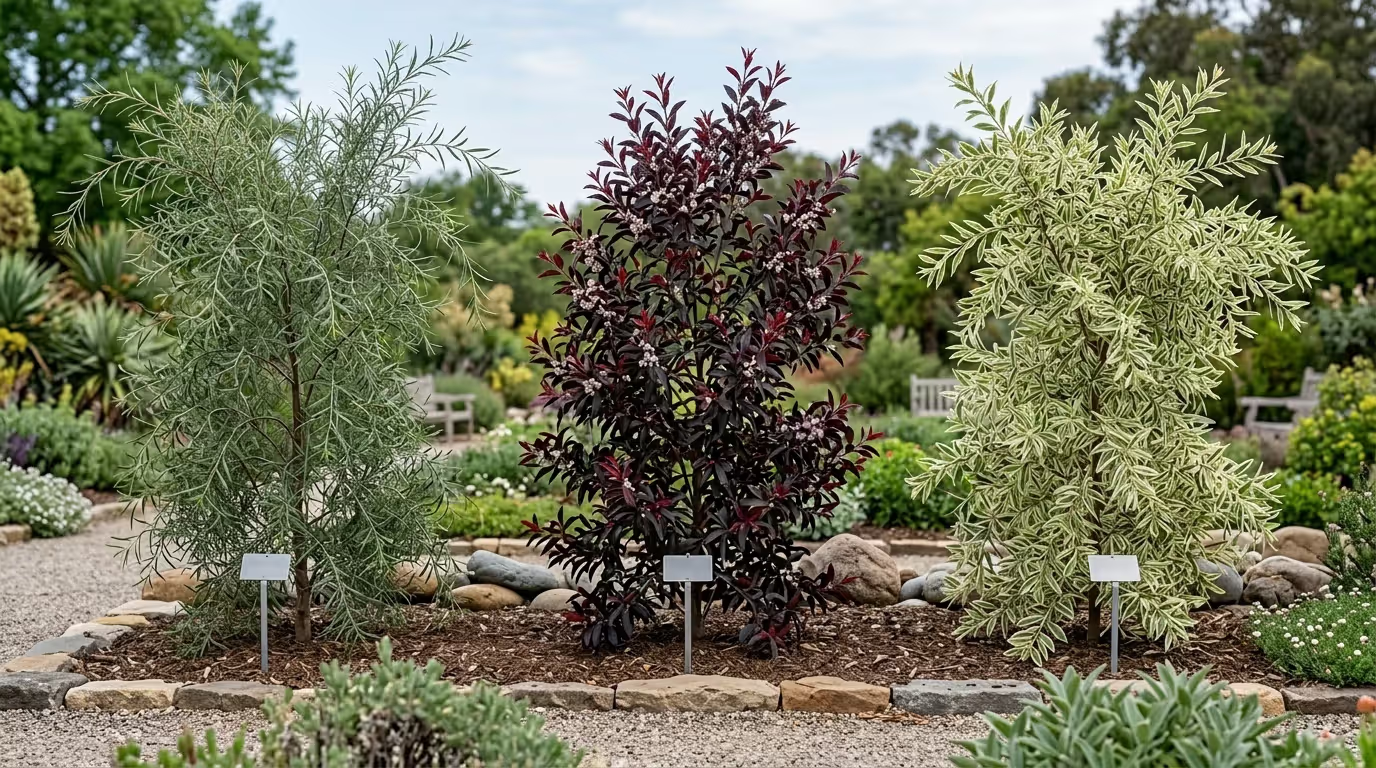
The species itself offers plenty of appeal, but several cultivated varieties have been selected for specific traits. The US market primarily offers four distinct options, each with its own personality.
Variety Name
Mature Height
Growth Habit
Foliage Color
Best Use
Standard Species
25–35 feet
Weeping
Gray-green
Large gardens, parks
'Burgundy'
20–30 feet
Moderately weeping
Burgundy-red (new growth)
Accent tree, color contrast
'Jervis Bay After Dark'
15–25 feet
Compact weeping
Deep burgundy-purple
Smaller yards, containers
'Variegata'
20–30 feet
Weeping
Green with cream margins
Bright spots, feature planting
The standard species remains the most widely available. It's also the most vigorous grower and the most forgiving of less-than-ideal conditions. If you're new to growing this tree, start here.
'Burgundy' changed the game when it entered cultivation. The new growth emerges in striking burgundy-red tones before maturing to deep green with burgundy undertones. This variety maintains better color in cooler conditions than 'Jervis Bay After Dark', making it a safer choice for zone 8 experiments.
'Jervis Bay After Dark' is the showstopper. Its foliage stays dark burgundy-purple throughout the year, creating dramatic contrast in mixed plantings. But this intensity comes with a tradeoff — it grows more slowly and seems slightly more sensitive to cold than other varieties.
The variegated form is harder to find but worth seeking out if you want something different. The cream margins brighten shady areas, and the tree maintains good variegation without reverting to solid green in most cases. Just watch for any solid green shoots and prune them out promptly to maintain the pattern.
All varieties share the characteristic weeping habit, though the degree of weep varies. The standard species and 'Variegata' tend toward the most pronounced droop. 'Jervis Bay After Dark' maintains a slightly more upright branching structure, especially when young.
Author: Olivia Maren;
Source: cribbslandscaping.com
Size, Growth Rate, and Landscape Uses
Understanding how this tree grows helps you place it correctly the first time. And placement matters more than most people realize.
A typical Agonis flexuosa in a US garden reaches 25 to 30 feet tall with a spread of 15 to 25 feet. That's considerably smaller than the 40-foot specimens you might encounter in its native Australia. Our drier summers and occasional cold snaps keep it more compact.
The growth rate falls into the moderate-to-fast category, though calling it a fast growing shade tree stretches the definition slightly. You'll see 2 to 3 feet of growth per year under optimal conditions — decent progress, but not the 4 to 6 feet some true speed demons deliver.
The Agonis flexuosa fills a specific niche in warm-climate landscapes that few other trees can match. It provides filtered shade without the brittleness of many fast-growing alternatives, and its moderate size means it won't overpower residential lots the way so many Australian natives tend to do in cultivation.
— Martinez Elena
Expected Growth Timeline
Patience pays with this tree. Here's what realistic expectations look like.
A 5-gallon nursery specimen typically stands 4 to 6 feet tall at planting. In year one, expect minimal visible growth as the tree focuses on root establishment. This pause frustrates impatient gardeners, but it's setting the stage for healthy long-term development.
Years two and three bring noticeable progress. You'll see that 2 to 3 feet of annual growth if you're meeting the tree's basic needs. By year five, a well-sited tree should reach 12 to 15 feet with a developing canopy.
The tree hits functional shade-providing size around year seven to ten. At this point, you're looking at 18 to 22 feet of height with enough canopy density to create comfortable filtered shade beneath.
Full mature size arrives between years 15 and 20. But here's the thing — the tree doesn't just stop growing. It continues adding girth and canopy density even after reaching mature height. A 30-year-old specimen has a presence that a 15-year-old tree can't match, even if they're similar heights.
Best Landscape Placements
The agonis landscape use possibilities are broader than you might expect for a tree with such a distinctive form.
Single specimen placement works beautifully in medium to large yards. Position it where you can appreciate the weeping form from multiple angles. Avoid planting too close to structures — that 15 to 25-foot spread needs room to develop properly. I've seen too many beautiful specimens butchered by pruning because someone planted them 8 feet from a house.
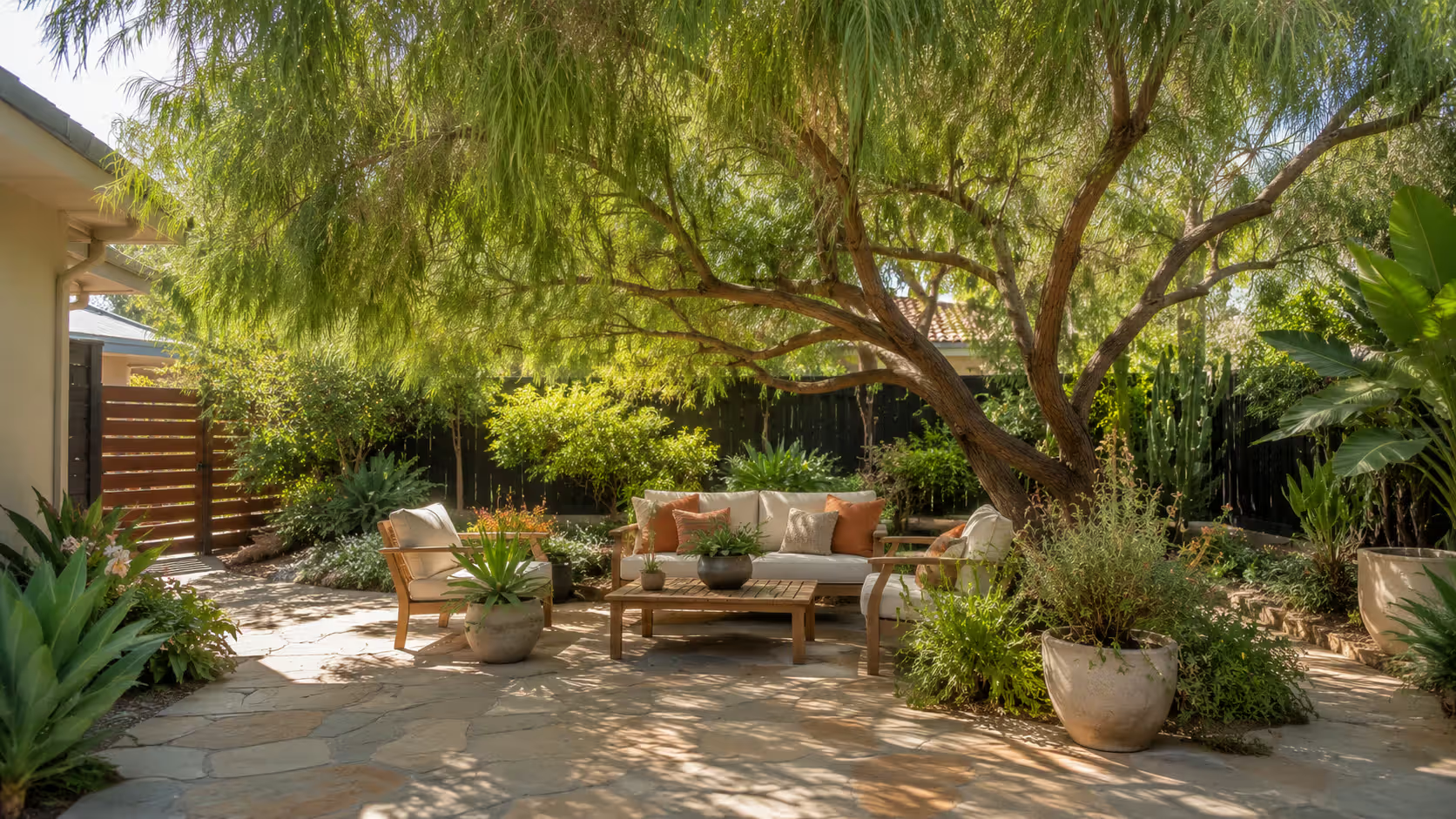
The tree excels as a patio or pool tree. The fine-textured foliage drops gradually rather than all at once, and individual leaves are small enough that they don't create a major cleanup burden. The filtered shade it provides keeps outdoor spaces comfortable without plunging them into deep darkness.
Parkway and street tree use works in appropriate climates. The tree tolerates urban conditions reasonably well, though it prefers some distance from heavy pavement. It's not as tough as a crape myrtle or Chinese pistache, but it's not fragile either.
Small groves create beautiful effects. Space trees 15 to 20 feet apart for a light woodland feel. This approach works particularly well on larger properties where you want to define space without blocking views entirely.
One landscape use that doesn't work: formal hedging. The naturally irregular, weeping form resists the tight shearing formal hedges require. You'll just create a maintenance headache.
Author: Olivia Maren;
Source: cribbslandscaping.com
How to Care for Your Peppermint Willow Tree
The agonis tree care requirements are straightforward. This isn't a fussy species, but it does have preferences.
The tree adapts to various soil types but performs best in well-drained situations. Clay soil works if it doesn't stay waterlogged. Sandy soil works with supplemental irrigation. The sweet spot is a loamy soil that drains freely but holds some moisture.
Soil pH isn't particularly critical. The tree tolerates slightly acidic to slightly alkaline conditions (pH 6.0 to 8.0) without complaint. Most US garden soils fall somewhere in this range naturally.
Sunlight needs are flexible. Full sun produces the most compact growth and the best foliage color on burgundy varieties. But the tree tolerates partial shade quite well — it just develops a slightly more open canopy and reaches a bit more for light.
Fertilization needs are minimal. A balanced slow-release fertilizer applied in early spring provides enough nutrition for healthy growth. Avoid high-nitrogen formulations that push excessive soft growth. The pattern I see most often is over-fertilization creating lanky, weak growth that's more susceptible to wind damage.
Climate tolerance extends beyond simple zone ratings. The tree handles heat exceptionally well, thriving in areas where summer temperatures regularly exceed 100°F. It's also moderately drought-tolerant once established, though "drought-tolerant" doesn't mean "never water."
Cold tolerance is the limiting factor for most US growers. Mature trees handle brief dips to the mid-20s°F without significant damage. Prolonged freezes or temperatures below 20°F will cause dieback. Young trees are more cold-sensitive than established specimens.
Watering Requirements
Getting water right makes the difference between a thriving tree and a struggling one.
Newly planted trees need consistent moisture for the first growing season. Water deeply two to three times per week during warm weather, ensuring moisture penetrates 12 to 18 inches deep. Shallow, frequent watering creates shallow roots that leave the tree vulnerable to stress.
Year two allows you to reduce frequency. Once-weekly deep watering typically suffices during the growing season, with adjustments for rainfall and temperature.
By year three, established trees in most climates need supplemental water only during extended dry periods. In Mediterranean climates with dry summers, plan on deep watering every two to three weeks when rainfall is absent.
The biggest watering mistake? Keeping the root zone constantly moist. This tree evolved in areas with distinct wet and dry periods. It expects the soil to dry somewhat between waterings. Constantly soggy soil leads to root problems and overall decline.
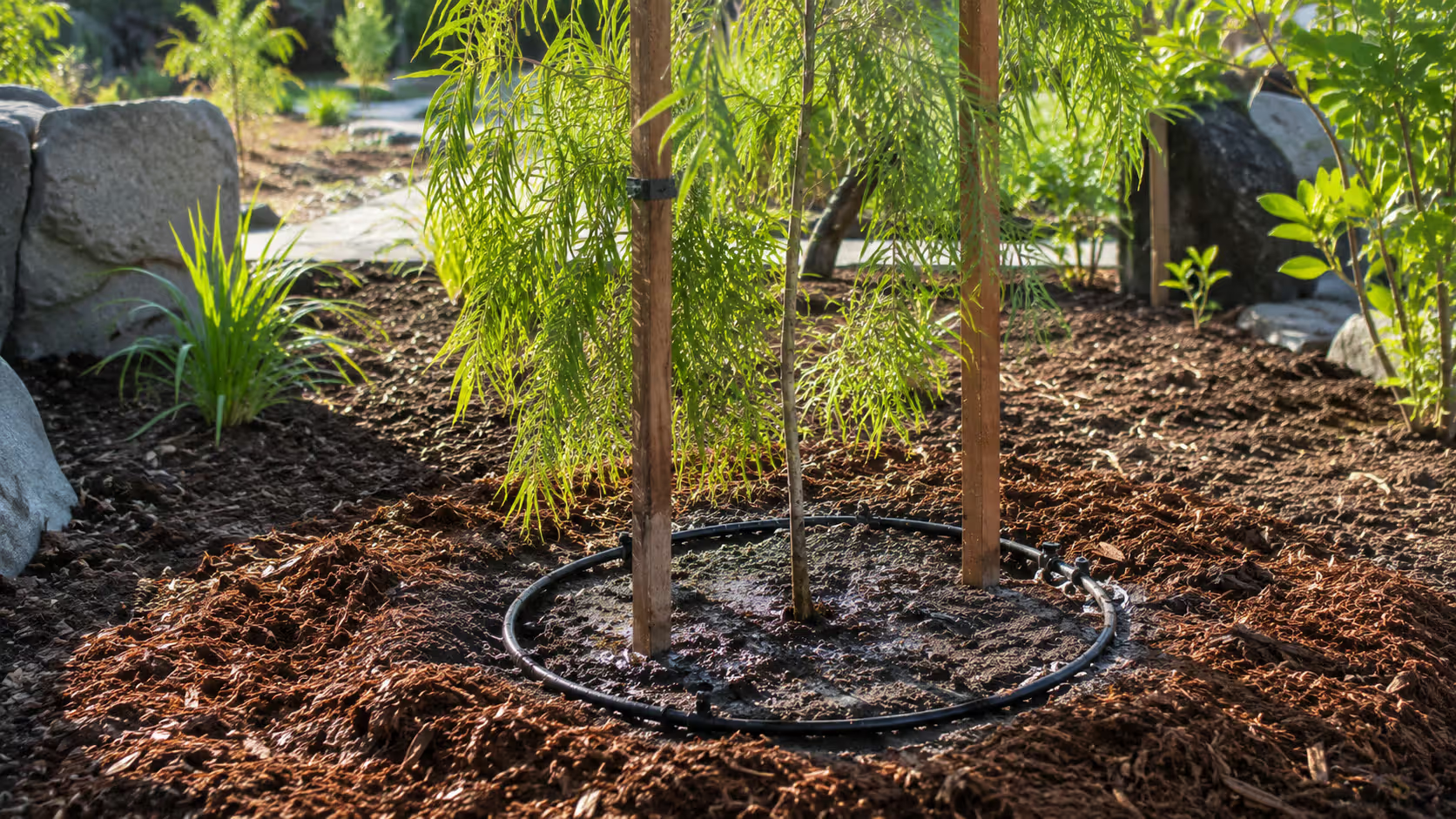
Drip irrigation works well for this species. Position emitters in a ring around the tree at the drip line rather than right at the trunk. This encourages roots to spread outward.
Author: Olivia Maren;
Source: cribbslandscaping.com
Soil and Sunlight Needs
We've touched on these already, but some details deserve expansion.
Drainage matters more than soil type. If water pools in the planting area for more than a few hours after heavy rain, you've got a problem. Either choose a different location or amend the soil extensively with organic matter and consider creating a raised planting mound.
The tree doesn't require rich soil. In fact, overly fertile soil can create problems by encouraging excessive growth that's more susceptible to pests and diseases. Average garden soil amended with a bit of compost at planting time provides everything the tree needs.
Mulching helps moderate soil temperature and moisture. Apply 2 to 3 inches of organic mulch in a ring around the tree, keeping it a few inches away from the trunk. Replenish the mulch annually as it breaks down.
Sunlight exposure affects more than just growth rate. Trees in full sun develop denser canopies with more pronounced weeping. Partial shade produces a more open, reaching form. Neither is wrong — they're just different. Match the exposure to the effect you want.
Pruning and Maintenance Tips
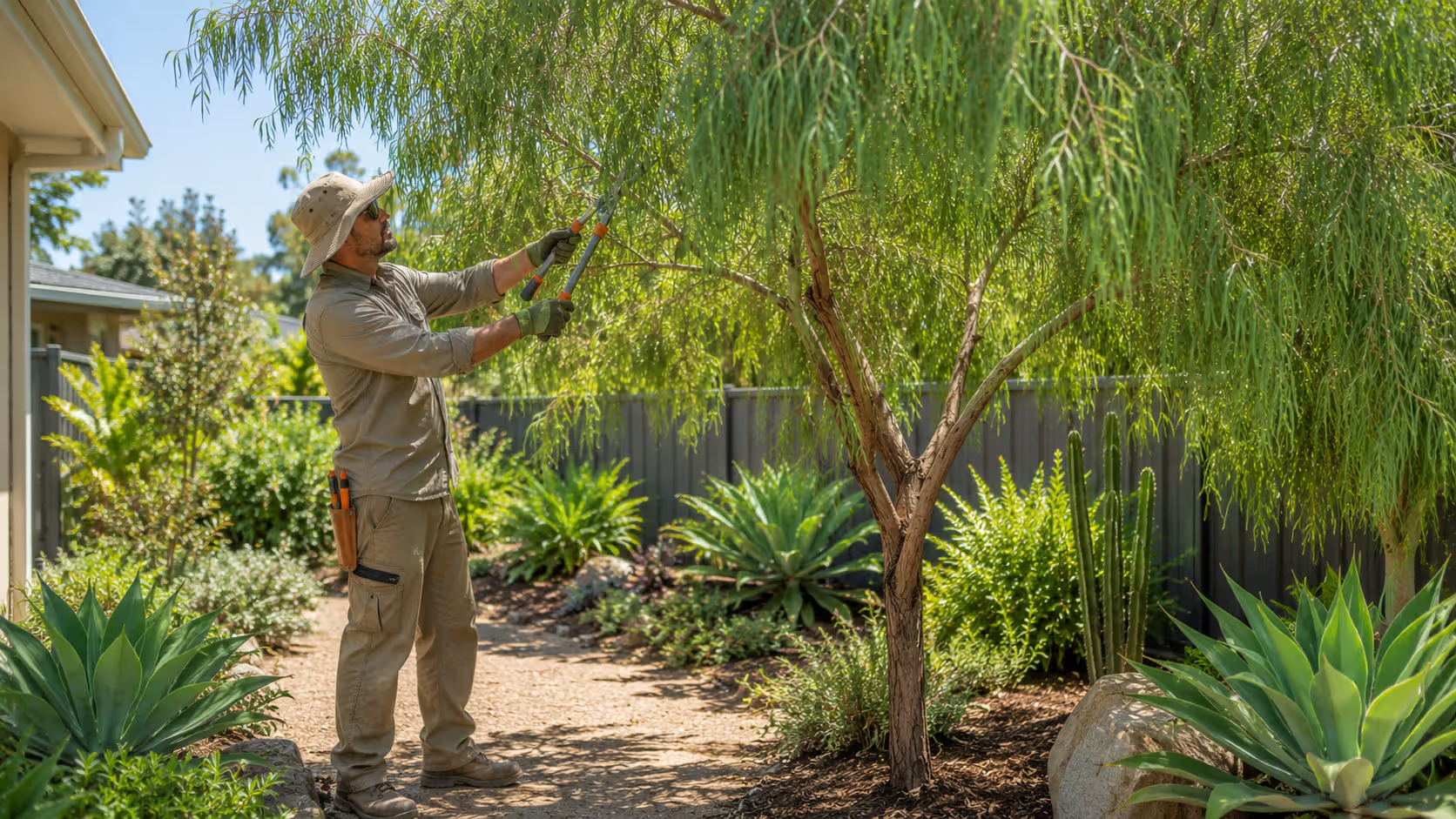
Agonis tree pruning is more about guidance than heavy intervention. This species develops a naturally attractive form with minimal help.
The best time for structural pruning is late winter to early spring, just before new growth begins. This timing allows you to see the branch structure clearly and gives the tree the full growing season to close pruning wounds.
Young trees benefit from some early training. Select a central leader and remove competing upright shoots. Identify 3 to 5 well-spaced scaffold branches and remove shoots that create narrow crotch angles or cross through the center of the tree.
Once the basic structure is established, maintenance pruning is minimal. Remove dead, damaged, or diseased wood as you notice it. Thin out crossing branches that rub against each other. That's about it.
The weeping habit means some branches will naturally hang low. Decide early how much clearance you want beneath the canopy and remove lower branches accordingly. For pedestrian areas, 6 to 7 feet of clearance makes sense. For lawns or planting beds, you can let branches sweep much lower for dramatic effect.
Avoid topping or severe heading cuts. These create ugly stubs and stimulate excessive regrowth that ruins the tree's natural form. If a tree has outgrown its space, the problem was poor siting, not pruning technique.
Thinning cuts — removing branches at their point of origin — maintain the natural form while controlling size. Make cuts just outside the branch collar without leaving stubs.
Seasonal maintenance beyond pruning is light. Rake up fallen bark strips if they bother you aesthetically. Check irrigation systems before summer heat arrives. Watch for signs of stress during temperature extremes.
One maintenance task that's often overlooked: monitoring for root competition. If you've planted groundcovers or perennials beneath the tree, make sure they're not creating a dense mat that prevents water from reaching tree roots.
Author: Olivia Maren;
Source: cribbslandscaping.com
Common Problems and Solutions
No tree is completely problem-free, but Agonis flexuosa has fewer issues than many landscape alternatives.
Psyllids are the most common pest concern. These small sap-sucking insects cause leaf distortion and can produce honeydew that leads to sooty mold. Light infestations don't require treatment — the tree tolerates them fine. Heavy infestations respond to horticultural oil sprays or systemic insecticides, though I'd try the oil first.
Scale insects occasionally appear, particularly on stressed trees. They look like small bumps on stems and branches. Again, horticultural oil is your first line of defense.
Root rot becomes an issue in poorly drained soils or with overwatering. Symptoms include yellowing foliage, branch dieback, and overall decline. There's no cure once root rot is established — prevention through proper siting and watering is the only real solution.
Leaf spot diseases sometimes appear during periods of high humidity and warm temperatures. Small brown or black spots develop on leaves. The tree usually outgrows minor infections without treatment. Severe cases benefit from improved air circulation through selective pruning and fungicide applications.
Frost damage shows up as blackened, wilted foliage after cold events. Damaged tissue won't recover, but the tree typically pushes new growth from undamaged buds. Prune out dead wood once you're certain what's dead and what's just dormant.
Chlorosis — yellowing leaves with green veins — sometimes develops in highly alkaline soils. This indicates iron deficiency. Chelated iron applications usually correct the problem. But check your watering practices first — overwatering can cause similar symptoms.
Wind damage is rare but possible during severe storms. The tree's flexible branches usually bend rather than break. If breakage occurs, prune damaged limbs back to sound wood using proper pruning cuts.
Heat stress in newly planted trees manifests as leaf drop and wilting. Increase watering frequency and consider providing temporary shade during the hottest part of the day until the tree establishes.
The simpler option usually wins here — most problems trace back to cultural issues rather than pests or diseases. Get the basics right, and you'll avoid most trouble.
FAQ: Agonis Tree Questions Answered
Is Agonis flexuosa invasive in the United States?
No, Agonis flexuosa isn't considered invasive in the United States. The tree doesn't self-seed aggressively in US climates, and it doesn't spread vegetatively through root suckers or runners. It stays where you plant it. This makes it a responsible choice for environmentally conscious gardeners who want to avoid species that might escape cultivation and disrupt native ecosystems.
How tall does a peppermint willow tree grow?
In US landscapes, peppermint willow trees typically reach 25 to 30 feet tall with a spread of 15 to 25 feet. Dwarf varieties like 'Jervis Bay After Dark' stay smaller, usually topping out around 15 to 20 feet. Growth is influenced by climate, soil, and care — trees in ideal conditions may reach the upper end of the range, while those in marginal climates or poor soil stay more compact.
Can Agonis flexuosa tolerate frost and cold winters?
Agonis flexuosa handles light frost and brief cold snaps reasonably well once established. Mature trees tolerate temperatures down to the mid-20s°F without significant damage. Prolonged freezes or temperatures below 20°F will cause foliage damage and branch dieback. Young trees are more cold-sensitive and may need protection during their first few winters in zone 8 locations. The tree isn't suitable for areas with hard freezes or extended winter cold.
How often should I water a newly planted Agonis tree?
Water newly planted Agonis trees deeply two to three times per week during the first growing season, adjusting for rainfall and temperature. Each watering should moisten the soil 12 to 18 inches deep. In year two, reduce frequency to once weekly during warm weather. By year three, most established trees need deep watering only every two to three weeks during dry periods. Always allow soil to dry somewhat between waterings rather than keeping it constantly moist.
Does the weeping peppermint tree attract wildlife?
The weeping peppermint tree attracts pollinators like bees and beneficial insects to its small white flowers in spring and summer. Birds sometimes use the dense canopy for nesting and shelter, though the tree doesn't produce berries or fruits that would make it a major wildlife food source. It's not a wildlife magnet like a berry-producing native would be, but it contributes to overall garden biodiversity in modest ways.
Can I grow Agonis flexuosa in a container?
Yes, you can grow Agonis flexuosa in a large container, particularly the more compact varieties like 'Jervis Bay After Dark'. Use a container at least 24 inches in diameter with excellent drainage. Container-grown specimens need more frequent watering than in-ground trees and benefit from annual fertilization. You'll need to prune more regularly to maintain size. Container culture also limits ultimate size — expect trees to stay 8 to 12 feet tall rather than reaching their full landscape potential.
The peppermint willow tree offers US gardeners in warm climates a reliable alternative to overused landscape standards. It won't give you the instant gratification of truly fast-growing species, but it won't saddle you with the structural problems and short lifespan those speed demons often deliver either.
What makes Agonis flexuosa worth considering? The combination of moderate size, graceful form, and low maintenance requirements hits a sweet spot that few other trees manage. You get year-round interest from the evergreen foliage, textured bark, and weeping habit. You don't get the invasive tendencies, messy fruit drop, or pest problems that plague many exotic species.
The tree isn't perfect for every situation. Cold-climate gardeners can't grow it. Small yards may not have room for even the compact varieties. And if you need dense shade or rapid growth, other options serve better.
But if you're in zones 9 through 11, have room for a medium-sized tree, and want something that looks good without constant fussing, take a closer look at this Australian native. Start with the standard species if you're unsure. Try 'Burgundy' if you want color. Go for 'Jervis Bay After Dark' if drama is your goal.
Give it decent soil, regular water while establishing, and room to develop its natural form. Then step back and let it do what it does best — creating a graceful focal point that improves with age rather than becoming a maintenance burden. That's the kind of landscape investment that pays dividends for decades.
Star jasmine creates fragrant, evergreen coverage but grows vigorously. This guide explains whether it's truly invasive, how fast it spreads, control strategies, and complete care instructions for US gardeners in zones 8-11.
You've probably noticed entire hillsides glowing gold during autumn walks. Yellow fall foliage creates stunning displays, but not every tree joins the show. Learn which species reliably turn brilliant yellow year after year, the science behind the color change, and how to choose the perfect yellow fall tree for your landscape.
Learn which plants thrive in bioswales and drainage areas. This comprehensive guide covers native species by region, moisture-tolerant options, planting zones, design principles, and common mistakes to avoid when creating functional rain gardens and bioswales.
Lonicera plants offer more than sweet-smelling vines. This guide covers climbing, shrub, and ground cover varieties, plus care tips for hedges, wildlife gardens, and responsible planting. Learn which honeysuckles attract hummingbirds and which to avoid for ecological reasons.
The content on this website is provided for general informational and educational purposes only. It is intended to explain concepts related to landscape design, outdoor spaces, plants, irrigation, hardscape and softscape, and sustainable landscaping.
All information on this website, including articles, guides, and examples, is presented for general educational purposes. Outcomes may vary depending on local climate, soil, plant selection, and project implementation.
This website does not provide professional design, construction, or horticultural advice, and the information presented should not be used as a substitute for consultation with qualified landscape architects, contractors, or horticulturists.
The website and its authors are not responsible for any errors or omissions, or for any outcomes resulting from decisions made based on the information provided on this website.